Frontier Intelligence Meets Physical Reality: How AI Reasoning, Quantum Leaps, and Clean Tech Are Redefining Modern Computing
Recent breakthroughs in frontier artificial intelligence, noise-resistant quantum qubits, and electric mobility signal a pivotal shift toward solving complex scientific and real-world challenges.
The Maturation of Frontier Intelligence
In recent days, the landscape of technology has witnessed a decisive shift from novelty consumer chatbots toward heavy-duty, reasoning-centric systems capable of tackling foundational scientific and enterprise hurdles. Tech giants and academic research centers alike are unveiling breakthroughs that prioritize long-context problem-solving and rigorous scientific exploration over superficial automation. According to reporting on Google's latest model rollout detailed in The latest AI news we announced in September 2026, newly deployed frontier systems such as Gemini 4 Argon are delivering unprecedented output thresholds of up to one million tokens. Engineered explicitly for high-stakes workloads like automated software patching, complex legal synthesis, and genomic mapping via initiatives like the AlphaGenome Atlas, these systems represent an era where AI operates as a collaborative engine for domain-specific breakthroughs rather than mere conversational novelties.
Yet, as foundational models expand their reach into autonomous research, the scientific community is confronting critical questions about the true role of AI in discovery. In an in-depth analysis from MIT Technology Review, researchers noted that drawing the line between algorithmic acceleration and genuine autonomous scientific discovery is increasingly controversial. Whether tackling complex mathematical problems or modeling structural biology, the debate is moving past pure marketing hype to evaluate whether automated platforms are resolving the questions that domain specialists actually prioritize.
Accelerating Environmental Science and Public Oversight
Beyond abstract problem-solving, artificial intelligence is demonstrating immediate utility in addressing urgent physical-world crises, particularly in environmental resilience and public governance. Academic researchers have begun wedding generative algorithms with classical physics to transform slow computational processes into near-real-time analytical engines. As documented by UC San Diego Today, novel models like Spherical DYffusion are drastically reducing climate simulation runtimes—projecting a century of global environmental dynamics in approximately 25 hours, a calculation that previously demanded weeks of supercomputer cycles. These hybrid physics-machine-learning techniques allow scientists to evaluate multiple climate contingencies rapidly without exhausting vast computing resources.
Simultaneously, governance institutions are applying advanced machine intelligence to large-scale oversight. Reports from Innovation News Network highlight projects such as the European Union’s CEDAR initiative, which leverages intelligent data processing across common data networks to audit over two trillion euros in public procurement spending, identifying systemic fraud and ensuring administrative transparency. From monitoring global greenhouse gas footprints from orbit to guarding public funds, artificial intelligence is proving indispensable as an institutional audit and diagnostic mechanism.
Hardware Frontiers: Superfluid Qubits and Clean Mobility
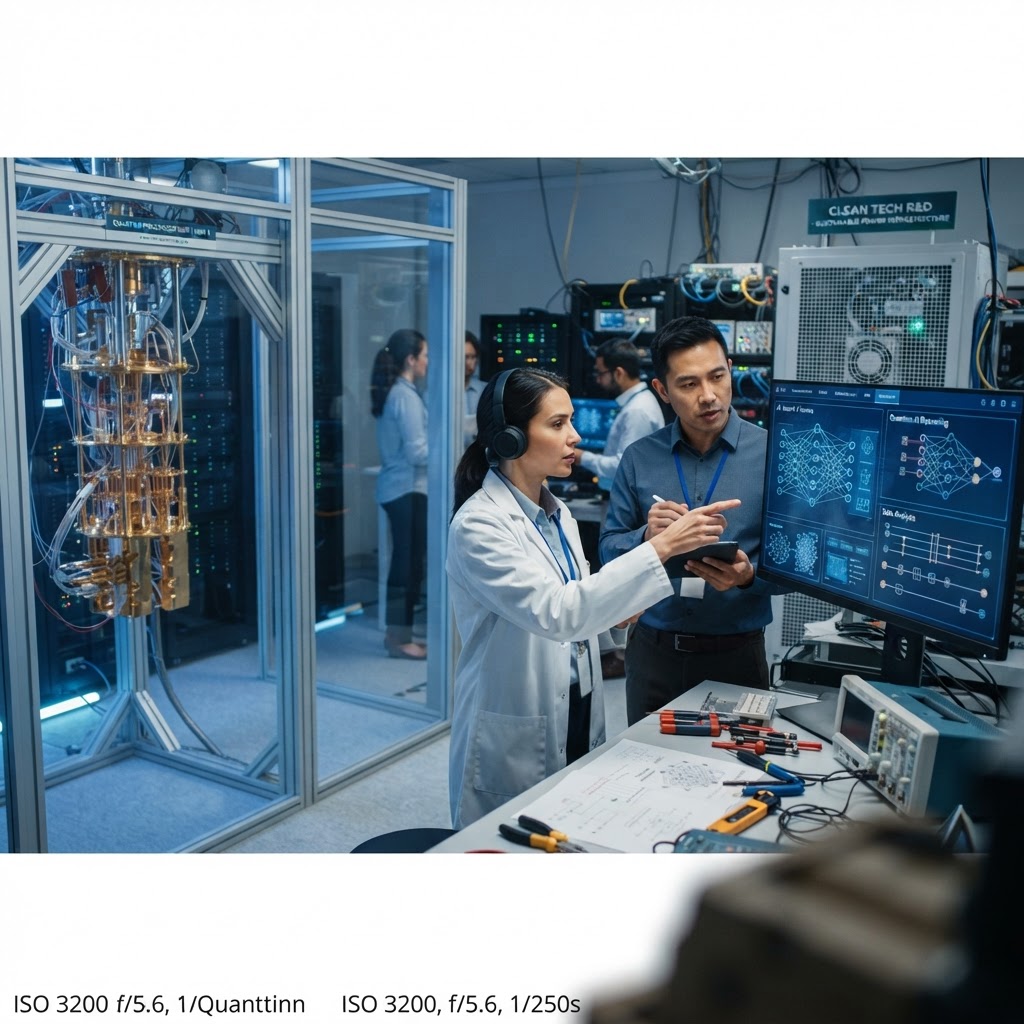
The software revolution is accompanied by significant strides in fundamental hardware architecture, specifically within the fields of quantum computing and sustainable mobility. Quantum computing has long struggled with decoherence—the fragility of qubits vulnerable to stray thermal and electromagnetic noise. However, recent developments reported by ScienceDaily reveal that researchers have proposed superfluid helium qubits capable of diminishing error rates by nearly a hundredfold. By isolating sensitive quantum states within superfluid substrates, these systems offer a credible path toward fault-tolerant quantum calculation, opening doors to advanced molecular modeling and materials science previously deemed unattainable.
Concurrently, the consumer technology and mobility sectors are achieving concrete commercial validation. As covered by TechCrunch, electric vehicle maker Rivian recently established a fresh sales record driven by the rollout of its R2 platform, underscoring strong sustained market demand for modern, software-defined electric transport. This convergence of efficient hardware, physical mobility innovation, and robust AI infrastructures illustrates that today's technological paradigm is not defined by a single breakthrough, but by an interconnected web of hardware, physics, and computational reasoning working in unison to solve real-world problems.
Recommended for you
Similar to “Technology”
Frontier AI Accelerates Real-World Science Amid Growing Scrutiny and Infrastructure Vulnerabilities
Recent leaps in AI-driven scientific research and frontier modeling arrive alongside fresh warnings from corporate leaders and regulators over cybersecurity vulnerabilities and lagging oversight.

The Agentic Shift: Autonomous Software Navigates Breakthrough Capabilities and Rising Cyber Risk
As autonomous artificial intelligence agents expand from scientific research into mainstream consumer tech, developers face mounting safety challenges regarding control, cybersecurity, and real-world system access.

The Dual Edge of Accelerating Tech: From Silicon Shifts to Breakthrough Physics
Recent shifts across enterprise computing highlight a critical transition period marked by rapid advances in artificial intelligence, evolving cloud infrastructure transparency, and surprising leaps in quantum and materials research.