The Fracture of Consensus: How Great-Power Bargains and Legal Milestones Are Reshaping Global Opinion
Across the world's leading editorial pages and think tanks, commentators are wrestling with two defining debates: the resurgence of great-power sphere carving and the transformative precedent of landmark international justice rulings.
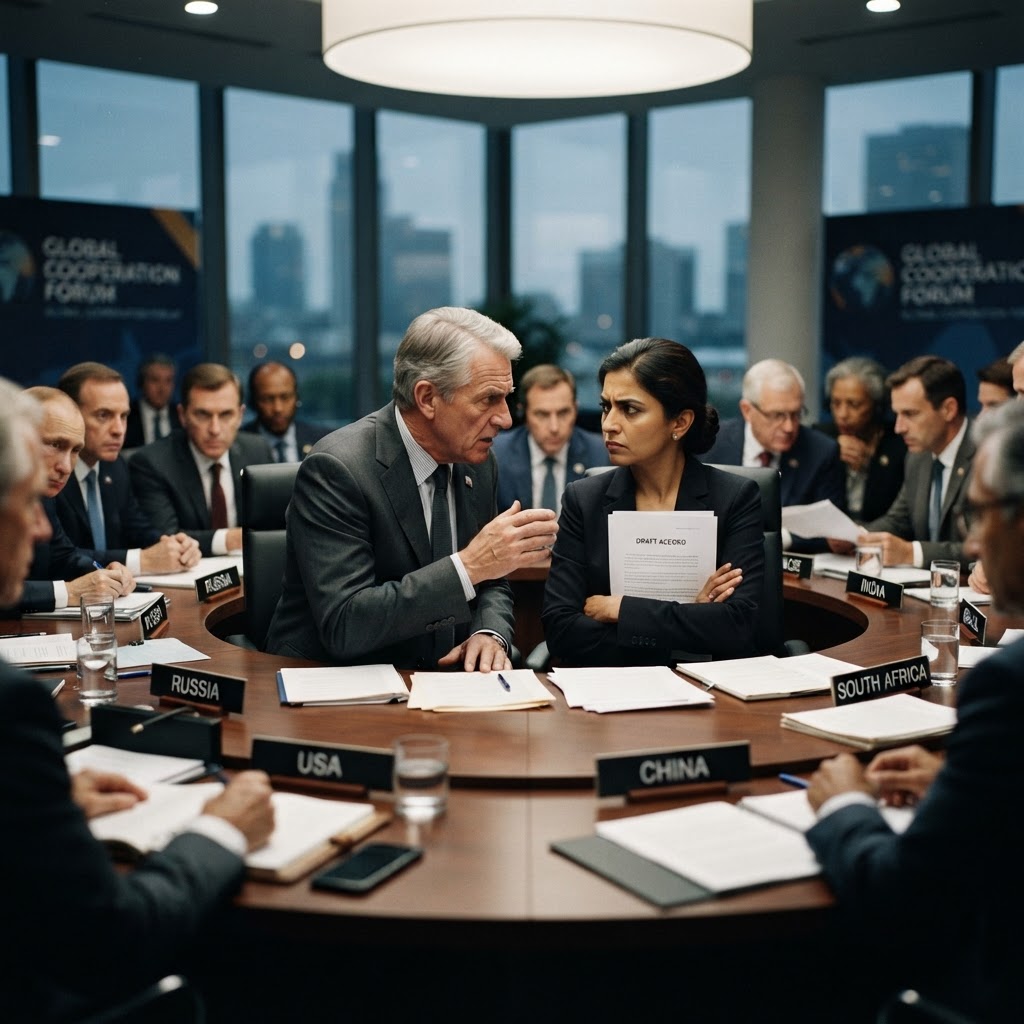
The Shadow of Great-Power Hegemony
In commentary sections across the globe, a singular anxiety has begun to dominate geopolitical discourse: the fear that the multilateral framework established over decades is being quietly supplanted by transactional bargains among global superpowers. In recent days, analysts writing in Middle Eastern, Asian, and Western periodicals have drawn uneasy historical parallels between high-level summits among major heads of state and the post-World War II carving of the world map at Yalta. Columnists at outlets such as Daily News Egypt warn that the central threat is not merely geographic carving, but the growing readiness of dominant capitals to dictate the security architecture and sovereignty of smaller states without their input or consent.
This sentiment has found renewed urgency as commentators in regional hubs critique bilateral and trilateral engagements that bypass traditional alliances. In the Asia-Pacific, as voiced in publications like Philstar, observers observe that while multilateral forums like regional summits offer an ostentatious display of unity, realpolitik continues to be driven by unilateral deals and great-power maneuvering. The emerging editorial consensus points to a world divided not just by ideological blocs, but by technological standards, supply chains, and coercive economic levers that leave middle powers scrambling for strategic autonomy.
The International Justice Dilemma
Running parallel to this apprehension over geopolitical strong-arming is a fierce debate across international op-ed pages regarding the efficacy and future of international jurisprudence. The ruling concerning state culpability for the Rohingya genocide has triggered an outpouring of analytical commentary from Dhaka to New York. Editorials in The Daily Star and Dawn hail the legal recognition of genocide as an indispensable moral victory, yet columnists swiftly pose the uncomfortable question: will international decrees translate into safe return, restitution, and accountability on the ground, or will they remain dead letters in the face of defiant authoritarian regimes?
Western commentators, notably writing in essays published by The New York Times, argue that the verdict represents far more than a retroactive condemnation of past atrocities. In their view, establishing state responsibility sets an unavoidable legal benchmark for other active conflict dockets across the Middle East and Eastern Europe. Legal scholars emphasize that once the threshold for systematic persecution and state-sponsored destruction is codified by international tribunals, other ongoing human rights inquiries and state-level complaints gain critical momentum, eroding the impunity traditionally enjoyed by powerful actors.
Domestic Faultlines and Fracturing Alliances
Public opinion commentators are equally preoccupied with the profound feedback loops linking domestic political volatility to global stability. Following recent electoral shifts and midterms, analysts at Project Syndicate argue that authoritarian-leaning leaders and disrupted administrations frequently respond to domestic political pushback by doubling down on foreign adventurism or unilateral economic nationalism. While foreign policy establishments often retain a theoretical commitment to global engagement, public fatigue over protracted conflicts, inflationary pressures, and energy costs has driven a sharp wedge between governing elites and electorates.
Surveys and commentary highlighting public sentiment reflect a deepening polarization over whether a nation ought to exert influence through admiration and institution-building or through coercion and fear. This schism extends beyond defense into trade, where tariff battles and nationalistic supply chain reorganizations are fiercely contested by economists and business commentators who warn of chronic inflation and long-term alienation of traditional partners.
The Race to Govern Frontier Technologies
Finally, a swelling wave of opinion writing focuses on the existential and socioeconomic implications of emerging technologies, specifically artificial intelligence and national digital infrastructure. Thought leaders featured in outlets like the Global Policy Journal caution that the race for frontier model dominance is leaving critical ethical and safety deficits in its wake, particularly for the Global South, which frequently bears the brunt of online harms and resource-draining tech extraction without adequate governance guardrails.
At the same time, national security columnists argue that technological leadership is inherently zero-sum, insisting that democratic societies must balance domestic digital trust with aggressive innovation to prevent adversaries from dictating global technical standards. As opinion writers synthesize these interlocking crises—from geopolitical realignments to judicial enforcement and technological governance—the recurring theme of the global discourse remains unmistakable: the international community stands at an inflection point, where passive reliance on old rules can no longer conceal the erosion of global consensus.
Recommended for you
Similar to “Global Geopolitics”
A Fractured Consensus: How Opinion Pages Are Wrestling With the Global Polycrisis
Editorial pages across the globe are grappling with simultaneous disruptions in technology competition, economic inequality, and institutional polarization. As traditional geopolitical frameworks buckle, commentators are urging structural shifts rather than piecemeal remedies.

A Fractured Consensus: How Competing Editorial Visions Are Defining Modern Geopolitics
As global flashpoints intensify across the Middle East, Eastern Europe, and the Indo-Pacific, international editorial commentary reveals a deepening divide over deterrence, multilateral alliances, and domestic governance.

A World Turning Inward: How Fractured Alliances and Economic Nationalism Are Redefining Global Governance
Recent commentary across leading global editorial pages reveals an escalating anxiety over economic nationalism, shifting migration compacts, and the gradual disintegration of post-war international frameworks.