Diplomacy on Edge: Summits, Sanctions, and Escalating Flashpoints Redraw Global Geopolitics
High-stakes summits across the Asia-Pacific collide with intensifying strikes in Eastern Europe and escalating unrest in the Middle East, testing the limits of international diplomacy.
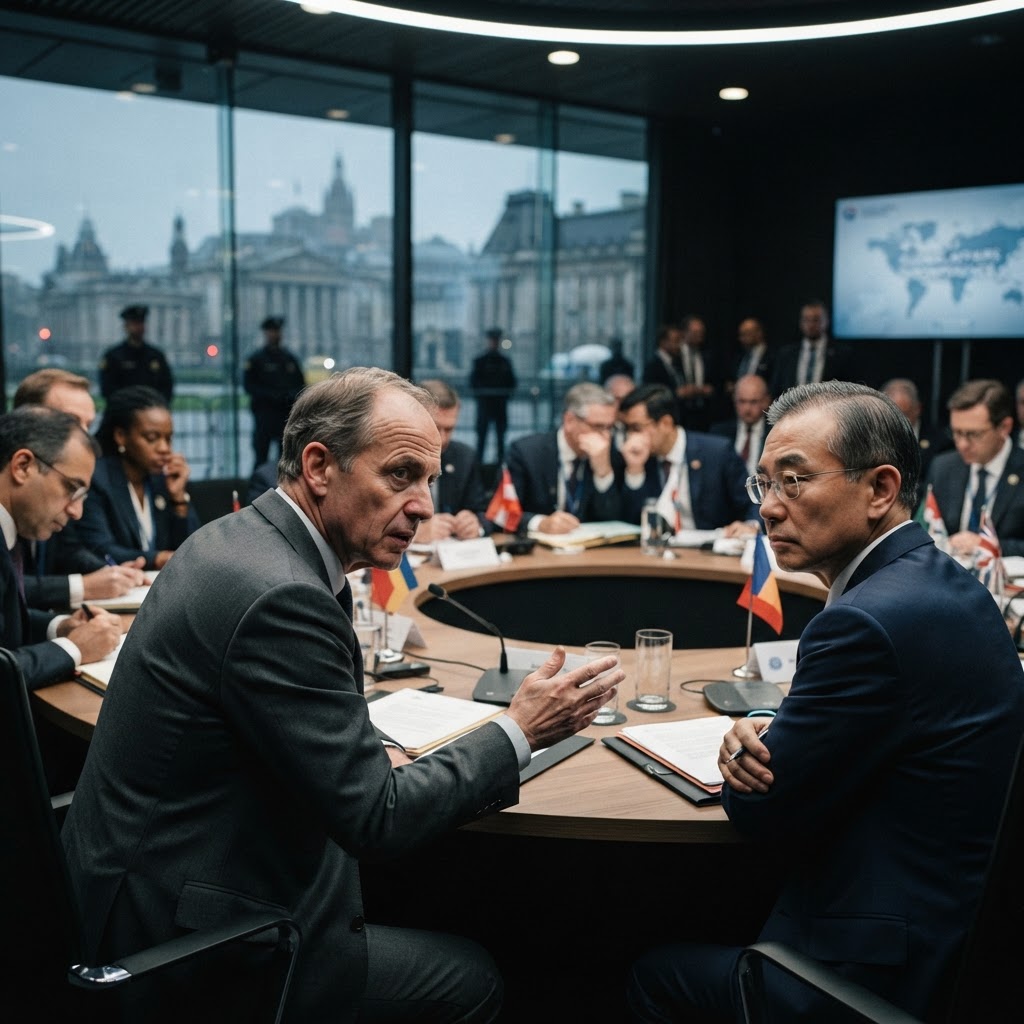
Summitry and Shifting Alliances Across the Asia-Pacific
International statecraft witnessed a flurry of high-stakes engagements this week as leaders converged around the Asia-Pacific Economic Cooperation (APEC) summit in southern China. The gathering served as a backdrop for intense multilateral bargaining and private bilateral talks involving key global powers, including direct meetings between Russian President Vladimir Putin and Chinese President Xi Jinping ahead of high-profile interactions with U.S. President Donald Trump (POLITICO; Anadolu Agency). Central to these discussions were broader security architectures in Eurasia, maritime coordination, and regional trade configurations navigating persistent tariff threats.
Concurrently, secondary diplomatic tracks saw notable developments. Canadian Prime Minister Mark Carney and President Xi explored reciprocal trade diversification, signaling a desire by mid-tier economies to cushion against unilateral trade friction (Anadolu Agency). At the same time, regional security discussions saw Quad representatives gathering to reassess maritime stability, while South Korean officials underscored the link between diplomatic engagement with Beijing and peace on the Korean Peninsula (Anadolu Agency). These simultaneous maneuvers highlight how global powers are actively recalibrating trade channels and military deterrence strategies against an increasingly unpredictable geopolitical horizon.
Infrastructure Battles and Heightened Tensions in Eastern Europe
While leaders met in East Asia, the conflict in Eastern Europe escalated into another destructive phase marked by infrastructure attrition. Ukrainian forces conducted high-precision drone strikes targeting critical transit hubs, inflicting substantial structural damage on the bridge spanning the Kerch Strait (Foreign Exchanges). The dual strikes across successive days disrupted essential supply corridors linking mainland Russia to the Crimean peninsula, underscoring Kyiv's ongoing effort to constrain logistics behind front lines.
In response, Russian forces unleashed heavy aerial assaults targeting municipal and transit networks in Kyiv and Dnipro, striking bridges across the Dnipro River and damaging metro systems (Foreign Exchanges; SANA). The bombardment sparked intense international fallout, prompting European capitals to summon diplomats after foreign diplomatic facilities sustained collateral damage in the Ukrainian capital (SANA). Meanwhile, airspace violations in neighboring Moldova further compounded fears of regional spillover (Foreign Exchanges), driving Western allies into fresh consultations regarding defense guarantees and long-term financial commitments.
Simmering Conflict and Regulatory Pressures in the Middle East
The Middle East remains trapped in a volatile cycle of proxy clashes and punitive economic sanctions. In Yemen, fresh aerial campaigns struck industrial targets across Hudaydah, Saada, and Sanaa (Foreign Exchanges), further imperiling an already fragile humanitarian environment where aid organizations warn that civilian populations continue to face disproportionate displacement and privation (Global Issues; UN News). Maritime vulnerability in key transit corridors also resurfaced following renewed incidents near the Strait of Hormuz (Anadolu Agency), prompting regional states to issue stern warnings regarding maritime navigation rights.
Further north, heightened friction emerged in central Iraq, where state security forces engaged in standoffs with regional militia factions over control of strategic infrastructure and illicit trade networks (Foreign Exchanges). Alongside the physical fighting, Western powers deployed new regulatory tools. The United Kingdom and Australia announced coordinated sanctions targeting entities associated with settlement expansion in the West Bank and groups obstructing humanitarian logistics into Gaza (Anadolu Agency), reflecting a widening international consensus aimed at cooling escalating flashpoints through financial interdiction.
Global Multilateralism Under Structural Strain
Beyond isolated conflicts, the broader institutional framework governing international order faces deepening gridlock. Negotiations at the COP31 climate conference in Antalya reached an impasse as participating nations wrangled over financing obligations and carbon-reduction oversight mechanisms (UN News). The deadlock underscores the pervasive difficulty of coordinating collective responses to systemic challenges while major powers remain consumed by regional rivalries and domestic realignments.
As diplomatic summits, military engagements, and economic measures play out in parallel, the international landscape is increasingly defined by tactical maneuvering rather than comprehensive consensus. With battle lines hardening across Europe and the Middle East, the coming months will test whether multilateral institutions can contain local escalations or if global governance will continue fracturing into regional spheres of influence.
Recommended for you
Similar to “World Affairs”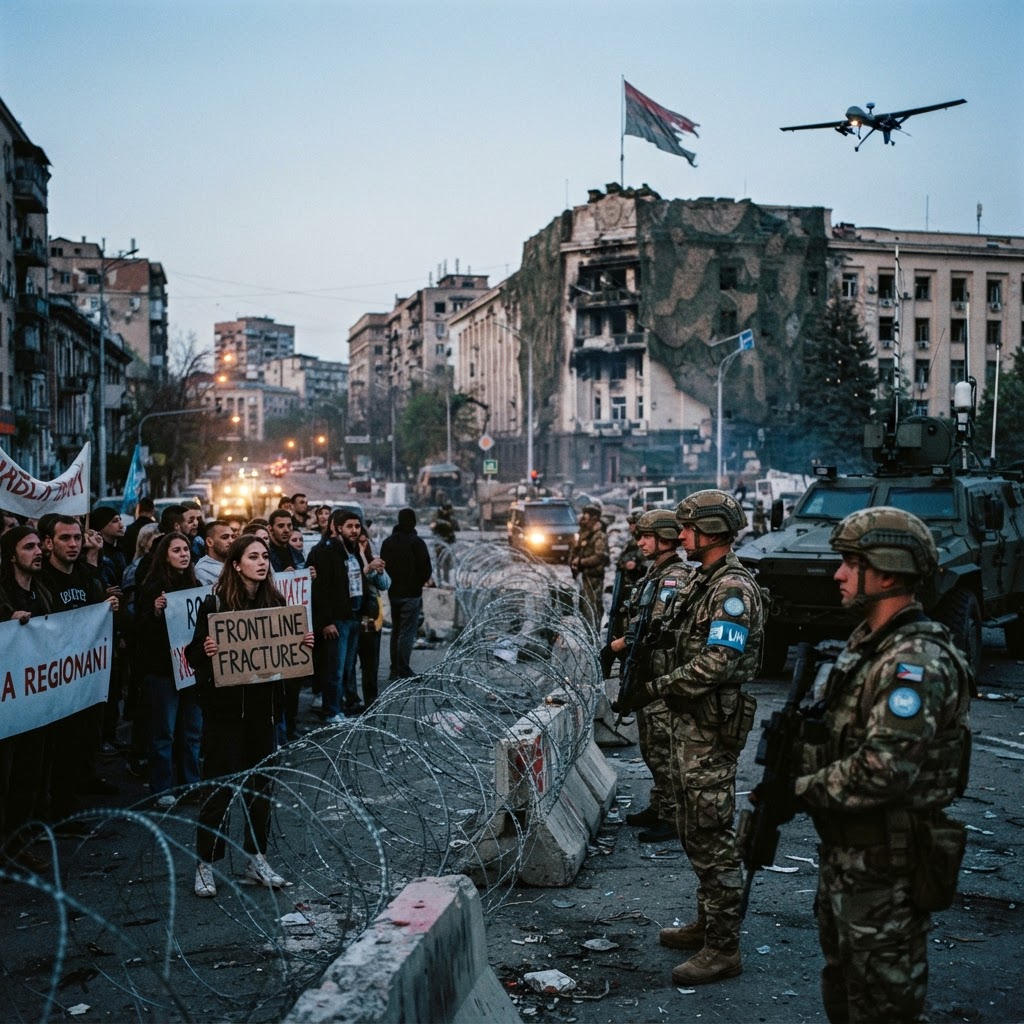
Global Flashpoints Intensify: Shifting Frontlines, Technological Brinkmanship, and Internal Fractures
Escalating cross-border strikes in Eastern Europe, advanced autonomous weapons testing in East Asia, and domestic unrest across Western democracies highlight a fractured international order navigating high geopolitical friction.
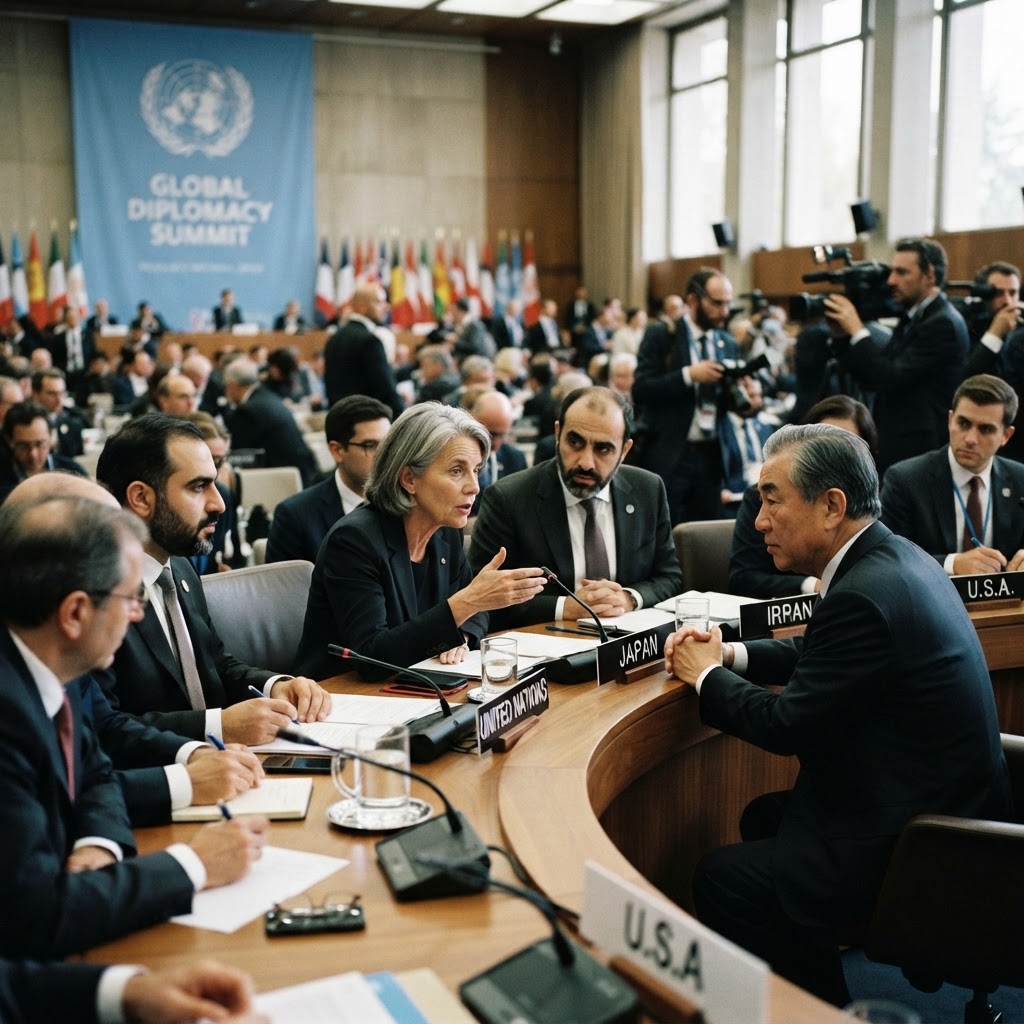
Global Diplomacy at a Crossroads: High-Stakes Summits, Regional Escalations, and Persistent Frontlines
Recent high-level diplomacy in Asia failed to yield concrete breakthroughs as major geopolitical flashpoints intensify across the Middle East, Eastern Europe, and global climate forums.
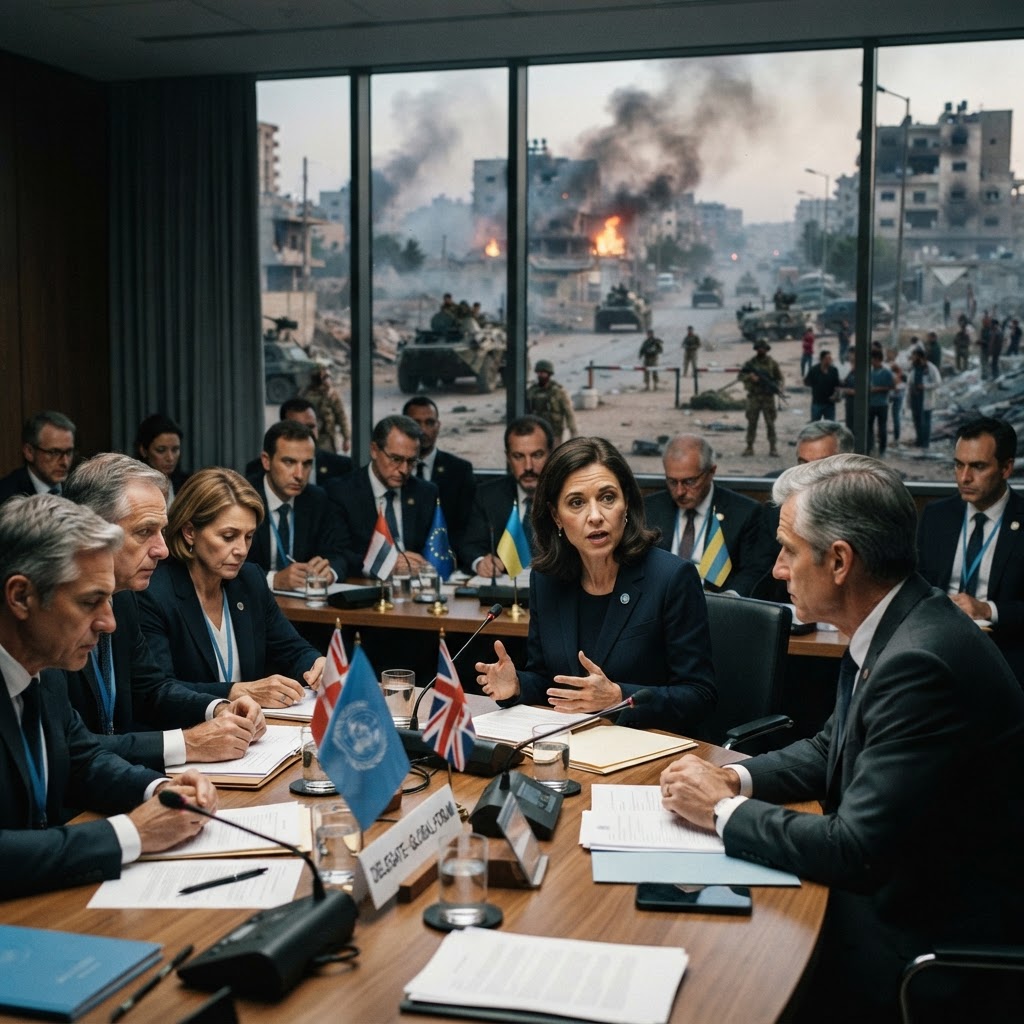
Fragile Diplomacy and Escalating Fronts: Global Tensions Test International Order
High-stakes diplomatic negotiations in the Middle East and Eastern Europe face mounting strain as battlefield strikes, political shakeups, and maritime friction disrupt peace efforts across multiple continents.