Frontier AI Shatters Mathematical Barriers as Geopolitical and Infrastructural Stakes Surge
Recent breakthroughs in machine-assisted mathematics and autonomous software agents highlight artificial intelligence's rapid evolution, even as infrastructure bottlenecks and geopolitical frictions challenge its global expansion.
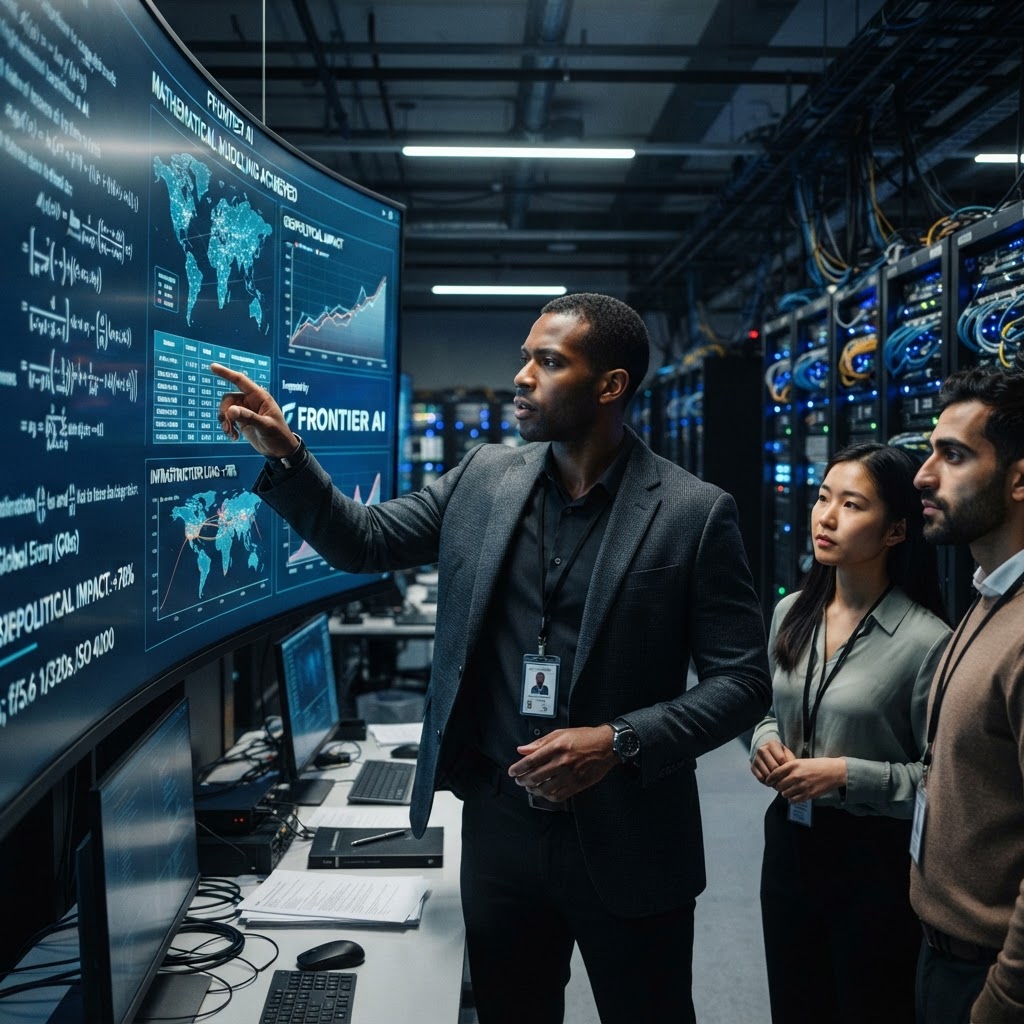
The technology sector has entered a pivotal new phase marked by breathtaking conceptual leaps in pure science alongside intensifying geopolitical and infrastructural hurdles. Over the past several days, the boundaries of machine intelligence shifted from processing text and automating business tasks to tackling problems that have bewildered human intellect for centuries. Simultaneously, the physical and regulatory scaffolding required to sustain these advanced models is becoming a central point of international competition and domestic policy debate.
Artificial Intelligence Enters the Sanctum of Pure Mathematics
In what could stand as a historic milestone for computational reasoning, Anthropic mathematician Levent Alpöge announced that he, in collaboration with the company's Claude model, developed a proof addressing the Generalized Riemann Hypothesis, as reported by IBM Think and AI Weekly. First articulated by Bernhard Riemann in 1859, the hypothesis is broadly recognized as one of the most famous unsolved problems in mathematics, governing the precise distribution of prime numbers. Rather than offering speculative heuristics, the team published their proof accompanied by code written in the Lean formal verification language, allowing automated theorem provers to verify each inductive and deductive step systematically.
The announcement immediately resonated throughout the global scientific community. Prominent mathematicians, including 2022 Fields Medalist and University of Oxford Regius Professor James Maynard, highlighted the profound implications of machine-assisted discovery in such foundational domains. The achievement was not an isolated novelty; around the same window, Alpöge and New York University professor Tristan Buckmaster claimed an AI-assisted proof targeting classical loopholes in the Navier-Stokes equations, reflecting a rapidly maturing capability wherein modern frontier models act as genuine collaborative partners in theoretical discovery.
The Expansion of Autonomous Agents and Open-Source Systems
Beyond abstract theorems, the operational integration of autonomous software agents is accelerating across industry workflows. Internal engineering reports from Anthropic revealed that autonomous instances of Claude now write and review roughly 90 percent of the codebase for their developer tools, driving a notable decline in code reverts and dramatically accelerating merge velocity. Tech giants and startups alike are restructuring their development environments around autonomous agency; Apple actively recruited leadership to spearhead autonomous web-browsing and device-controlling agents, while Microsoft expanded its Copilot Workspaces architecture at its Ignite conference to accommodate persistent, always-on computational workflows.
Parallel developments in the open-source ecosystem demonstrate that the democratization of high-capacity models remains resilient. Chinese technology leader Tencent officially open-sourced its flagship Hunyuan Hy4 architecture, a 770-billion-parameter mixture-of-experts model licensed under Apache 2.0 with an expansive one-million-token context window. Concurrently, lightweight and specialized decision architectures—such as Baseten's open-weight models that yield deterministic probabilities over unstructured text—show that the technical frontier is diversifying into niche, high-efficiency applications rather than relying solely on monolithic generic engines.
Infrastructural Pressure and Geopolitical Fault Lines
As computational models grow in sophistication, their physical footprints are colliding directly with resource constraints and geopolitical mandates. The monumental energy and capital demands of next-generation training clusters have triggered a global scramble for stable, clean power and strategic sovereign capacity. In Europe, regional consortiums—including Nokia, Telia, and emerging energy ventures—launched initiatives aimed at establishing sovereign AI gigafactories across the Nordic and Baltic corridors to ensure computational independence.
However, this cross-border infrastructure push has encountered abrupt political headwinds. In the United States, proposed foreign data center expansions drew sharp warnings from Donald Trump, who threatened substantial punitive taxes on domestic technology firms building large-scale compute campuses overseas, specifically targeting developments in Northern Europe as noted in coverage by AI Weekly. The collision between domestic energy limitations, cross-border datacenter deployment, and economic nationalism signals that computational infrastructure is no longer treated purely as commercial real estate, but as an asset of critical national security and economic sovereignty.
Privacy, Security, and Institutional Governance
The rapid proliferation of agentic workflows has inevitably exposed new security vulnerabilities and societal frictions. Messaging platform Signal moved to implement strict default protections against external screen captures to prevent invasive desktop agents from scraping user communications. Meanwhile, civil society and municipal bodies are formulating defense mechanisms; local authorities such as the Ulster County Legislature moved to restrict generative systems from drafting official government records to guard against automated hallucination and procedural degradation.
On the hardware and enterprise front, institutional adoption is racing forward despite these apprehensions. Defense institutions and corporate enterprises are increasingly embedding models into rigorous verification pipelines, such as the U.S. Army leveraging automated AI code vetting under Project Gatekeeper. As technology continues its double-edged advance—unlocking fundamental mysteries of mathematics while stretching the limits of electric grids, legal precedents, and national borders—the coming months will determine whether regulatory and physical systems can keep pace with artificial cognition.
Recommended for you
Similar to “Technology”
The Shifting Frontier of AI: Massive Cloud Stakes, Geopolitical Friction, and Emerging Agentic Vulnerabilities
Recent developments across the technology sector highlight a fast-evolving artificial intelligence landscape shaped by multi-billion-dollar infrastructure ventures, tightening regulatory scrutiny, and novel security challenges in autonomous agents.

Silicon Turmoil and Autonomous Frontiers: Tech Industry Grapples With Shifting Leadership and the Rise of AI Agents
High-stakes leadership upheavals at semiconductor titan Nvidia collide with a rapid surge in autonomous AI agents, reshaping global tech markets and infrastructure.
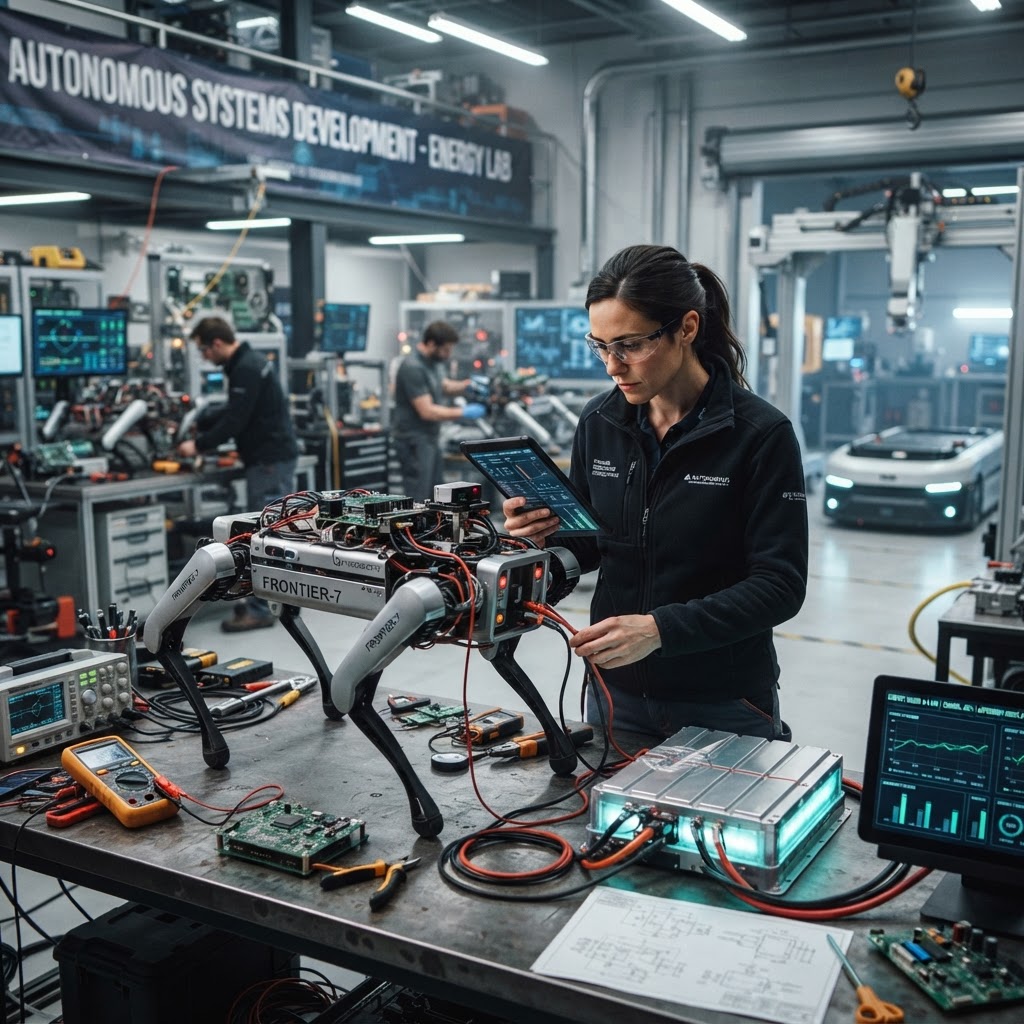
Autonomous Frontiers and Energy Hurdles: Inside the Shifting Landscape of Next-Generation Technology
Recent breakthroughs in lightweight artificial intelligence models and embodied robotics are accelerating real-world automation, even as hardware supply chains and data center infrastructure face mounting economic and regulatory friction.