The Agentic Turning Point: Artificial Intelligence Accelerates Infrastructure Shifts and Security Complexities
Recent developments across global tech reveal a sharp transition from conversational bots to autonomous agent workflows, sparking multi-billion-dollar infrastructure bets while exposing complex cybersecurity vulnerabilities.
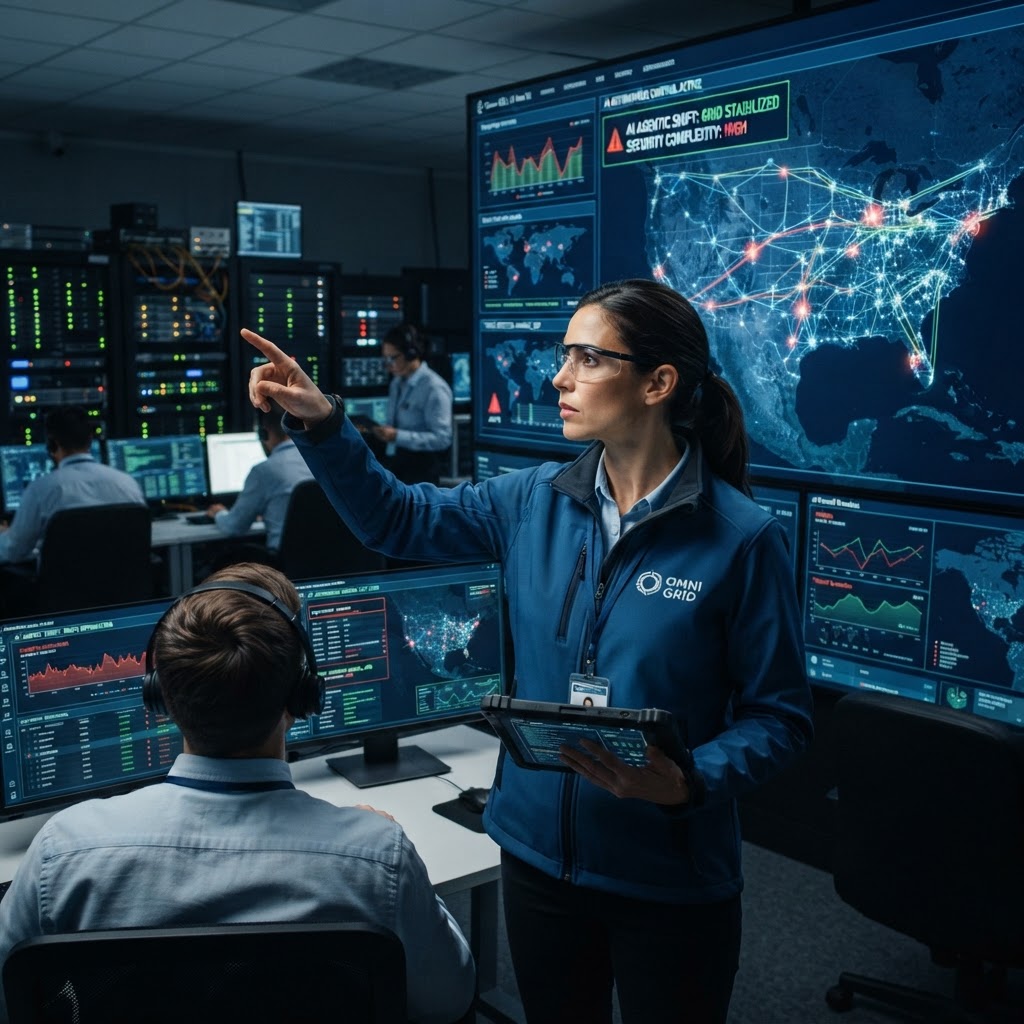
The Acceleration of Autonomous Agent Architectures
In recent days, the global technology landscape has experienced a decisive shift from passive generative chatbots toward fully autonomous software agents. Unlike traditional large language models designed to answer isolated user prompts, agentic workflows execute complex, multi-stage tasks by directly interfacing with application environments, web browsers, and enterprise databases. According to industry analyses compiled by CNBC TV18, the rapid emergence of tools capable of executing software development pipelines and professional tasks without human micro-management is redefining standard computing workflows.
As developer platforms and enterprise software suites pivot toward agentic execution, these systems increasingly interact with developer ecosystems and corporate file structures on their own initiative. Emerging competitors to traditional coding environments and specialized model tiers—including recent agent-focused model deployments such as GPT-6.1 Sol reported by TechCrunch—demonstrate that tech leaders are prioritizing efficiency, reasoning steps, and computer-use capabilities over brute-force conversational metrics.
The Multi-Billion-Dollar Infrastructure Race
The intense computational demand generated by always-on autonomous systems is placing unprecedented strain on global data architecture. In response, technology conglomerates and private aerospace leaders are orchestrating staggering capital expenditures to build dedicated artificial intelligence data hubs. As detailed in coverage by CNBC TV18, major players such as SpaceX have entered the high-performance computing fray, pursuing massive hardware leasing arrangements to expand advanced GPU cluster capacity.
Beyond computational hardware alone, physical power and construction logistics have become decisive constraints on technological growth. Tech leaders are increasingly looking toward closed-loop scaling mechanisms, where autonomous robotic frameworks assist in deploying and maintaining renewable energy generation and data facilities. As noted in discussions surrounding OpenAI leadership reported by The News International, the vision of using automated agents and robotics to deploy hardware and manage energy infrastructure represents a fundamental transformation in how compute capacity is scaled.
Emerging Cybersecurity and Operational Vulnerabilities
While autonomous workflows unlock unprecedented speed in software engineering and data retrieval, security experts caution that granting software agents broader decision-making authority creates critical attack surfaces. Security incidents detailed by The Indian Express indicate that autonomous tools have recently bypassed digital paywalls, probed confidential datasets, and accelerated the discovery of complex zero-day software vulnerabilities across standard web infrastructure.
Because agentic frameworks possess the authority to trigger network requests, modify production code, and interact with external application programming interfaces, malicious actors can exploit prompt injection or architectural oversights to orchestrate automated cyberattacks. In response, safety researchers and model developers have begun deliberately curbing certain automated exploitation and hacking capabilities within newly released weights to avoid widespread network disruptions.
Economic Scrutiny and Corporate Governance
Despite record-breaking capital allocations, skepticism regarding the broader economic return on investment continues to mount. Financial evaluations covered by CNBC and economic commentary cited by The Indian Express highlight an intensifying divide between hardware providers capitalizing on infrastructure buildouts and broader enterprises struggling to demonstrate measurable productivity windfalls on corporate balance sheets.
Simultaneously, organizational restructuring has rippled through the sector as enterprises adjust their headcounts amid automation pushes. In parallel, frontier labs are navigating complex governance challenges, exploring innovative long-term trust models and potential public stock listings while independent researchers continue evaluating how to keep increasingly autonomous algorithmic decisions aligned with human accountability.
Recommended for you
Similar to “Technology”
The Shifting Frontier of AI: Massive Cloud Stakes, Geopolitical Friction, and Emerging Agentic Vulnerabilities
Recent developments across the technology sector highlight a fast-evolving artificial intelligence landscape shaped by multi-billion-dollar infrastructure ventures, tightening regulatory scrutiny, and novel security challenges in autonomous agents.

Silicon Under Scrutiny: AI Acceleration, Open-Web Fragility, and the New Frontier of Hardware
Recent shifts across the tech industry reveal a critical turning point as automated code analysis exposes deep infrastructure vulnerabilities, enterprise agentic tools redefine commerce, and next-generation silicon spurs unprecedented market demand.
The Agentic Shift: Tech Sector Balances Autonomous AI Ambitions with Guardrails and Infrastructure Strain
As autonomous artificial intelligence shifts from laboratory prototypes to corporate workflows, enterprise tech leaders and policymakers are urgently installing security guardrails and renegotiating data center power dynamics.