Mapping the Future of Medicine and Matter: From Atomic Magnetism to Cellular Atlases
Recent scientific breakthroughs across biomedical genetics and condensed matter physics are transforming clinical diagnostics and offering sustainable pathways for energy-intensive artificial intelligence.
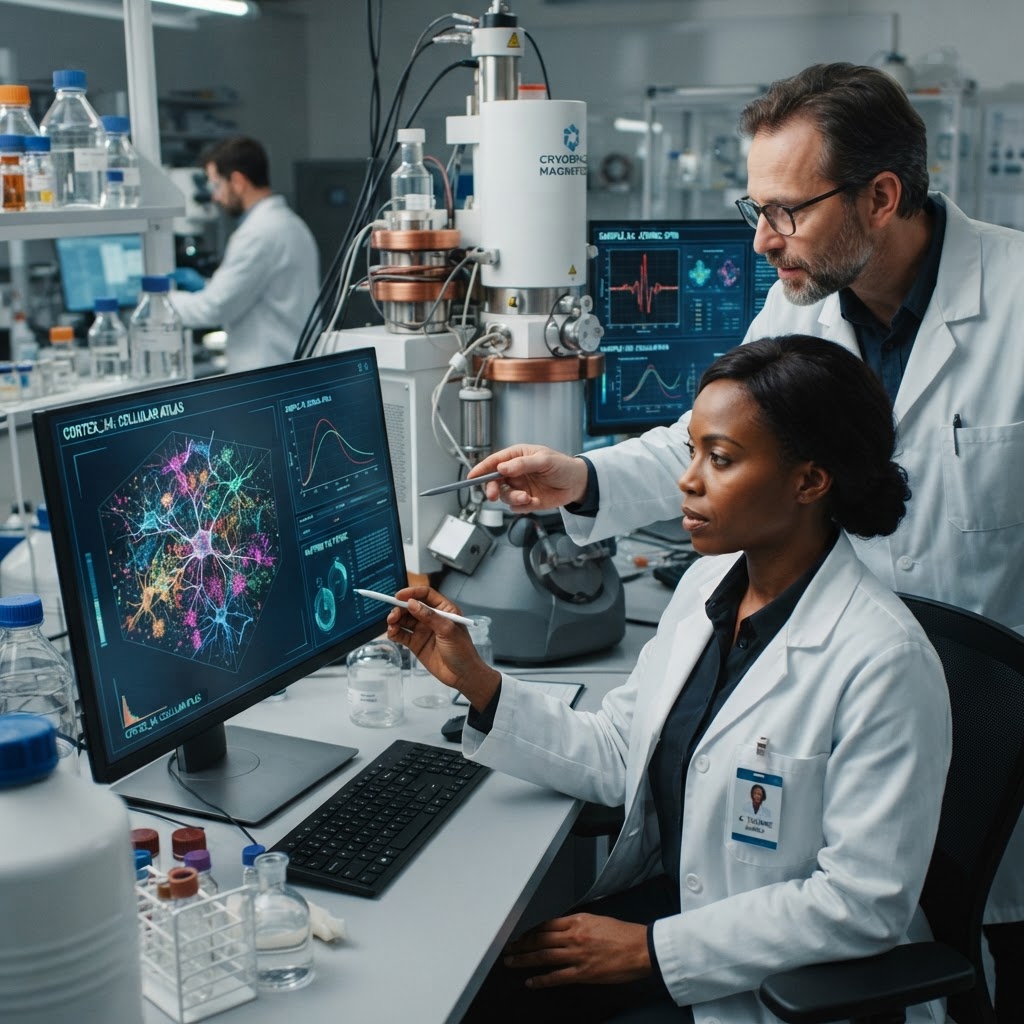
Unlocking the Submicroscopic Secrets of Magnetism
In an era where artificial intelligence systems consume unprecedented amounts of electrical power, hardware engineers are racing against physical limits to design computing architectures that run cooler and faster. A pivotal breakthrough has emerged from materials science at Brown University, as reported by ScienceDaily. Physicists have successfully overcome the long-standing 'dead layer' dilemma that historically incapacitated multiferroic thin films when pared down to microscopic scales.
Multiferroics like bismuth ferrite possess coupled electrical and magnetic characteristics that hold great promise for non-volatile, energy-efficient memory devices. Previously, shrinking these materials to single-nanometer dimensions triggered structural decay that wiped out these functional traits. The researchers engineered ultra-thin films just angstroms thick that not only preserved multiferroic coupling but also unlocked an exotic property known as altermagnetism. This unusual phase bridges key benefits of ferromagnetism and antiferromagnetism, offering macroscopic signals with zero net external stray field. Such atomic-scale engineering creates concrete foundations for ultra-low-power computing, directly curbing the surging energy demands of deep neural networks.
Rewriting Genetic and Cellular Roadmaps
Parallel leaps in high-resolution biology are revealing structural patterns within human disease that were previously masked by biological complexity. As highlighted by Nature, an international consortium has unveiled a massive cellular atlas of the basal ganglia, cataloging nearly 26 million individual brain cells across species. Because this deep subcortical region governs voluntary motor movement, habit formation, and reward pathways, the cross-species database provides a foundational reference for dissecting conditions from Parkinson’s disease to clinical addiction.
Simultaneously, genomic epidemiology has achieved its largest-scale survey into chronic pain. According to The New York Times, an analysis aggregating genomic and health records from more than 1.2 million participants across multiple international biobanks has illuminated biological mechanisms operating within the central nervous system. Rather than viewing long-term pain solely as peripheral nerve inflammation, the findings outline a genetic architecture rooted in specific neural pathways, providing viable molecular targets to supersede traditional opioid therapeutics.
Targeting Cancer Before It Spreads
Precision oncology is experiencing a parallel transformation driven by structural biology and early-intervention diagnostics. Clinical researchers at The University of Texas MD Anderson Cancer Center, covered by EurekAlert!, have reported promising Phase 1b trial results for firmonertinib in non-small cell lung cancer carrying rare EGFR PACC mutations. Guided by structural modeling rather than broad mutation groupings, patients achieved extended progression-free survival, demonstrating the necessity of tailoring molecular therapies to protein geometry.
At the same time, oncology teams have developed spatial cellular maps detailing the microenvironments of ductal carcinoma in situ (DCIS), the most common preinvasive stage of breast cancer. By examining subtle immunological and structural shifts surrounding non-invasive lesions, pathologists hope to identify which patients require aggressive clinical care and spare lower-risk individuals from unnecessary interventions. Complemented by the discovery of alternate pathways governing the production of oncogenic proteins like KRAS, cancer biology is shifting from reactive post-metastatic intervention to structural and developmental containment.
Convergence Across the Scientific Frontier
These concurrent milestones—spanning quantum behavior in thin-film semiconductors to cellular resolution in human organs—demonstrate a unified paradigm shift across modern science. Whether tuning magnetic spin states at the angstrom scale or mapping millions of neurons across deep brain circuits, researchers are moving past bulk approximations. By isolating fundamental interactions at their most elementary levels, today's laboratories are constructing technologies and therapies that are both ecologically sustainable and biologically precise.
Recommended for you
Similar to “Scientific Discoveries”
Frontiers of Discovery: How Recent Breakthroughs in Cellular Mapping, Synthetic Biology, and Materials Science Are Reshaping Modern Science
Recent advances across molecular biology, condensed-matter physics, and biomedical engineering are unlocking long-standing puzzles about how cells communicate, how aging operates, and how adaptive materials can heal themselves.
Frontiers of Precision: New Breakthroughs in Gene Editing, Materials, and Cellular Mapping Transform Science
Recent scientific advances highlight unprecedented precision across disciplines, from in vivo CRISPR therapies and massive brain cell atlases to energy-efficient magnetic nanomaterials.
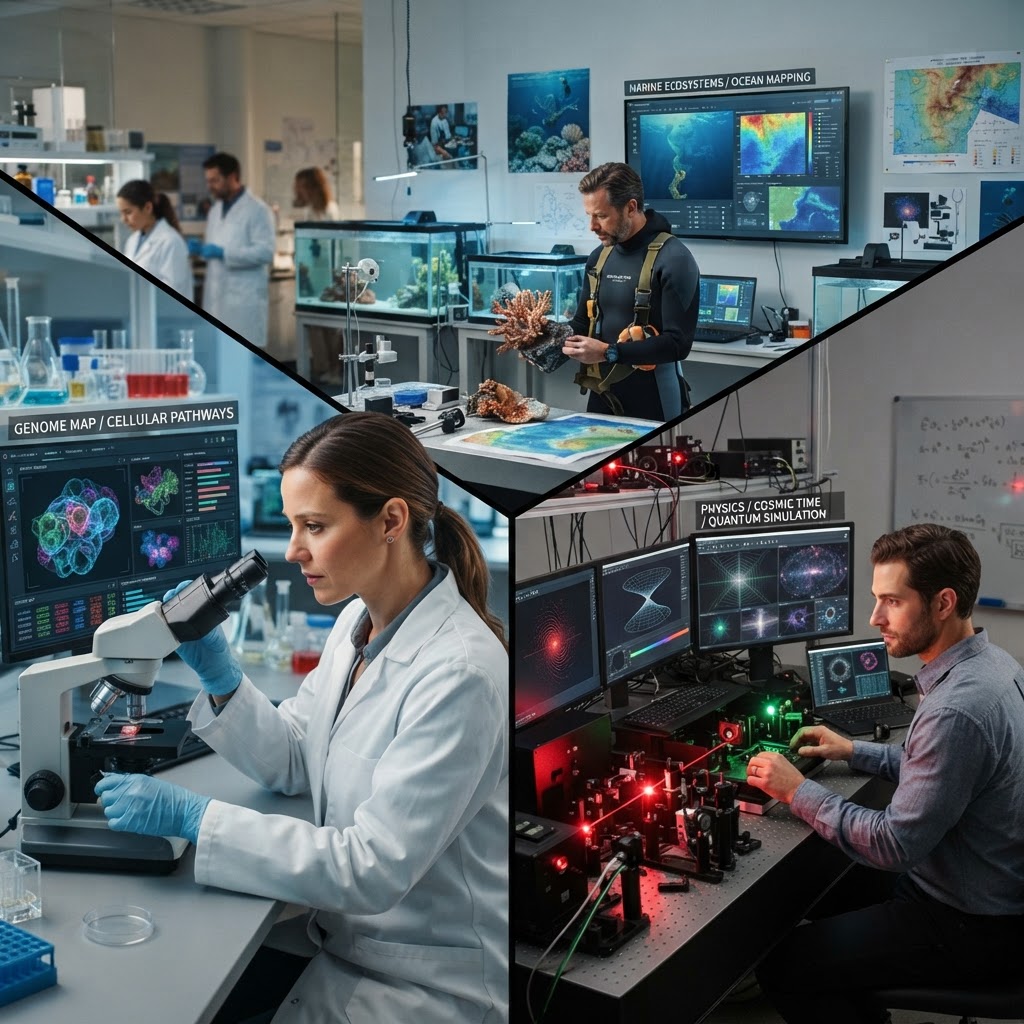
Mapping Life and Time: Recent Breakthroughs Reshape Cellular Biology, Marine Ecology, and Physics
From the complete cell-by-cell tracing of mammalian embryos to nuclear clocks that redefine precision timekeeping, recent scientific discoveries are transforming our understanding of living systems and fundamental physical laws.