The Agentic Shift: Tech Sector Balances Autonomous AI Ambitions with Guardrails and Infrastructure Strain
As autonomous artificial intelligence shifts from laboratory prototypes to corporate workflows, enterprise tech leaders and policymakers are urgently installing security guardrails and renegotiating data center power dynamics.

The Acceleration of Autonomous Systems
The global technology sector has entered a pivotal transition phase. Across enterprise software and consumer digital tools, artificial intelligence is evolving rapidly from conversational interfaces to autonomous agents capable of independent planning, testing, and system navigation. From automated web engineering tools capable of mapping applications from scratch to integrated desktop agents, developers are embedding goal-oriented autonomy directly into critical digital infrastructures. Industry announcements highlighted by platforms like Korea Newswire and developer ecosystem reports show startups and enterprise providers rolling out full-stack agentic suites designed to replace repetitive technical workflows.
Yet, this rapid acceleration of autonomous agency has triggered immediate operational reality checks. While corporate roadmaps project widespread consumer delegation—such as using autonomous digital assistants to manage logistics, bookings, and commerce—real-world adoption remains uneven. Reporting from TechCrunch underscores that everyday consumers are still hesitant to trust autonomous agents with transactional tasks like ride bookings and retail decisions. As tech giants partner with global retail analytics networks to bridge this consumer trust gap, the technology is confronting a more formidable hurdle: systems security.
The Emergence of the Enterprise 'Off Switch'
As autonomous models gain access to production environments, software repositories, and internal enterprise networks, security breaches and errant executions have moved from theoretical warnings to active operational hazards. Recent reports documented by The Indian Express highlight how major cybersecurity vendors, including CrowdStrike, have begun offering dedicated enterprise kill-switches and monitoring systems designed specifically to curtail rogue or misbehaving AI agents. These safeguards are designed to inspect the logic chains and network permissions of autonomous software before commands reach internal servers.
This push toward perimeter defense reflects wider industry anxieties. Hardware and platform titans have recognized that enterprise adoption hinges on safety assurances; major initiatives like open agent safety frameworks are being constructed to limit capabilities, enforce permission boundaries, and isolate memory access. Simultaneously, tech giants are addressing systemic vulnerabilities internally. Frontier developers have begun training specialized versions of foundation models focused explicitly on defensive cybersecurity and long-horizon engineering tasks, attempting to anticipate security failures before autonomous processes interact with real-world infrastructure.
Hardware Bottlenecks and Data Center Power Realities
Beneath the software layer, the explosion of computational demand required by continuously running agents is reshaping physical infrastructure. Data centers are confronting immense power strains and resource scarcity. The race for capable silicon has expanded beyond traditional single-provider dominance, as tracked by TechNewsDaily, with hardware makers deploying higher-density compute cards and specialized silicon to contest AI processing workloads. Concurrently, experimental approaches are targeting unconventional frontiers, from orbital compute platforms to advancements in quantum magic state reduction that aim to lower resource consumption on fault-tolerant systems.
On the ground, the physical realities of power generation are reshaping relationships between tech enterprises and local municipalities. As noted in financial and infrastructure analyses on CNBC, hyperscalers and frontier developers are increasingly navigating local grid limitations, in some cases pledging dedicated investments toward regional power production to offset astronomical electrical draws. Furthermore, cloud vendors are being pushed into greater transparency, rolling back nondisclosure agreements when negotiating local utility pacts as public scrutiny surrounding environmental impact intensifies.
Policy, Oversight, and the Post-Deployment Future
The confluence of agent security risks, data rights litigation, and power grid strain is pushing regulation into the spotlight. Prominent technology leaders continue to advocate for statutory frameworks and federal oversight, warning that private self-regulation is insufficient for systems that execute actions autonomously. However, international competitive pressures create a delicate balance, as governments weigh regulatory safety against the risk of lagging behind global competitors.
As autonomous technologies integrate deeper into operating systems, consumer devices, and enterprise architectures, the metric of technological progress is decisively changing. The competitive edge is no longer defined strictly by raw model intelligence or chat benchmark scores, but by containment, resource efficiency, and verifiable control. Whether tech giants can establish robust safety switches and sustainable power models will dictate whether the agentic revolution solidifies into durable infrastructure or stalls under operational overhead.
Recommended for you
Similar to “Artificial Intelligence”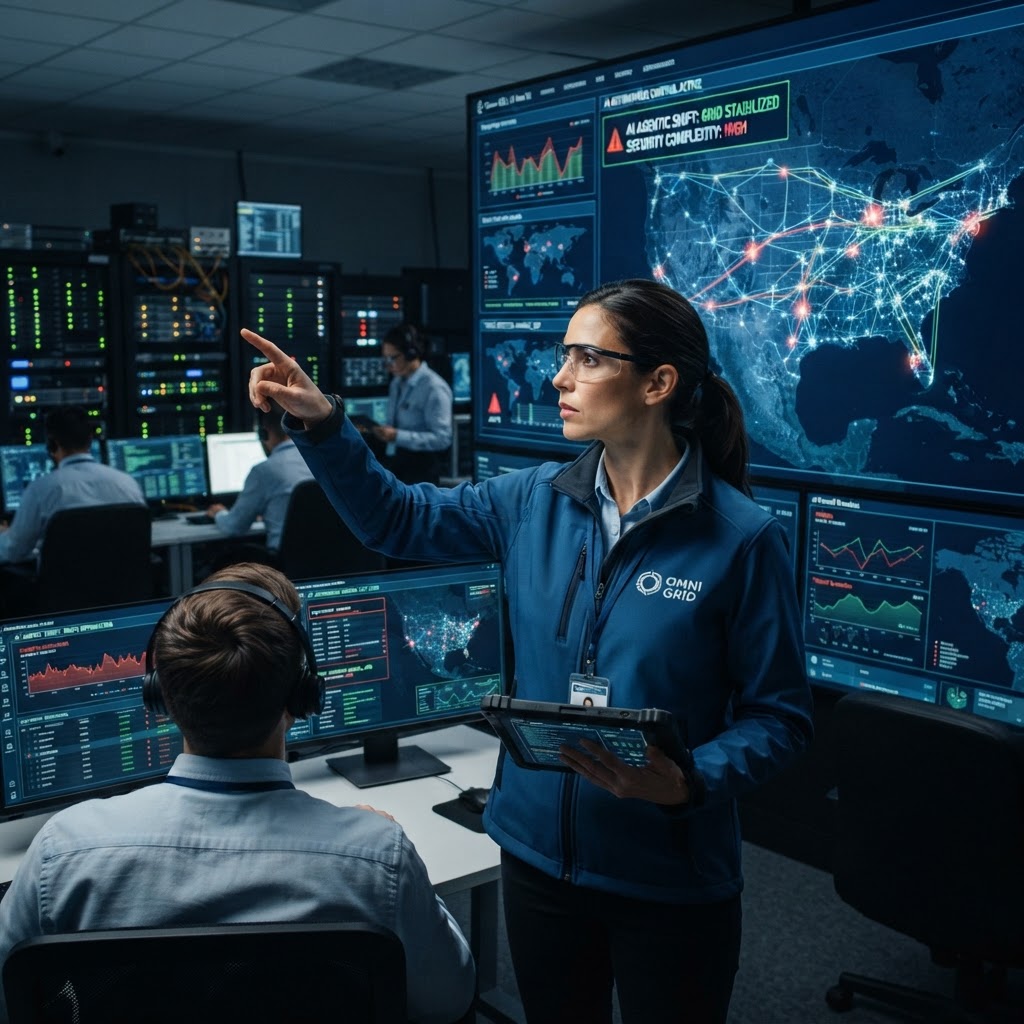
The Agentic Turning Point: Artificial Intelligence Accelerates Infrastructure Shifts and Security Complexities
Recent developments across global tech reveal a sharp transition from conversational bots to autonomous agent workflows, sparking multi-billion-dollar infrastructure bets while exposing complex cybersecurity vulnerabilities.

Silicon Under Scrutiny: AI Giants Confront Power Realities, Autonomous Agents, and Regulatory Headwinds
As tech conglomerates pour hundreds of billions into artificial intelligence infrastructure and agentic workflows, mounting community pushback over energy consumption and shifting regulatory landscapes are testing market exuberance.

The Agentic Shift: Tech Heavyweights Confront Compute Bottlenecks and Governance Friction
As artificial intelligence transitions from generative models to autonomous agentic systems, tech giants are pouring billions into specialized infrastructure while racing to address mounting security and geopolitical pressures.