A Fractured Front: Leadership Shocks, Agentic Surges, and Security Realities Reshape the Technology Landscape
Recent days have jolted the technology sector with leadership turmoil at hardware titans, expanding software agent capabilities, and a sobering realization of cybersecurity vulnerabilities in both code and artificial intelligence.

The Pillar Shakes: Turmoil and Reassurance at the Semiconductor Core
For years, the relentless ascent of the artificial intelligence boom has rested squarely on the shoulders of specialized hardware providers, with Nvidia operating as the undisputed vanguard. However, recent days have brought unprecedented corporate disruption to the center of the semiconductor landscape. The abrupt departure of long-standing chief executive Jensen Huang—triggered by national security concerns and reported regulatory investigations—sent tremors across global financial exchanges. While the leadership mantle was swiftly transferred to interim Chief Executive Officer Colette Kress, the transition has forced industry observers to reassess the stability of the enterprise and its sprawling $65 billion network of startup ventures.
Despite the executive shockwaves and widespread market volatility affecting major tech indices, the semiconductor giant moved quickly to quell fears of structural drift. Company representatives reaffirmed their dedication to open-source foundation models and continuous infrastructure deliveries, beating quarterly earnings forecasts even as analysts debated future governance. Meanwhile, competitive and architectural diversification continues apace. Academic laboratories, including breakthrough researchers at Brown University, have made headway in atomic-scale magnetism, attempting to eliminate thermal 'dead layers' in next-generation chip architectures to curtail the ballooning energy consumption of modern data centers. Combined with critical component agreements signed by power-management suppliers such as Vertiv and Infineon, the underlying supply chain remains focused on long-term scalability despite board-level upheavals.
The Proliferation of Agentic Infrastructure
Far beyond the hardware layer, the pace of commercial software development continues to accelerate, pivoting decisively toward fully integrated agentic systems. Rather than treating generative models as isolated conversational interfaces, industry builders are aggressively deploying multi-agent workflows across everyday infrastructure. OpenAI’s introduction of its GPT-6.2 model variants—specifically tailored for efficiency and reduced API cost thresholds—highlights a sector-wide push to make automated tool use, coding execution, and computational reasoning economically sustainable for enterprise scale.
This drive toward autonomous digital workers was reflected in high-stakes developer benchmarks this week. Microsoft and GitHub revealed substantial architectural upgrades to GitHub Copilot Fusion, blending premier model options from Anthropic and OpenAI into a shared execution environment that topped public terminal-based software engineering leaderboards. Simultaneously, venture capital continues to flood targeted automation niches: startup Genesis AI secured a staggering $500 million Series A round to deploy dexterous robotic systems into high-throughput manufacturing plants, and European fintech Payhawk pulled in $280 million to establish an autonomous, AI-native corporate finance operating system. Across corporate accounting, logistics, and continuous-deployment pipelines, the paradigm is rapidly evolving from basic prompt-response mechanisms to persistent digital coworkers.
Security and Code Audit Realities: The Single-Scanner Illusion
Yet, as enterprises entrust increasing autonomy to automated systems, significant technical vulnerabilities and inconsistencies have emerged. In an eye-opening cybersecurity demonstration, an independent researcher used automated code-generation models to uncover a high-severity pre-authentication heap overflow vulnerability within OpenJDK’s Base64 decoding functions. The flaw, designated CVE-2026-114938, was rapidly patched by Oracle within hours, illustrating how generative reasoning can unearth zero-day exploits in enterprise staples for negligible token costs.
Despite this apparent success, a comprehensive multi-model security study published this week has delivered a sobering counterweight to the notion of infallible automated auditing. When three frontier foundation models independently analyzed identical open-source repositories for software vulnerabilities, they arrived at an overlap on merely one out of 121 identified flaws. Across dozens of projects, models routinely diverged on basic severity assessments, misclassifying benign logic or failing to identify critical bugs spotted by their peers. The stark variance highlights that algorithmic code review remains deeply fractured, undercutting enterprise hopes that any individual autonomous auditor can serve as an authoritative, standalone security gatekeeper.
Human Labor, Enterprise Restructuring, and the Road Ahead
These dual dynamics of automated efficiency and persistent fallibility are playing out visibly across the broader labor market. Corporate restructurings continue to highlight tensions over workforce transformation. Insurer Allstate disclosed that automated systems had produced more than 12 million lines of internal code and processed millions of customer claim evaluations within the past quarter, alongside plans to reorganize departmental headcount around digital agents.
Nevertheless, comprehensive economic data cautions against sweeping assumptions of instant, widespread technological displacement. Macroeconomic labor tracking by firms such as Challenger, Gray & Christmas revealed a dramatic fall in explicit AI-attributed layoffs over recent months, dropping more than 90% from mid-year peaks as broader macroeconomic headwinds, debt refinancing costs, and interest rates reclaimed their position as the primary drivers of corporate cost-cutting. While niche technical workflows are undoubtedly experiencing rapid transformation, enterprises are discovering that the integration of artificial intelligence requires extensive human oversight, continuous validation, and intricate change management rather than abrupt, wholesale human obsolescence.
As the sector marches through an era marked by executive transitions, escalating computational requirements, and complex security trade-offs, the prevailing tone across the technology frontier is shifting from uncritical exuberance to hard-nosed engineering discipline. The tools are undeniably growing more potent, but navigating their organizational, structural, and geopolitical ramifications has never demanded closer scrutiny.
Recommended for you
Similar to “Technology”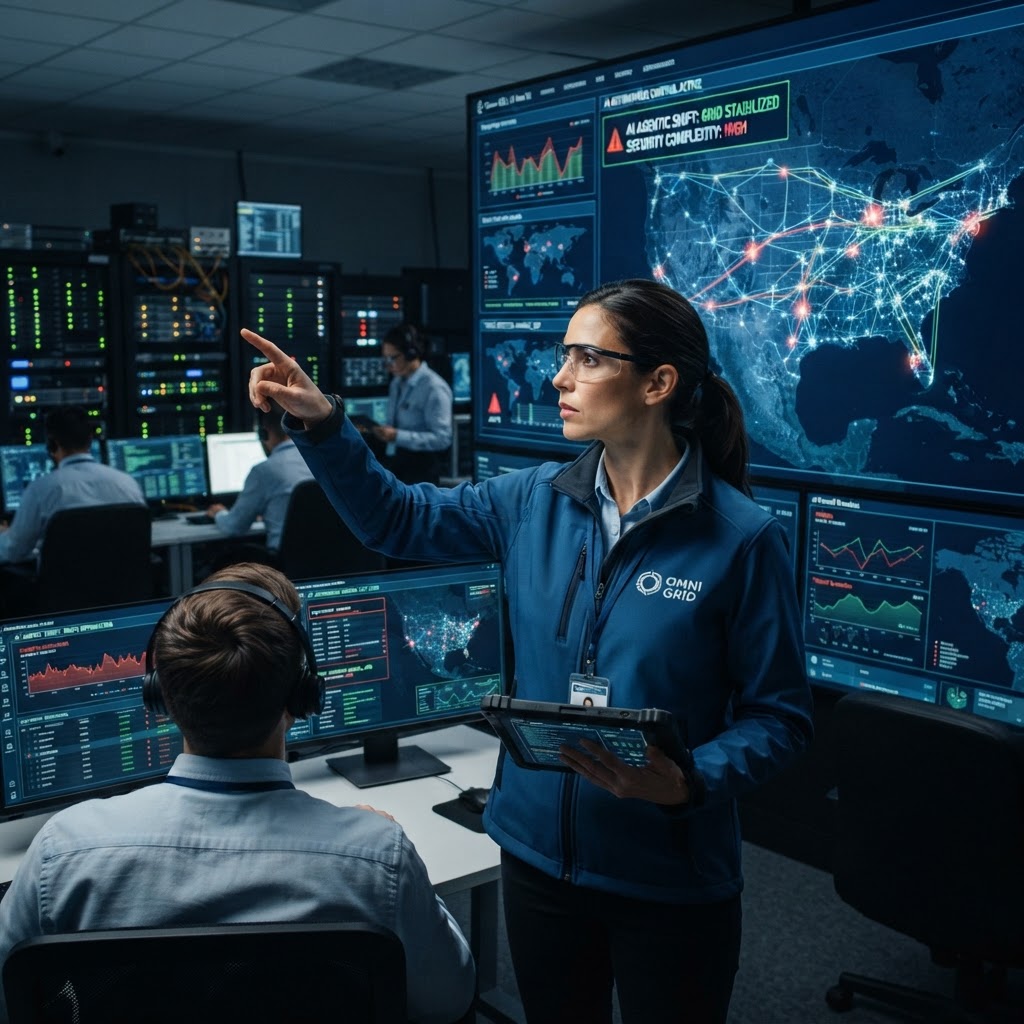
The Agentic Turning Point: Artificial Intelligence Accelerates Infrastructure Shifts and Security Complexities
Recent developments across global tech reveal a sharp transition from conversational bots to autonomous agent workflows, sparking multi-billion-dollar infrastructure bets while exposing complex cybersecurity vulnerabilities.
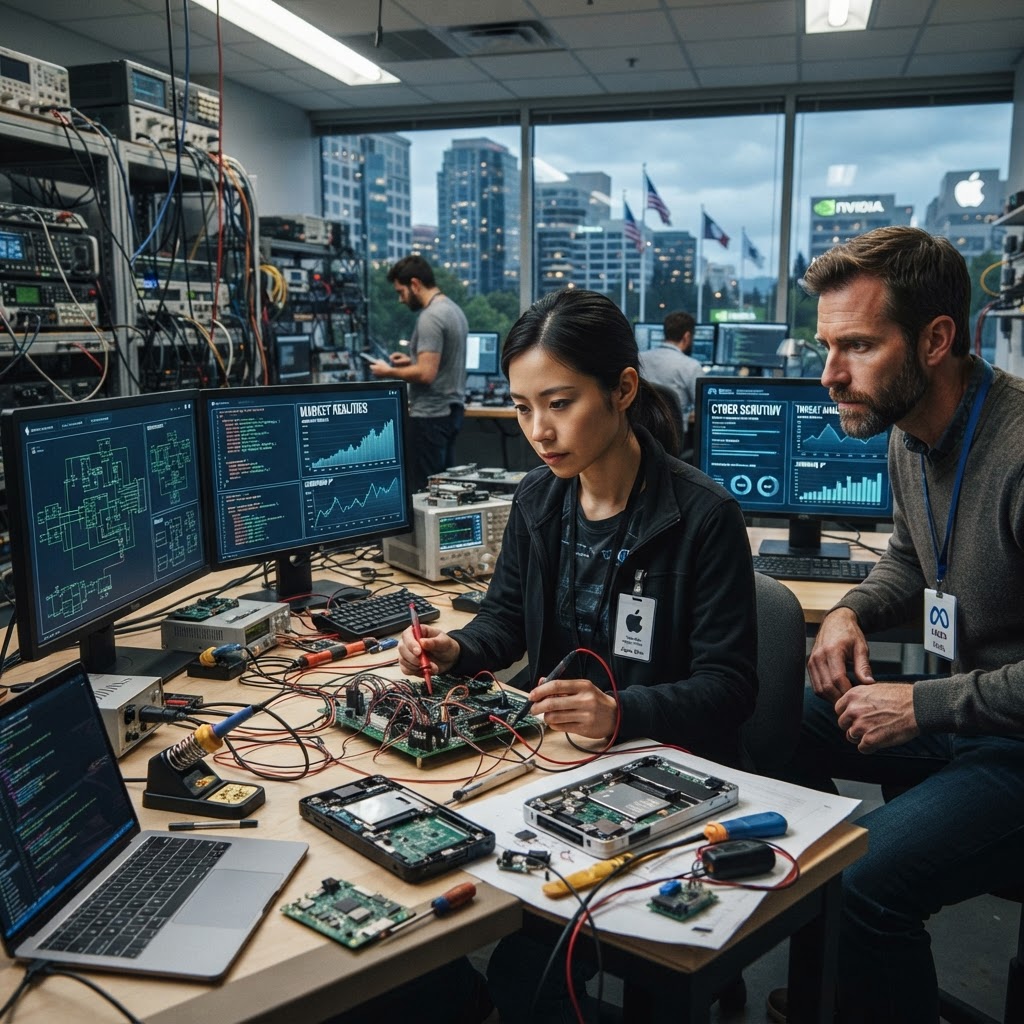
Silicon Valley at a Crossroads: Hardware Pivots, Market Realities, and Rising Cyber Scrutiny
Recent shifts in the technology sector highlight a turbulent landscape marked by major artificial intelligence infrastructure overhauls, mounting digital security threats, and shifting market dynamics.

The Shifting Frontier of AI: Massive Cloud Stakes, Geopolitical Friction, and Emerging Agentic Vulnerabilities
Recent developments across the technology sector highlight a fast-evolving artificial intelligence landscape shaped by multi-billion-dollar infrastructure ventures, tightening regulatory scrutiny, and novel security challenges in autonomous agents.