A World in Recalibration: Midterm Shocks, Climate Fractures, and the Perils of Tech Capital
Recent commentary across global opinion pages reveals an international order in deep transition, as U.S. midterm reverberations, new climate diplomacy fractures, and the financial toll of the artificial intelligence boom redefine global stability.
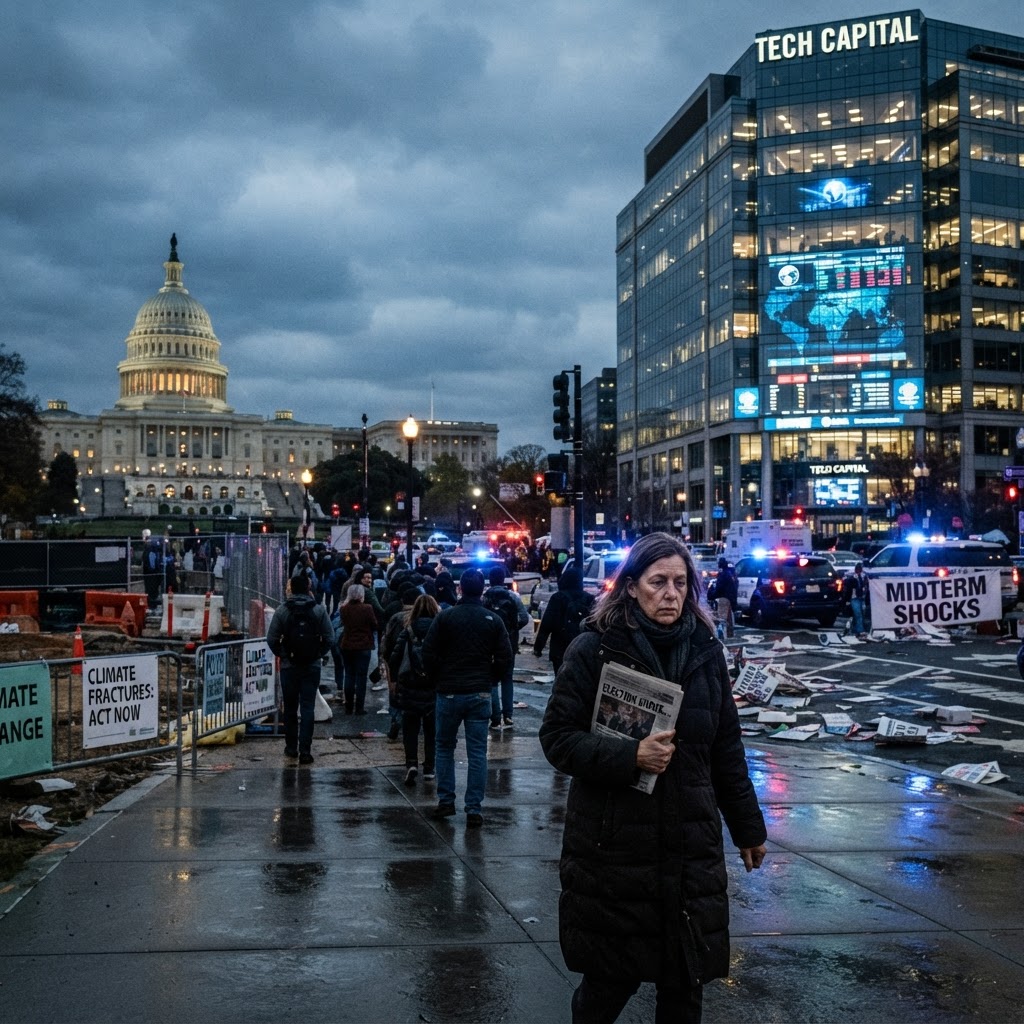
The Shifting Tectonic Plates of Global Politics
In recent days, the world’s leading editorial boards and opinion desks have converged around a shared diagnosis: the existing architectures governing international alliances, economic resilience, and domestic policy are bending under unprecedented strain. The outcomes of the U.S. midterm elections have sent shockwaves across political and foreign policy spheres, setting off rigorous debates on the future posture of American global engagement. According to recent public sentiment and analysis highlighted by polling and think tanks, including findings documented by Ipsos, the shifting balance of power in Washington has left domestic constituencies polarized while simultaneously forcing international allies to contemplate the reality of a constrained, increasingly transactional American executive.
As international observers and columnists at platforms like Project Syndicate argue, Washington's political recalibration has immediate consequences abroad. For decades, global governance relied upon predictable commitments from the United States. Today, foreign policy experts warn that domestic pushback and legislative friction threaten to weaken traditional multilateral umbrellas. From European capitals attempting to forge closer strategic autonomy and alternative security pacts to Asian partners hedging their regional bets, the midterms have underscored that foreign leaders must plan for structural discontinuity rather than continuous alignment.
Climate Diplomacy in a Fragmented Multilateral Landscape
Nowhere is this geopolitical fissure more pronounced than in international climate policy. Recent commentaries published in The Japan Times and regional diplomatic forums focus heavily on the impending COP31 climate summit, framing it as a critical test of a world navigating diminished American engagement. With U.S. institutional commitment wavering and delegation postures in flux, emerging coalitions are scrambling to fill the resulting leadership void. Observers point out that developing nations, particularly vulnerable Pacific and African states, find themselves caught in the crosshairs of grand geopolitical theater, forced to demand both climate finance and adaptation assurances from increasingly fractured regional powers.
Meanwhile, voices from Beijing to Ankara are positioning themselves to capitalize on this retreat. Chinese state editorials via China Daily emphasize continuity in global environmental stewardship, while Middle Eastern analyses from Arab News emphasize how hosting duties and energy transition negotiations serve as leverage points for mid-tier powers striving for diplomatic clout. Yet, beneath the political maneuvering lies an unresolved paradox: without integrated regulatory frameworks and binding consensus among the highest-emitting nations, the transition to green infrastructure risks stalling at the precise moment acceleration is most urgently required.
The Artificial Intelligence Investment Trap and Economic Vulnerabilities
Beyond traditional diplomatic standoffs, analysts are turning their critical lenses toward an escalating economic confrontation fueled by technological ambition. A growing body of economic opinion warns of the profound unintended consequences associated with the corporate artificial intelligence race. As massive technology hyperscalers pour billions of dollars into high-capacity compute infrastructure and sprawling data hubs, they are increasingly relying on long-term debt markets to fuel these colossal capital expenditures. This insatiable appetite for liquidity is beginning to crowd out vital public and sovereign financing.
Economists sound alarms that developing nations—already burdened by high interest rates, inflationary strains, and sovereign debt distress—are now forced into direct competition with trillion-dollar corporate giants for limited pools of global capital. What Silicon Valley celebrates as an unprecedented wave of digital transformation is, in the eyes of developmental economists, acting as a sovereign drain. The vast resources directed toward speculative machine-learning ventures risk diverting capital away from foundational human infrastructure, public health, and climate adaptation in regions where fiscal headroom is already exhausted.
Regional Realignment and the Quest for New Alliances
Confronted by these systemic uncertainties, regional powers are forging bespoke alliances rather than waiting on stagnant global bodies. Middle Eastern commentators, alongside researchers writing for Geopolitical Monitor, note the quiet emergence of non-traditional security architectures and deterrence pacts spanning the Gulf, South Asia, and the Mediterranean. These arrangements signal a decisive departure from absolute dependence on legacy Western guarantees toward a pragmatic diversification of strategic, economic, and defensive options.
Whether observed through Europe’s hasty attempts to shore up northern and Arctic security mechanisms, the recalibration of commercial real estate markets adjusting to high interest rates, or the uneasy balance between emerging Asian trade corridors, the overarching consensus of contemporary commentary is unmistakable. The post-Cold War presumption of a unipolar or predictable institutional equilibrium has dissolved. In its wake stands a fragmented landscape where states, corporate actors, and global institutions are locked in a high-stakes struggle to insulate themselves against volatility while forging an order whose final contours remain decisively unwritten.
Recommended for you
Similar to “Global Affairs”
The Global Rethink: How Geopolitical Fractures and Artificial Intelligence Are Reshaping Opinion Columns
Recent commentary across leading global publications reflects a world reassessing core assumptions, from shifting balance-of-power dynamics in Europe and Asia to the compounding anxieties surrounding artificial intelligence and democratic resilience.

A Fractured Consensus: How Opinion Pages Worldwide Are Reckoning with a Shifting Global Order
Recent commentary across leading global publications reflects mounting anxiety over macroeconomic instability, shifting geopolitical alliances, and the disruptive emergence of artificial intelligence.

A Fractured Equilibrium: How Emerging Hotspots and Frontier Tech Are Reshaping the Global Op-Ed Arena
Recent international commentary reveals deep anxieties over escalating Middle East tensions, high energy prices, and the urgent necessity for stringent frontier artificial intelligence governance.