A Fractured Global Order: Shenzhen Diplomacy Meets Escalating Confrontations in the Gulf and Eastern Europe
As major world leaders convened in Shenzhen for rare tripartite discussions, escalating conflict across the Persian Gulf, high-intensity drone warfare in Eastern Europe, and fragile ceasefires in the Levant exposed the widening fault lines of modern global security.

A High-Stakes Summit Under a Darkening Horizon
The convergence of global crises reached a critical diplomatic juncture this week as world leaders assembled in the southern Chinese metropolis of Shenzhen for the Asia-Pacific Economic Cooperation summit. Anchoring the event was a rare and highly anticipated trilateral encounter involving U.S. President Donald Trump, Chinese President Xi Jinping, and Russian President Vladimir Putin at Kylin Villa. Against a backdrop of economic posturing—with Beijing championing multilateral commerce and artificial intelligence cooperation, and Moscow insisting its economy remains resilient despite international restrictions—the diplomatic agenda was overshadowed by intense, concurrent security emergencies spanning the Middle East, Eastern Europe, and maritime Asia.
While official communiqués emphasized dialogue and systemic stability, diplomatic observers noted that concrete breakthroughs remained elusive. The meeting unfolded against severe international stress testing: persistent hostilities affecting energy transit corridors, an evolving attrition war between Russia and Ukraine, and escalating friction points that threaten to dismantle existing regional security arrangements.
The Persian Gulf Crucible and Energy Chokepoints
Foremost among the crises confronting international diplomacy is the deteriorating situation in the Persian Gulf. Tensions have intensified following the arrival of a third United States aircraft carrier strike group in the region, aimed at enforcing maritime transit security. In response, Iran's Islamic Revolutionary Guard Corps issued stern warnings against utilizing southern navigation channels through the Strait of Hormuz, characterizing the vital waterway as impassable and actively perilous for commercial fleets.
Regional violence has quickly expanded outward from the immediate strait. Reports of cross-border aerial strikes targeting logistics hubs in neighboring Gulf states, paired with direct U.S. operations against military assets on Qeshm Island, underline how rapidly maritime blockades can evolve into broader regional skirmishes. Compounding the maritime disruption, Yemen's southern coast experienced another tactical shift as government units withdrew toward Aden from positions near the Bab el-Mandeb Strait, consolidating Houthi control over critical passages connecting the Red Sea to global trade lanes. For energy markets and global supply chains, the simultaneous strain on both Hormuz and the Red Sea has driven transport insurance rates upward and raised alarms over sustained commercial disruption.
Technological Escalation and Long-Range Attrition in Ukraine
Simultaneously, the theater of war in Eastern Europe is witnessing an extraordinary acceleration in unmanned aerial warfare. Russian military authorities claimed the interception of well over 1,300 Ukrainian drones in a single massive wave of long-range strikes, reflecting the sheer industrial scale and technical evolution of Ukraine's offensive against energy facilities, refineries, and logistical networks. Kyiv's strategy increasingly focuses on neutralizing refining capacity and supply depots deep behind the front lines, demonstrating an ability to saturate defensive perimeters.
To bolster Kyiv's precarious economic footing, the European Commission unveiled a proposed €45 billion loan mechanism aimed at closing Ukraine's looming budget shortfalls for the coming fiscal cycle. Under the proposed structure, debt obligations would leverage yields generated from immobilized Russian assets, intending to defer final repayment until future war reparations are settled. Nonetheless, unanimity across European capitals remains complicated by domestic fiscal pressures and varying appetite for long-term financial commitments, illustrating the strain placed on Western institutions as the war enters an extended phase of structural attrition.
Fragile Truces and Power Projection in Asia and the Horn
Beyond these primary conflicts, secondary flashpoints are rapidly eroding existing security compacts. In Gaza, the fragile ceasefire signed in late 2025 faced severe strain as armored units crossed demarcation lines in central sectors to engage underground infrastructure, displacing civilians anew and drawing sharp condemnations from mediation monitors. The continuing friction demonstrates how fragile localized ceasefires become in the absence of durable political settlements, comprehensive demilitarization, and reconstruction frameworks.
Concurrently, major powers continue to project strategic strength into peripheral arenas. Moscow recently executed long-range patrols involving Tu-95 strategic bombers landing in central Vietnam, an unmistakable signal of lingering expeditionary reach in Southeast Asia even amid high-tempo operations on its western border. In East Africa, mounting military concentrations along the border between Ethiopia and Eritrea have alarmed the international community, where simmering territorial disputes and sea-access rivalries threaten to unravel years of precarious stabilization. Together, these simultaneous crises present the international system with an increasingly fragmented reality, where bilateral summits struggle to match the velocity of real-world military and economic fragmentation.
Recommended for you
Similar to “World Affairs”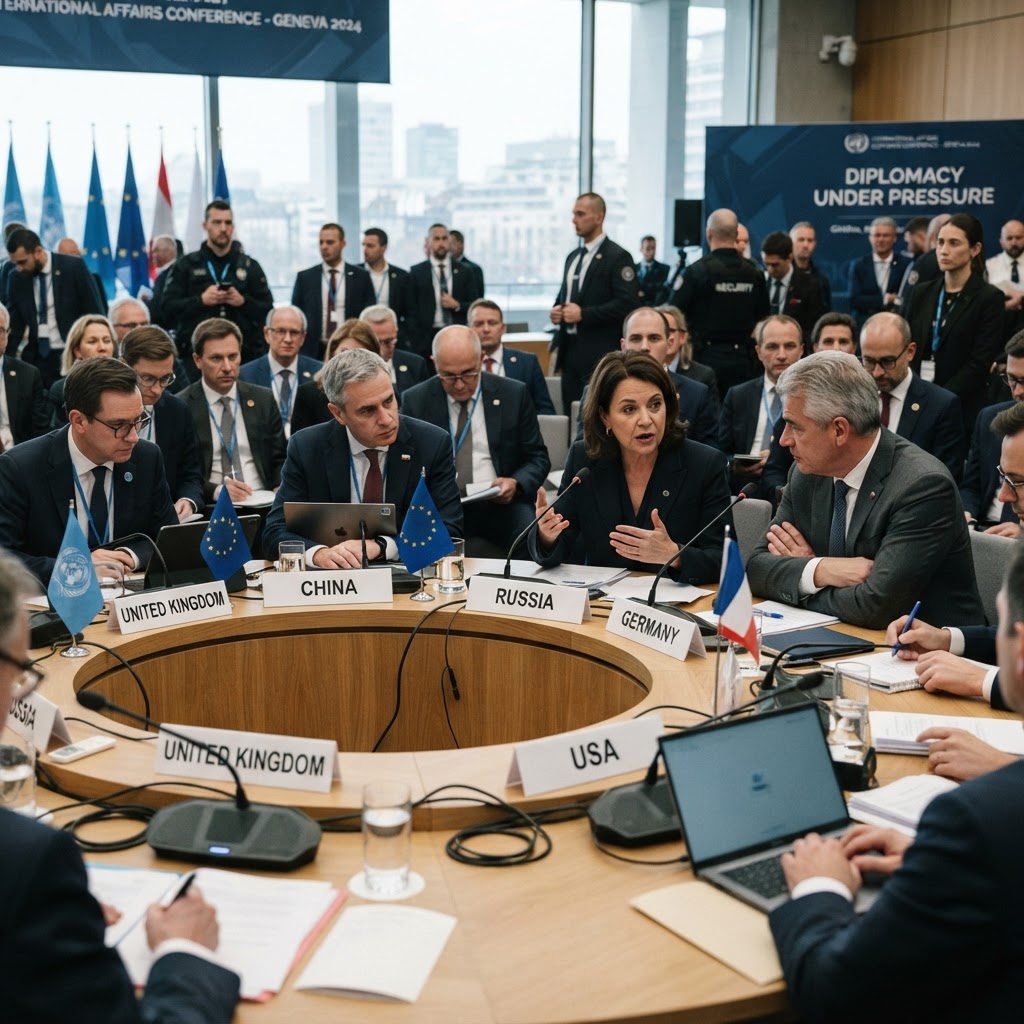
Fragile Fronts and Shifting Treaties: World Affairs Under Pressure Across Energy, Conflict, and Diplomacy
Escalating aerial assaults in Eastern Europe, volatile confrontations in the Persian Gulf, and high-stakes multilateral talks in Geneva and Antalya highlight a deepening strain across global geopolitical institutions.
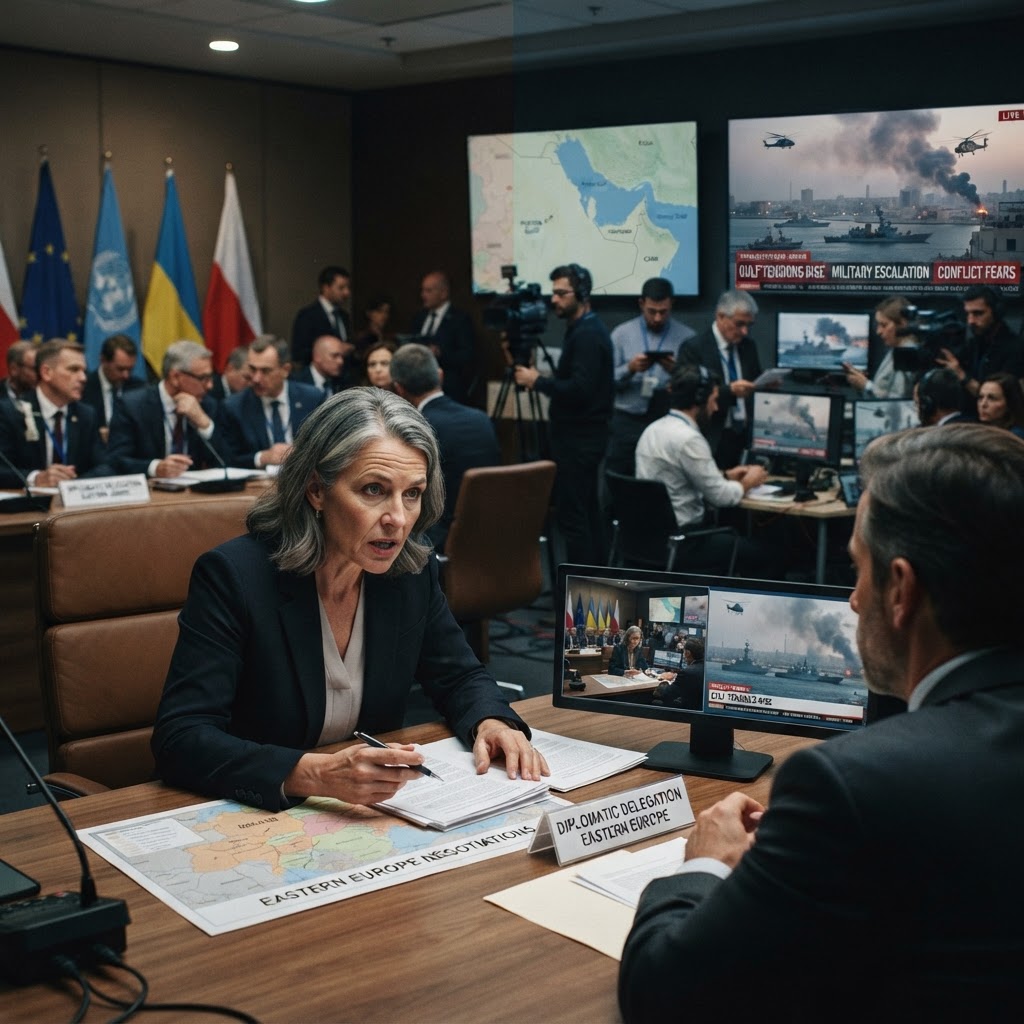
Fragile Peace Diplomacy in Eastern Europe Collides with Rising Escalation in the Gulf
While high-stakes diplomatic negotiations over the war in Ukraine face deadlock over territorial sovereignty, escalating maritime clashes and strategic strikes across the Persian Gulf threaten to spark a broader regional conflict.
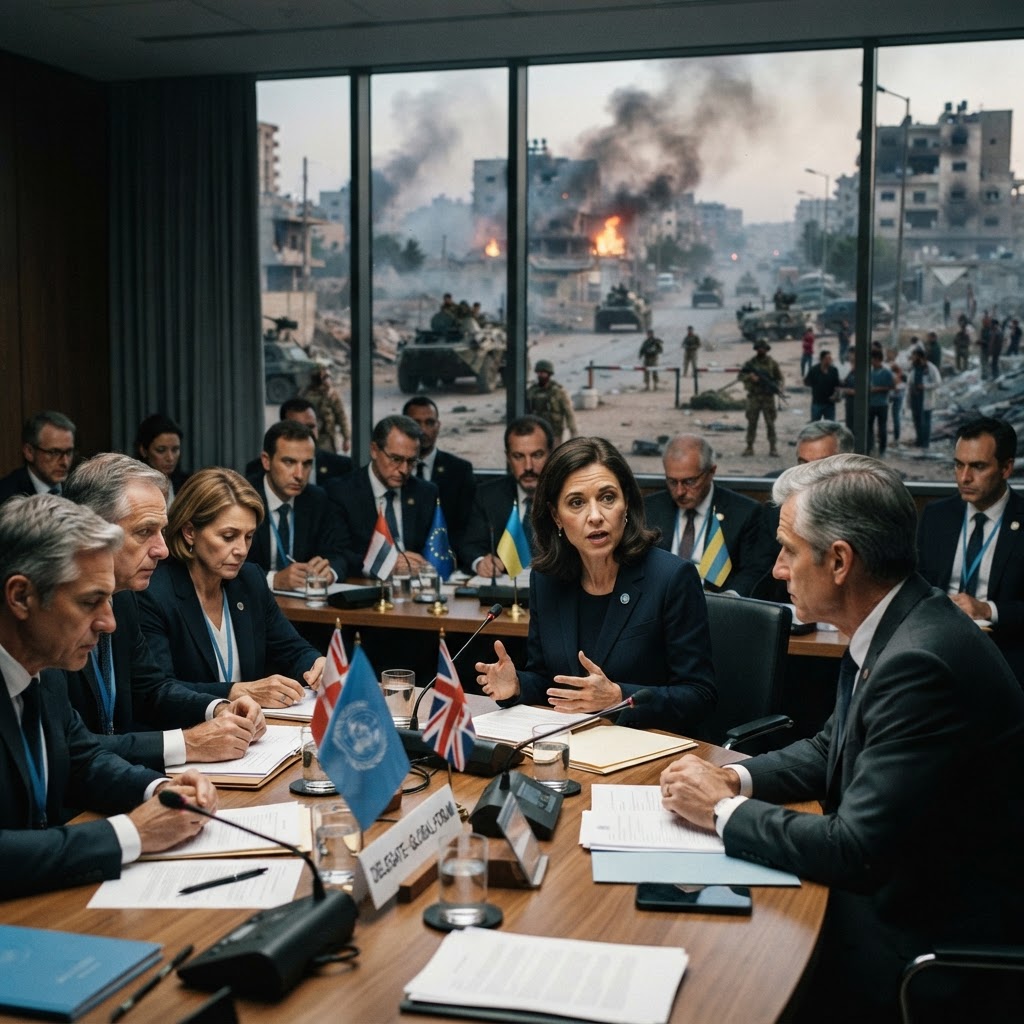
Fragile Diplomacy and Escalating Fronts: Global Tensions Test International Order
High-stakes diplomatic negotiations in the Middle East and Eastern Europe face mounting strain as battlefield strikes, political shakeups, and maritime friction disrupt peace efforts across multiple continents.