Frontiers of Precision: New Breakthroughs in Gene Editing, Materials, and Cellular Mapping Transform Science
Recent scientific advances highlight unprecedented precision across disciplines, from in vivo CRISPR therapies and massive brain cell atlases to energy-efficient magnetic nanomaterials.
The Era of In Vivo Genetic Medicine
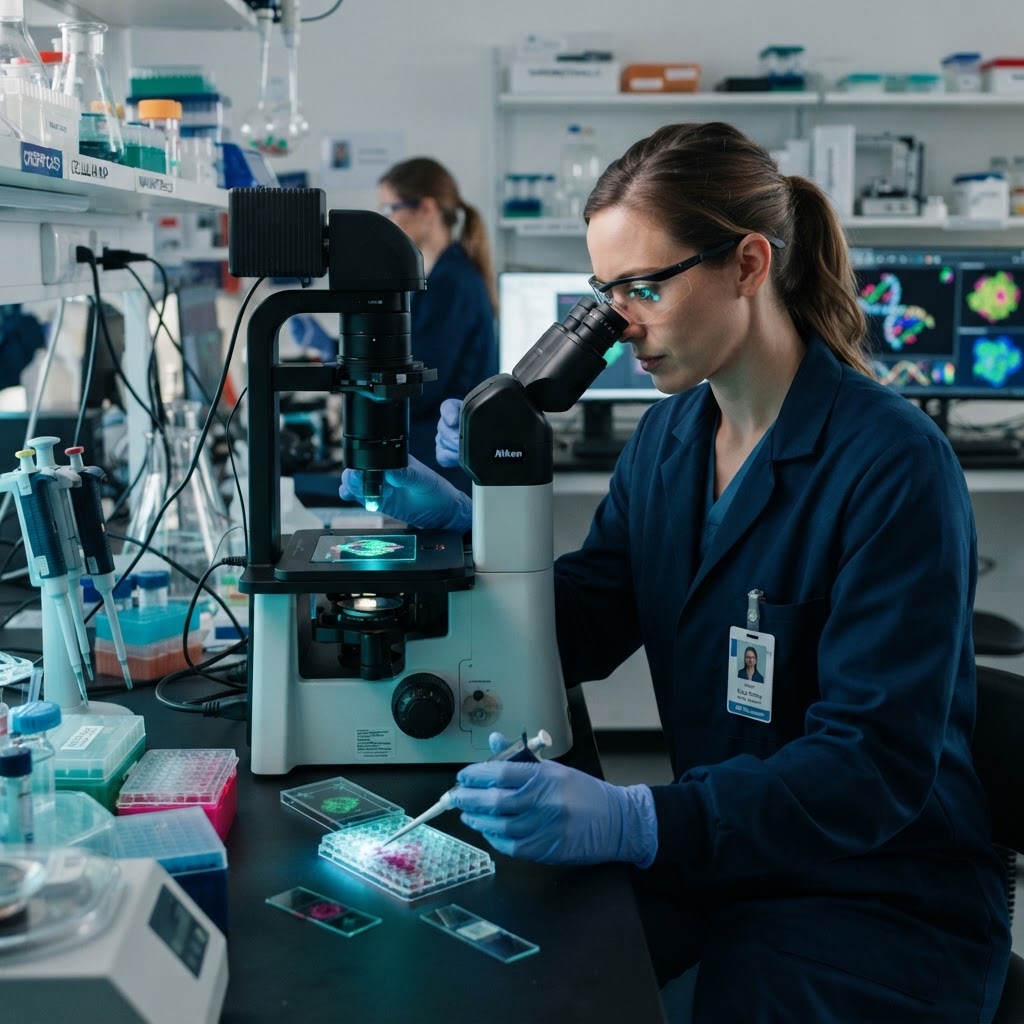
In a milestone for molecular medicine, gene editing is stepping beyond the laboratory dish and directly into the human body. As reported in recent scientific dispatches from Nature, regulatory bodies are poised to evaluate novel CRISPR therapies capable of editing genes in vivo. Historically, gene therapies leveraging CRISPR mechanisms have primarily relied on ex vivo workflows—a cumbersome process where a patient’s stem cells are harvested, engineered in specialized cleanrooms, and subsequently reinfused. The transition toward direct internal delivery eliminates major logistical barriers, opening avenues for more scalable, accessible treatments that can alter pathogenic mutations directly within living organs.
Mapping the Complexities of the Brain and Oncology
Parallel to advancements in genetic interventions, precision mapping at the cellular level has delivered fresh clarity on human biology. A global scientific consortium unveiled a landmark cellular atlas documenting nearly 26 million brain cells within the basal ganglia, as chronicled by Nature News. By cataloging cross-species cellular expression, this reference map offers a foundational blueprint to accelerate therapies for neurodegenerative and behavioral disorders such as Parkinson's disease and addiction.
This fine-grained resolution is equally transforming cancer biology. Recent studies from researchers at UT MD Anderson, highlighted by Newswise, constructed comprehensive microenvironment maps around ductal carcinoma in situ. These spatial insights help distinguish benign anomalies from high-risk precursors prone to invasive progression. Combined with new computational algorithms like TargetScore and therapies targeting specific mutant conformations, structural and spatial insights are converting oncology from broad-spectrum intervention into targeted, tailored care.
Nanomaterials and the Next Generation of Computing
Beyond the life sciences, condensed matter physics has achieved an important breakthrough that addresses the soaring power consumption of modern computation. For years, scientists sought to incorporate multiferroic materials—such as bismuth ferrite—into computational hardware due to their coupled magnetic and electrical functionalities. However, device miniaturization was hindered by the notorious 'dead layer' effect, where ultrathin films lose their functional properties when reduced to scales suitable for microchips.
According to findings covered by ScienceDaily, researchers at Brown University have resolved this bottleneck. By stabilizing bismuth ferrite films down to atomic thicknesses, the team not only eliminated the dead layer but also induced altermagnetism—a hybrid magnetic phase combining the high-speed dynamics of antiferromagnets with the read-out ease of ferromagnets. This breakthrough offers a viable path toward ultra-low-power spintronic devices, critical for curbing the immense electrical appetite of emerging artificial intelligence infrastructure.
Observing the Deep Universe and Earth's Ecological Limits
On the cosmic front, observational astrophysics continues to expand its reach. Deep-space surveys leveraging both the James Webb Space Telescope and the Euclid observatory have unveiled thousands of previously unidentified gravitational lenses, as reported on Phys.org. These cosmic magnifying glasses provide researchers with unprecedented tools to probe the distribution of invisible dark matter and witness distant transient phenomena, such as multiply imaged supernovae, across billions of light-years.
Simultaneously, environmental science is establishing clearer linkages between planetary boundaries and climate instability. A series of analyses compiled by Frontiers demonstrates how reduced winter sea ice in the Barents and Kara seas correlates directly with prolonged summer drought patterns across Eurasia. As planetary systems face compounding stresses, these findings underscore the urgent demand for sustainable technological transitions, ranging from thermal storage built from earth minerals to low-carbon computational hardware.
A Convergence of Measurement and Manipulation
Whether tracing the intricate trajectories of single-cell mutations, mapping neural circuits, or controlling atomic spins for next-generation chips, modern science is defined by its increasing ability to manipulate matter at the fundamental limits of scale. The convergence of computational modeling with physical observation is rapidly converting theoretical hypotheses into concrete tools, setting a vibrant agenda for health, energy, and global understanding.
Recommended for you
Similar to “Scientific Breakthroughs”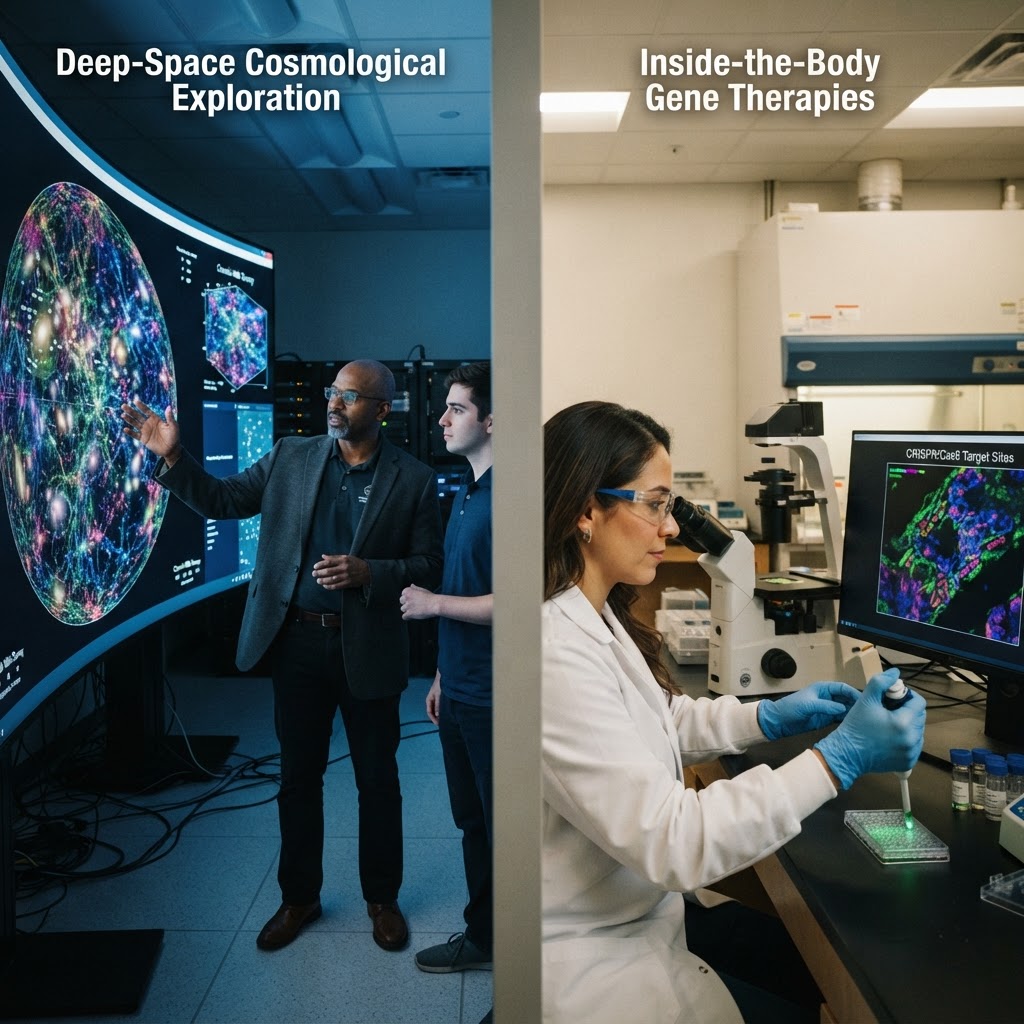
Mapping the Unknown: From Deep-Space Cosmological Surveys to Inside-the-Body Gene Therapies
Recent scientific breakthroughs are rewriting textbooks across disciplines, highlighted by Euclid's massive cosmic survey, pioneering in vivo CRISPR treatments, and landmark discoveries in fundamental physics.
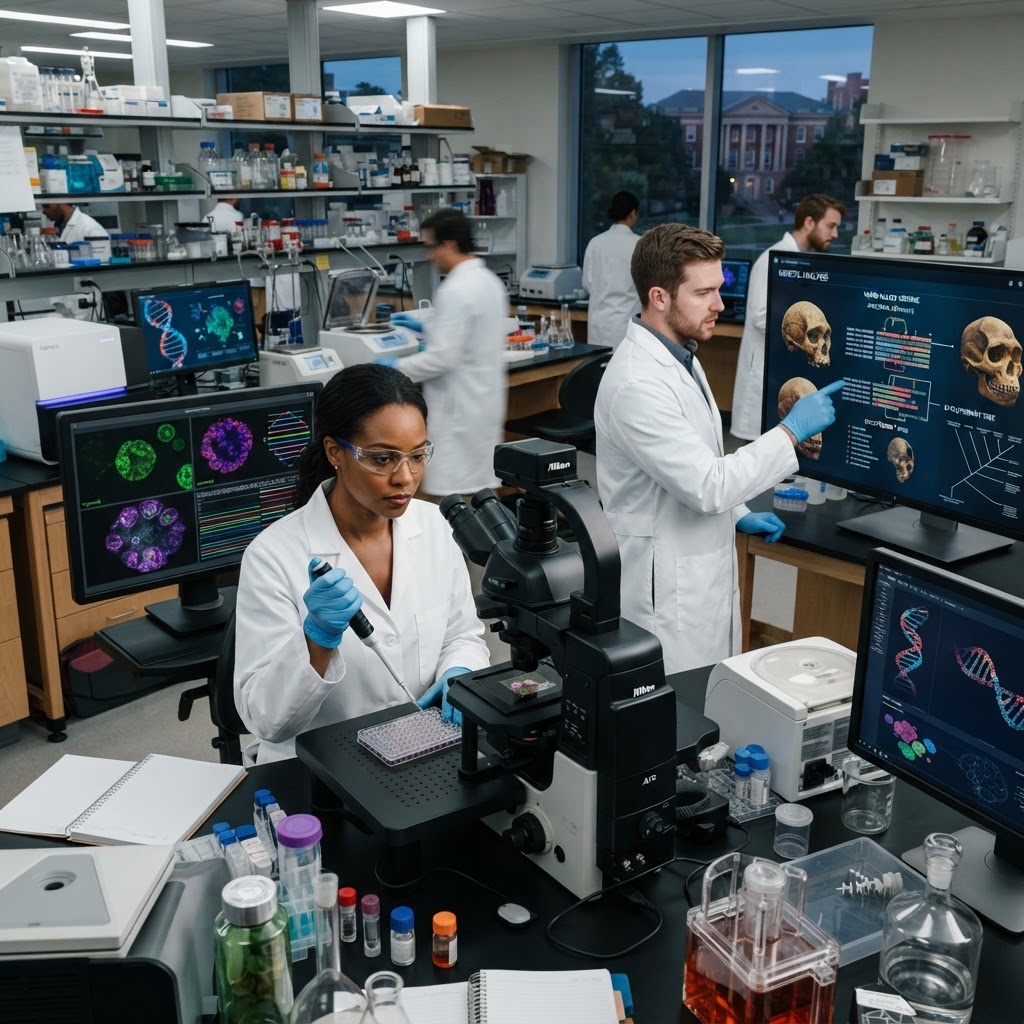
Frontiers of Discovery: Recent Breakthroughs Reshaping Medicine, Genetics, and Evolutionary History
Recent scientific advances highlight unprecedented precision in CRISPR gene editing inside living humans, promising clinical milestones in cancer immunotherapy, and remarkable fossil findings that overturn long-held evolutionary assumptions.
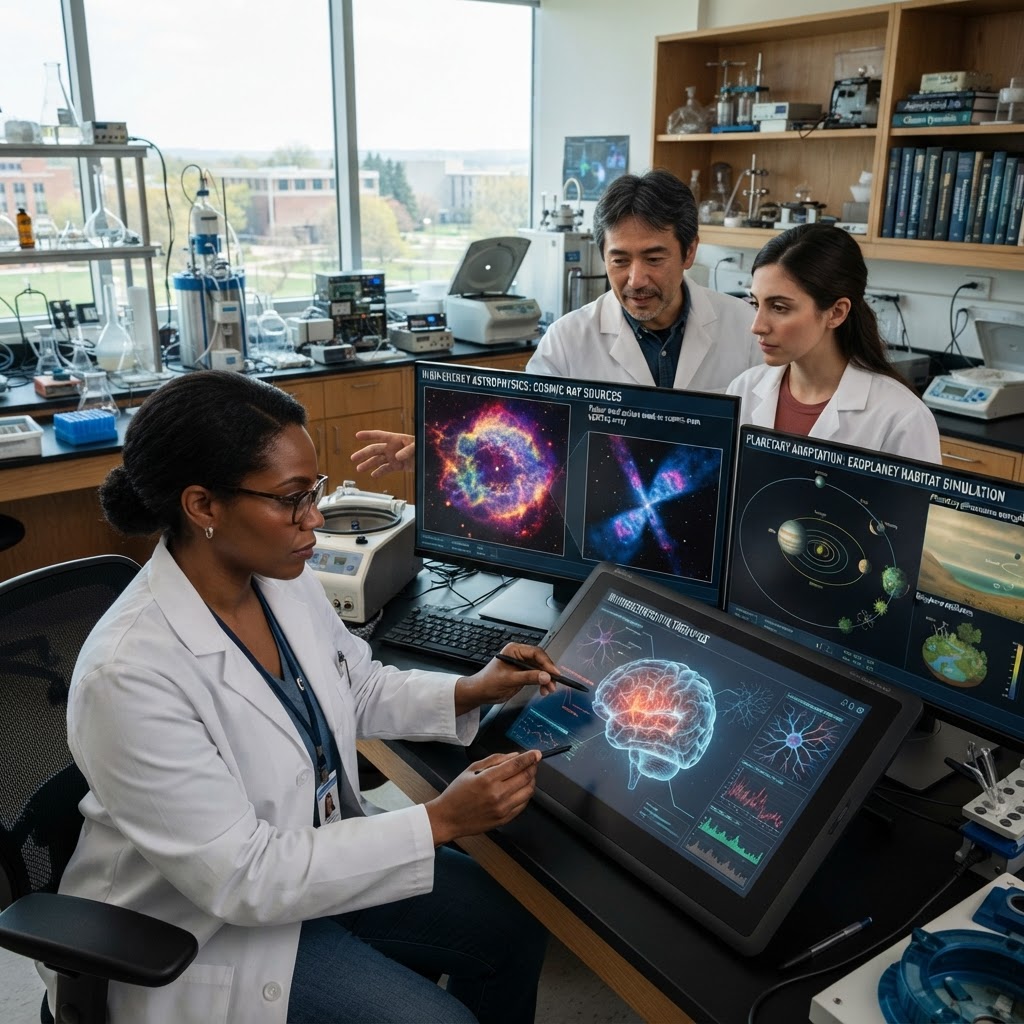
Frontiers of Discovery: Breakthroughs in Neurodegenerative Therapy, High-Energy Astrophysics, and Planetary Adaptation
Recent advances across scientific disciplines have yielded promising new avenues for countering Alzheimer's disease and cellular aging, while deep-space detectors and solar alert technologies open fresh perspectives on cosmic phenomena.