Frontiers of Discovery: How Ancient Biology, Botanical Engineering, and Machine Intelligence Are Reshaping Science
Recent breakthroughs across disciplines—ranging from AI-driven enzymatic discoveries to primordial antimicrobial proteins and genetic botanical engineering—are fundamentally altering the landscape of modern scientific research.
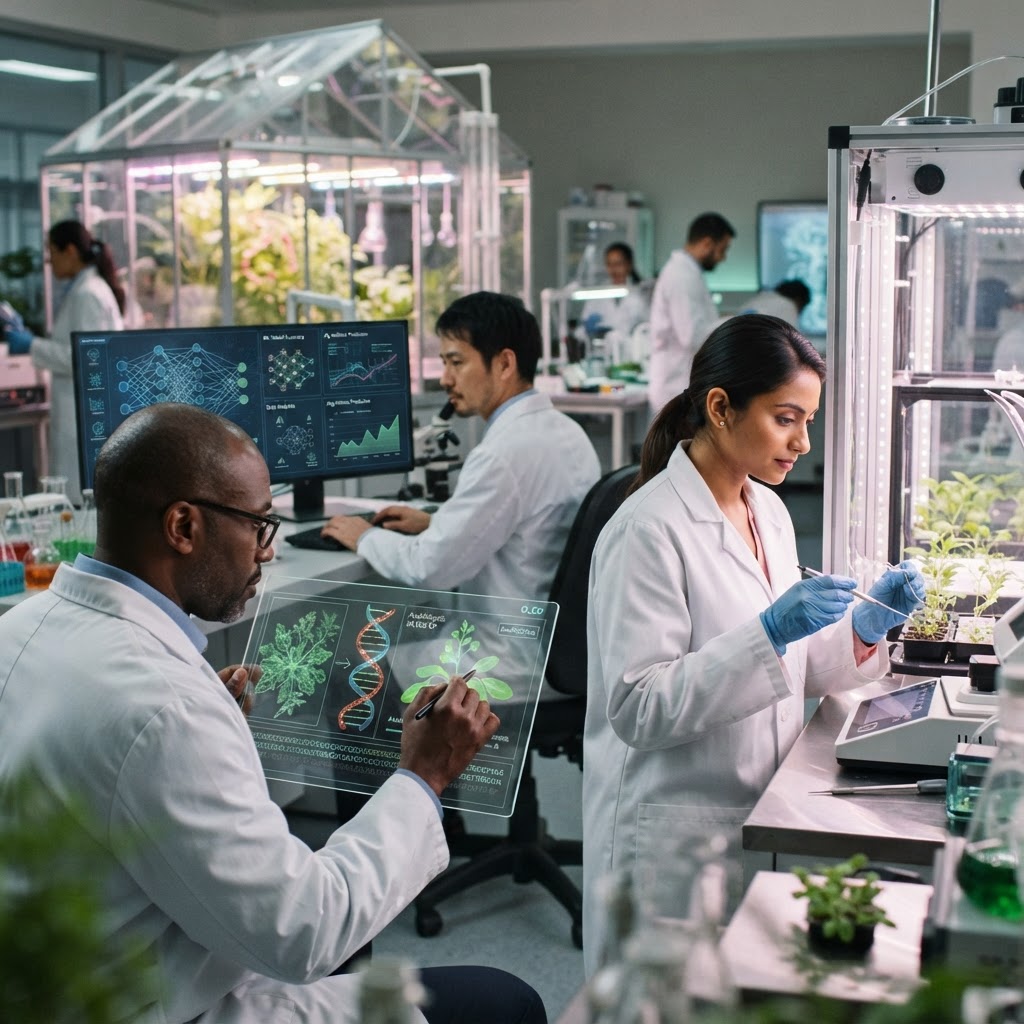
The Convergence of Modern Computation and Empirical Science
The pace of contemporary scientific discovery has increasingly become intertwined with algorithmic power and interdisciplinary experimentation. Over recent days, significant milestones reported across global institutions have highlighted how artificial intelligence, molecular archaeology, and advanced genetic engineering are rapidly solving problems once considered intractable. As researchers push boundaries in the laboratory, the traditional lines dividing biology, computational theory, and material engineering continue to blur, ushering in an era of accelerated insight alongside spirited debate within the scientific community.
Artificial Intelligence Steps Into the Wet Lab
One of the most consequential narratives emerging in modern research centers on the role of machine intelligence in experimental biology. Recent reporting highlighted in Forbes and examined in depth by The New York Times centers on Anthropic’s newly established biology lab, which announced its first significant discovery involving functional enzymes generated through advanced artificial intelligence models. This development represents a pivotal shift from passive predictive analysis—such as protein folding prediction—toward active generative design, where AI systems propose novel biochemical structures that are subsequently synthesized and validated in physical laboratories.
However, the milestone has also ignited a fundamental debate among biochemists and philosophers of science regarding the definition of autonomous discovery. While technology developers tout these findings as evidence of artificial intelligence operating as an independent researcher, independent scientists note that human researchers still curate training corpora, establish hypotheses, and oversee the physical verification process. This tension underscores an evolving partnership: AI is transforming the speed of biological synthesis, yet establishing rigorous benchmarks for machine attribution remains a pressing methodological challenge.
Resurrecting Primordial Defenses Against Modern Superbugs
Parallel to algorithmic advancements, researchers in biomedical sciences are looking backward across evolutionary history to confront the modern global health crisis of antimicrobial resistance. A striking breakthrough noted by ScienceDaily reveals that 160-million-year-old resurrected proteins exhibit remarkable efficacy against contemporary drug-resistant superbugs. By reconstructing ancestral peptide sequences from ancient evolutionary lineages, molecular biologists have identified structural motifs that evade the sophisticated resistance mechanisms evolved by modern bacterial strains.
Bacterial pathogens have spent decades adapting to conventional antibiotics, largely by altering cell-wall permeability or deploying molecular pumps to expel toxins. The newly synthesized archaic proteins operate through fundamentally distinct structural pathways, disrupting bacterial membranes before defensive countermeasures can deploy. This research not only offers a promising therapeutic roadmap for next-generation antibiotics but also establishes evolutionary paleobiology as an indispensable pillar in drug design.
Overcoming Nature’s Barriers: The Realization of the True Blue Rose
In the field of plant biology and synthetic genetics, another historic achievement was recently recorded: the creation of a genuine blue rose. For centuries, horticulturists considered the true blue rose a biological impossibility, as the genus Rosa inherently lacks the genes necessary to produce delphinidin, the primary pigment responsible for deep blue hues in the floral kingdom. While previous attempts yielded muddy lavenders or purples, new research reported by Science News demonstrates how an intricate dual-approach of pigment gene insertion and vacuolar pH management yielded authentic blue coloration.
Achieving this floral milestone required geneticists to look beyond merely expressing the delphinidin pigment. Petal cells must maintain a precise biochemical microenvironment, complete with specific molecular co-pigments and an altered cellular acidity, to reflect light along the true blue spectrum. By coordinating multiple synthetic pathways within a single plant genome, researchers overcame an evolutionary barrier that had stood for millennia, opening new avenues for commercial horticulture and complex metabolic engineering in agriculture.
A Broader Scientific Transformation
These disparate breakthroughs—from computational biology and molecular paleontology to precise botanical modification—collectively reflect a profound shift in modern scientific inquiry. Science is no longer solely focused on observation and classification; it is increasingly defined by the active reconstruction and de novo synthesis of complex biological systems. Whether mining hundreds of millions of years of evolutionary history to neutralize resilient superbugs, employing advanced machine models to design functional catalysts, or rewiring the pigment chemistry of plants, researchers are systematically overcoming obstacles once deemed absolute.
As these technologies mature, the scientific community faces the crucial mandate of establishing responsible oversight frameworks. The integration of high-velocity generative models into biological labs necessitates careful peer-review standards to ensure transparency and reproducibility. Simultaneously, these remarkable successes illustrate that the tools available to science today are capable of addressing some of humanity's most complex challenges, offering transformative solutions at the intersection of natural evolution and synthetic innovation.
Recommended for you
Similar to “Science”
Frontiers of Discovery: How Recent Breakthroughs in Neuroscience, Oncology, and Climate Science Are Redefining Modern Research
Recent discoveries in neurological processing, cancer biology, and environmental monitoring are fundamentally transforming established scientific doctrines and providing critical insights into life, health, and our changing planet.
Frontiers of Discovery: Recent Breakthroughs Reshaping Medicine, Molecular Biology, and Quantum Physics
Recent major developments across global laboratories highlight extraordinary momentum in modern research, ranging from optical control of cellular mechanisms and gut microbiome discoveries to unprecedented leaps in quantum hardware and preventative medicine.
Frontiers of Discovery: How AI, Evolutionary Timelines, and Sustainable Engineering Are Reshaping Modern Science
Recent breakthroughs spanning biological communication, ancient evolutionary paleontology, and resource extraction demonstrate how cross-disciplinary research is accelerating global scientific understanding.