Frontiers of Discovery: How Recent Breakthroughs in Neuroscience, Oncology, and Climate Science Are Redefining Modern Research
Recent discoveries in neurological processing, cancer biology, and environmental monitoring are fundamentally transforming established scientific doctrines and providing critical insights into life, health, and our changing planet.
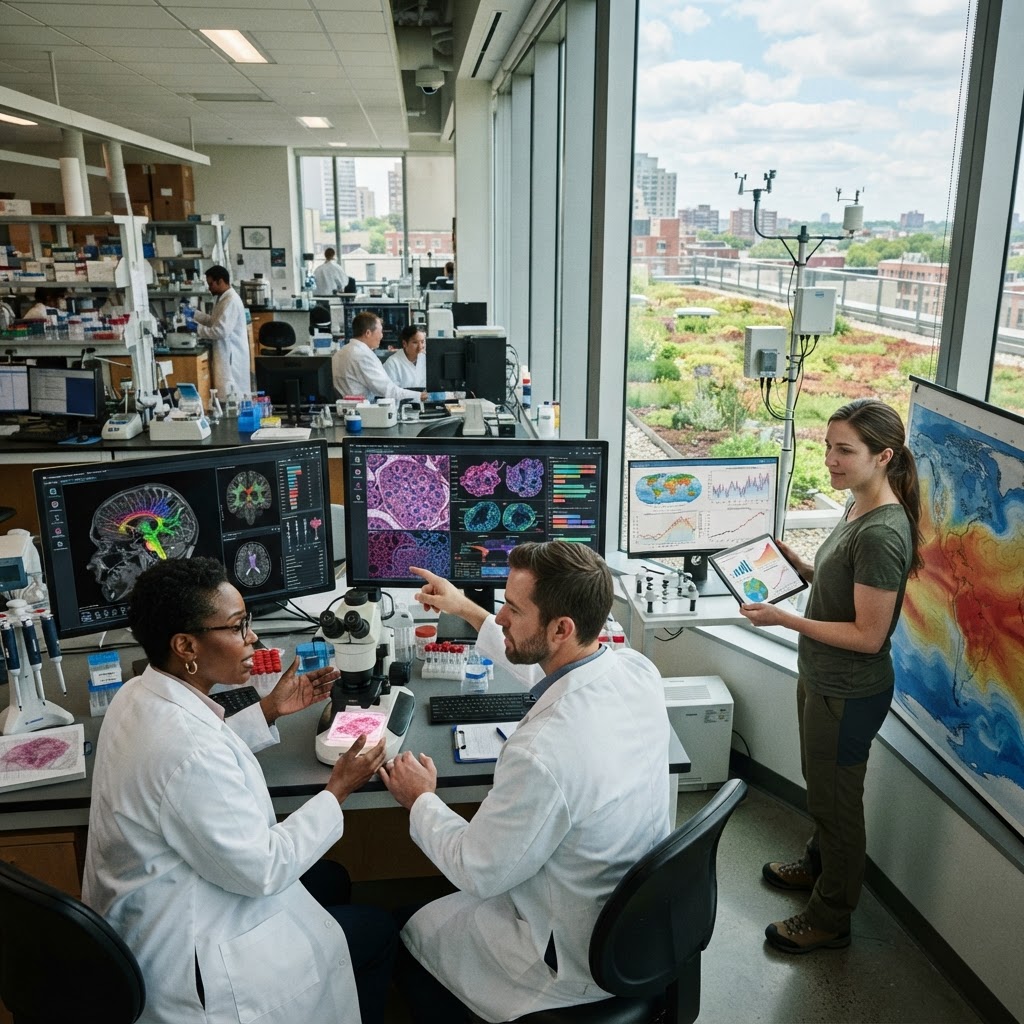
Challenging the Boundaries of Consciousness and Cognition
For decades, general anesthesia was considered a state in which higher cognitive functions are completely turned off, rendering the human brain dormant to the complexities of the surrounding world. However, cutting-edge findings reported in ScienceDaily have upended this conventional medical wisdom. Groundbreaking neuroimaging and electrophysiological research conducted by Baylor investigators reveals that even while fully anesthetized, the brain retains a remarkable ability to process subtle linguistic inputs. Patients under deep chemical sedation continue to decode linguistic structures, differentiate grammatical categories of spoken words, and predict syntactic continuations in auditory narratives.
This discovery provides critical nuance to the scientific understanding of human consciousness. Rather than functioning as a binary switch that turns awareness cleanly on or off, neural consciousness appears to operate along a modular spectrum. Certain predictive cognitive architectures remain functional even when subjective awareness and explicit recall are extinguished. These findings carry practical implications for clinical anesthesiology, offering clinicians new neurological biomarkers to evaluate sedation depth while avoiding accidental intraoperative awareness or unintended pharmacological stress.
Unraveling Oncology: The Unexpected Aggression of Smaller Cancer Cells
In the field of oncology, prevailing therapeutic assumptions have long associated larger tumor cell phenotypes with elevated genomic instability and malignant aggression. Yet, newly published insights highlighted by ScienceDaily demonstrate that the physical size of malignant cells does not reliably predict clinical severity. Investigators studying cellular morphology have found that abnormally small cancer cells carrying supernumerary chromosomes pose a disproportionately severe clinical threat.
These compact aneuploid cells display heightened survival capabilities compared to their standard-sized counterparts. Research indicates they divide more rapidly, adapt with greater plasticity to microenvironmental stressors, and metastasize into distant tissues with elevated frequency. Crucially, their reduced volume and altered metabolic activity make them unusually recalcitrant to standard chemotherapies and radiation protocols. Recognizing the destructive capability of these minute cellular variants opens a vital avenue for therapeutic development, encouraging oncologists to rethink traditional cytotoxic screening methods and target the molecular signatures governing miniaturized cancer cell survival.
Advances in Translational Medicine and Viral Prevention
These cellular revelations align with a broader surge of innovation across molecular biology and pharmacology. The momentum generated by structural biology breakthroughs—highlighted by Science's 2024 Breakthrough of the Year honoring the HIV capsid inhibitor lenacapavir—continues to shape prophylactic research. By illuminating the detailed architecture of the viral capsid shell, scientists demonstrated how tiny chemical scaffolds can block viral replication long before systemic infection occurs, a mechanism tracked across medical reviews by Discover Magazine.
This structural insight is paving the way for comparable capsid-targeting strategies against diverse viral families, including emerging zoonotic pathogens. Alongside localized advances such as inhalable exosomal therapies developed at Columbia University to target lung malignancies directly via nanobubbles, translational medicine is experiencing an era defined by precision drug delivery that minimizes systemic toxicity while attacking disease mechanisms at an atomic level.
Environmental Pressures and Geochemical Indicators
While biomedical sciences make strides at the microscopic scale, environmental and earth scientists are confronting macroscopic disruptions driven by global climate shifts. Satellite monitoring programs tracking polar regions have documented alarming trends in ice stability, as covered in reports from ScienceDaily Top Science News. Satellite telemetry reveals that polar sea ice is not only shrinking in spatial footprint across seasonal cycles, but the remaining ice sheet is skewing younger, thinner, and structurally fragile, reducing its capacity to buffer marine ecosystems against warming sea surface temperatures.
These systemic strains reach well beyond the polar caps into delicate terrestrial biomes. Ecological evaluations published across Frontiers Science News document that even high-altitude protective forests—historically resilient biomes that safeguard alpine valleys against avalanches and erosion—are exhibiting chronic stress due to persistent, recurrent droughts. Concurrently, environmental toxicologists are uncovering persistent chemical traces from anthropogenic sources, showing that industrial particulates and seasonal celebrations leave enduring, invisible chemical contamination across regional waterways. Together, these multidisciplinary findings highlight that the challenges facing ecosystems require holistic, data-driven stewardship across international borders.
The Trajectory of Cross-Disciplinary Discovery
Whether examining how the subconscious brain interprets language during surgical anesthesia, charting the hidden threat of compact cancer cells, or tracking vulnerabilities in global ecosystems, contemporary scientific investigation is characterized by the dismantling of longstanding assumptions. Emerging analytical tools—from single-cell molecular sequencing to orbital remote sensors—allow researchers to observe natural phenomena with unprecedented fidelity. Moving forward, the synthesis of clinical, computational, and environmental insights will serve as the foundation for safeguarding human health and ensuring planetary resilience.
Recommended for you
Similar to “Science”
Frontiers of Discovery: How Recent Breakthroughs in Physics, Medicine, and Computing Are Redefining Modern Science
From detecting extreme-energy cosmic ghost particles to unlocking backward bacterial defenses and brain-inspired electronics, a surge of recent discoveries is transforming our understanding of the universe and human biology.
Frontiers of Discovery: How AI Biolabs, Metabolic Research, and Endosymbiosis Are Redefining Modern Science
Recent advances across biotechnology, cellular evolution, and targeted therapeutics are transforming our understanding of living systems and opening new horizons for global medicine.
Frontiers of Discovery: How Ancient Biology, Botanical Engineering, and Machine Intelligence Are Reshaping Science
Recent breakthroughs across disciplines—ranging from AI-driven enzymatic discoveries to primordial antimicrobial proteins and genetic botanical engineering—are fundamentally altering the landscape of modern scientific research.