Frontiers of Discovery: Recent Breakthroughs Reshaping Medicine, Molecular Biology, and Quantum Physics
Recent major developments across global laboratories highlight extraordinary momentum in modern research, ranging from optical control of cellular mechanisms and gut microbiome discoveries to unprecedented leaps in quantum hardware and preventative medicine.
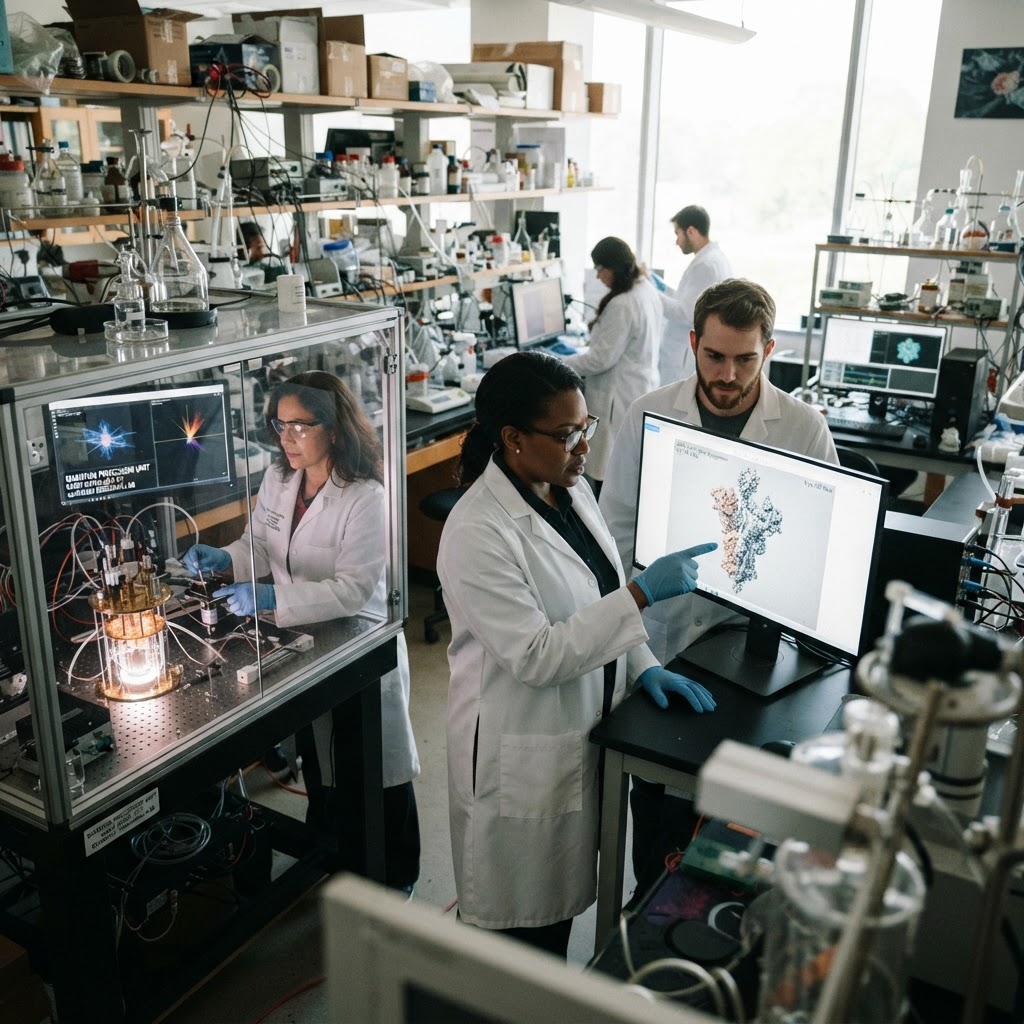
Unlocking the Cellular Machine: From the Microbiome to Optogenetics
In the opening weeks of October, the life sciences have experienced a burst of groundbreaking recognitions and clinical revelations. At the forefront of international attention, the Nobel Assembly highlighted fundamental advancements in neural manipulation by honoring pioneer discoveries behind optogenetic switches—mechanisms that allow scientists to toggle neurons on and off using targeted pulses of light. This capability has transformed neurobiology from an observational field into an active, causal discipline, giving investigators the tools to chart deep neural pathways associated with neurological disorders and behavioral regulation.
Simultaneously, fundamental research into our internal biochemistry is yielding immediate medical insights. A recent landmark rodent study published in Nature illuminated how a common intestinal bacterium produces a specialized molecular byproduct capable of suppressing natural cholesterol synthesis. By identifying the exact biochemical signal transmitted from the gut microbiome to the bloodstream, researchers have established a tangible link between intestinal microflora and cardiovascular protection, paving the way for targeted microbiome-based therapies against heart disease.
Rewriting Biological Paradigms: Chirality and Evolution
In addition to physiological breakthroughs, basic molecular chemistry and evolutionary biology have achieved long-sought answers to foundational enigmas. The Chemistry Nobel Prize highlighted groundbreaking efforts that demystified homochirality—the persistent puzzle of why biological life universally favors specific 'handed' mirror-image configurations of organic molecules rather than an arbitrary blend. Understanding how primitive chemical mixtures broke symmetry and established the architectural framework of RNA and proteins offers researchers unprecedented tools to synthesize novel macromolecules in cell-free systems.
These molecular insights dovetail with significant evolutionary milestones, such as the characterization of the nitroplast, an organelle documented in the marine alga Braarudosphaera bigelowii and highlighted by Science. As one of the exceptionally rare instances where a bacterial endosymbiont has fully evolved into a cellular organelle capable of biological nitrogen fixation, the discovery provides an operational blueprint for natural endosymbiosis. Agricultural geneticists are now studying these structures to explore whether crops might one day incorporate self-sustaining nitrogen fixation, potentially curbing synthetic fertilizer dependence.
The Preventive Revolution in Global Public Health
While basic science reshapes theoretical models, translational pharmacology has reported historically unprecedented clinical results. HIV/AIDS prevention is standing at the threshold of a new paradigm due to lenacapavir, a targeted capsid-inhibiting drug that achieved near-complete efficacy in multi-continent trials. By interfering directly with the protective protein shell of the virus, lenacapavir acts as a durable, long-acting pre-exposure prophylaxis (PrEP), offering a preventative safeguard against transmission far exceeding standard regimens.
Public health experts emphasize that translating such laboratory triumphs into worldwide epidemic reduction hinges entirely on equitable production, broad distribution, and lowered access barriers. If deployed aggressively, researchers believe this capsid-targeting strategy could radically bend the curve of global viral transmission rates over the coming decade.
Quantum Milestones and Next-Generation Computing
Physical scientists and engineers have matched these biological leaps with profound advances in information architecture. Researchers reached a critical benchmark in photonics by successfully orchestrating 13-qubit genuine quantum entanglement without destroying the underlying photons, as reported by Interesting Engineering. Bypassing photonic destruction allows systems to preserve coherence across extended intervals, a capability long considered a major engineering bottleneck for scalable quantum communication networks.
Concurrently, advances in neutral-atom platforms—such as full-stack room-temperature quantum systems utilizing optical tweezers to manipulate individual atoms—are transitioning theoretical quantum architecture into operational testing grounds. By pairing robust entanglement methods with error-correcting platforms, physicists are rapidly shifting quantum information from an experimental curiosity toward practical computational realization.
Recommended for you
Similar to “Science”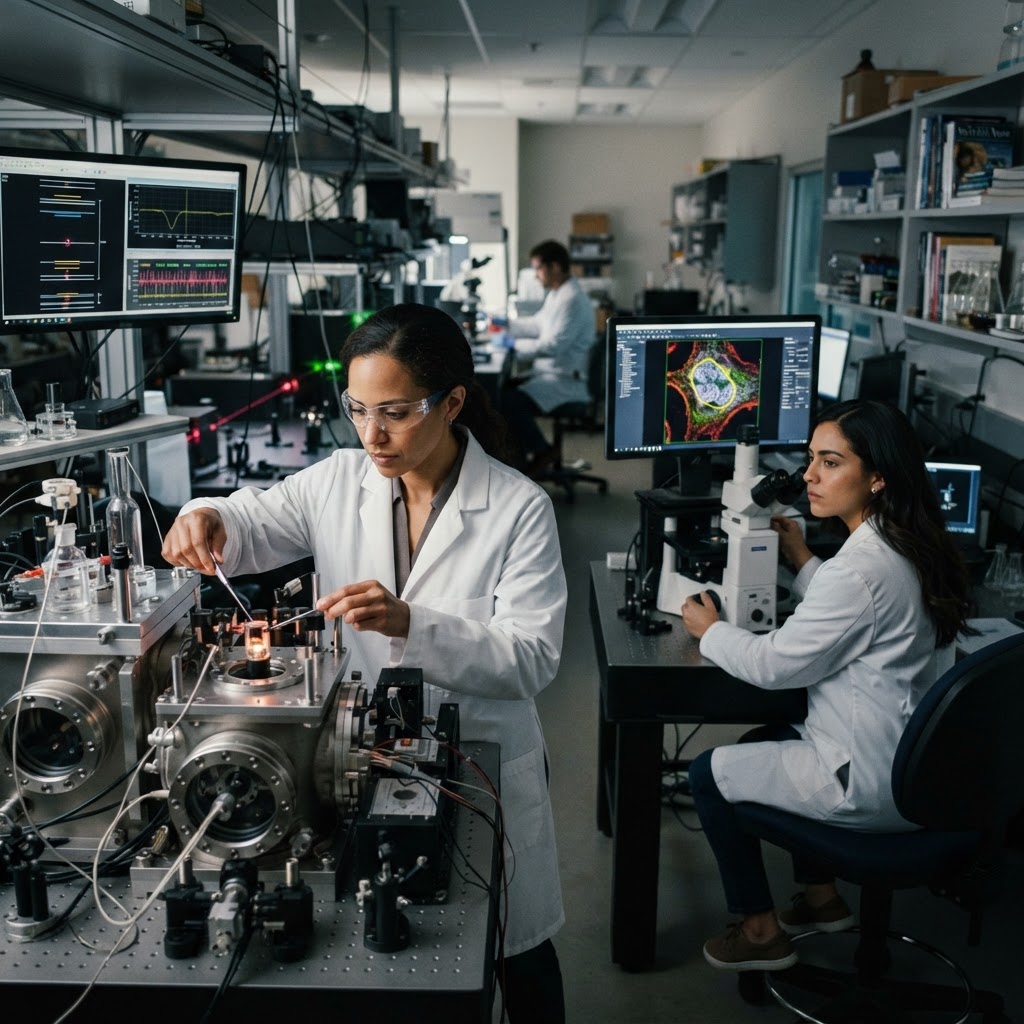
Frontiers in Discovery: From Nuclear Precision Clocks to Novel Cellular Organelles
Recent advances across physics, medicine, and evolutionary biology highlight a transformative period for modern scientific discovery, marked by quantum leaps and fundamental cellular revelations.
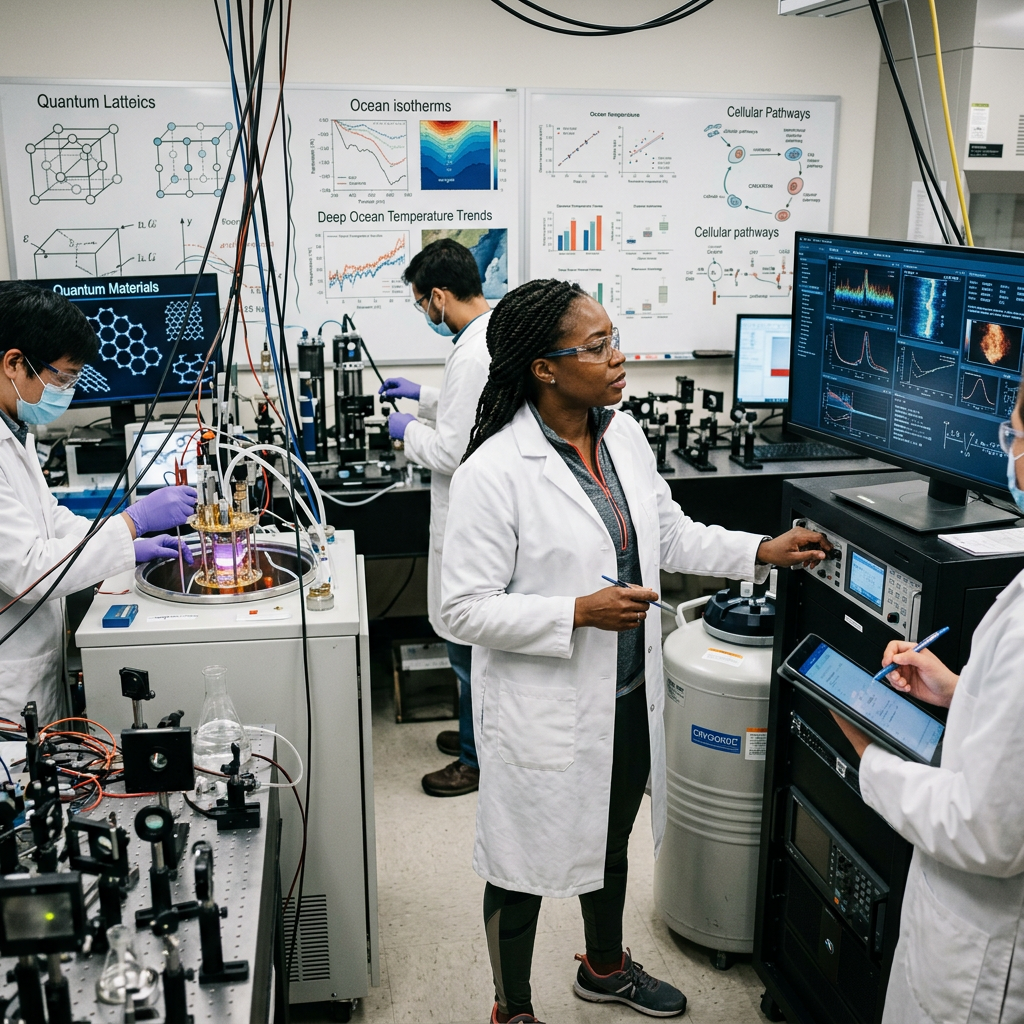
Frontiers of Discovery: Breakthroughs in Quantum Materials, Deep Ocean Heat, and Precision Oncology
Recent advances across physics, climate oceanography, and oncology highlight how atomic-scale manipulations, deep-sea tracking, and molecular genetic discoveries are reshaping modern science.
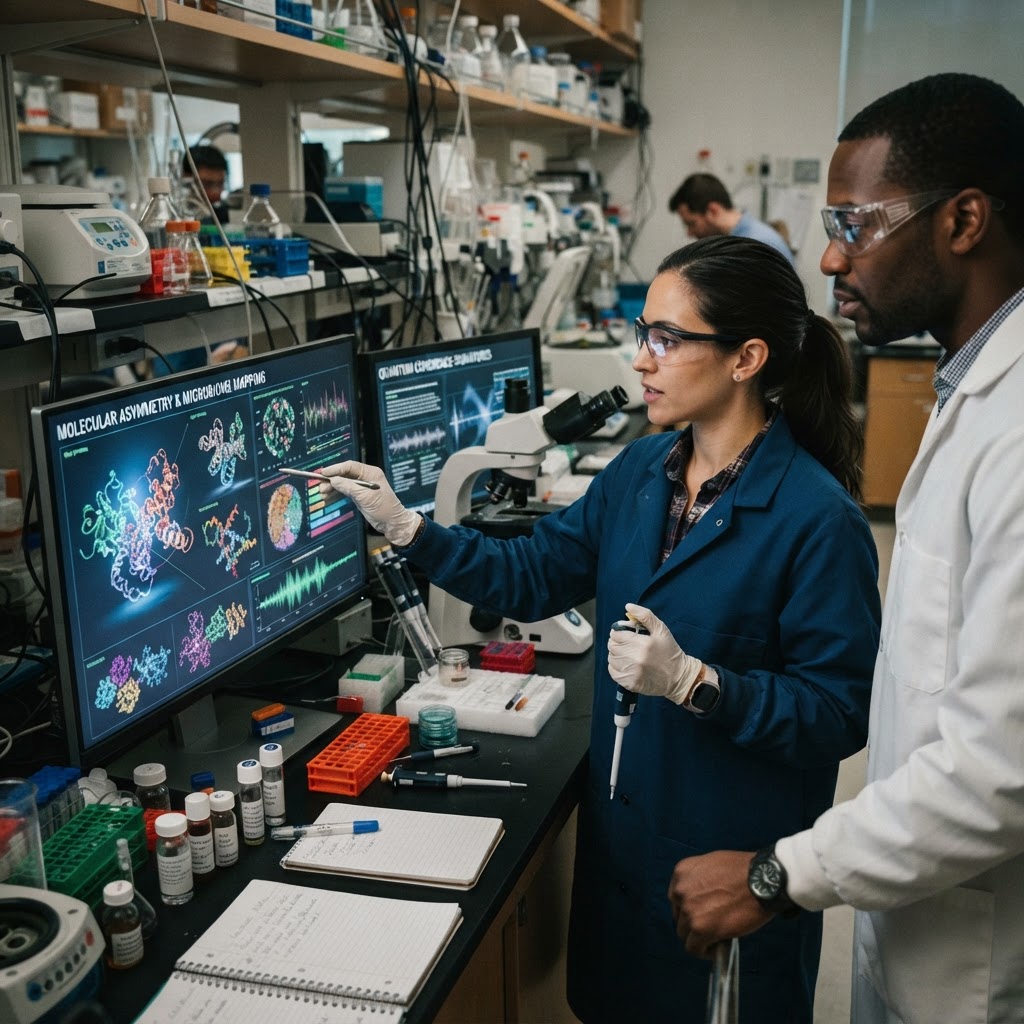
Frontiers of Discovery: Molecular Asymmetry, Microbiome Therapeutics, and the Quantum Boundary
Recent breakthroughs spanning stereochemistry, gut microbiome metabolomics, and quantum error mitigation highlight how interdisciplinary science is solving longstanding puzzles in medicine and physics.