Frontiers of Understanding: How New Instruments and Long-Duration Missions Are Reshaping Modern Science
Recent advances spanning orbital biology, targeted oncology, and cellular tracking tools highlight how novel measurement instruments are driving a new wave of scientific discovery.
The Instrument-Driven Revolution in Scientific Discovery
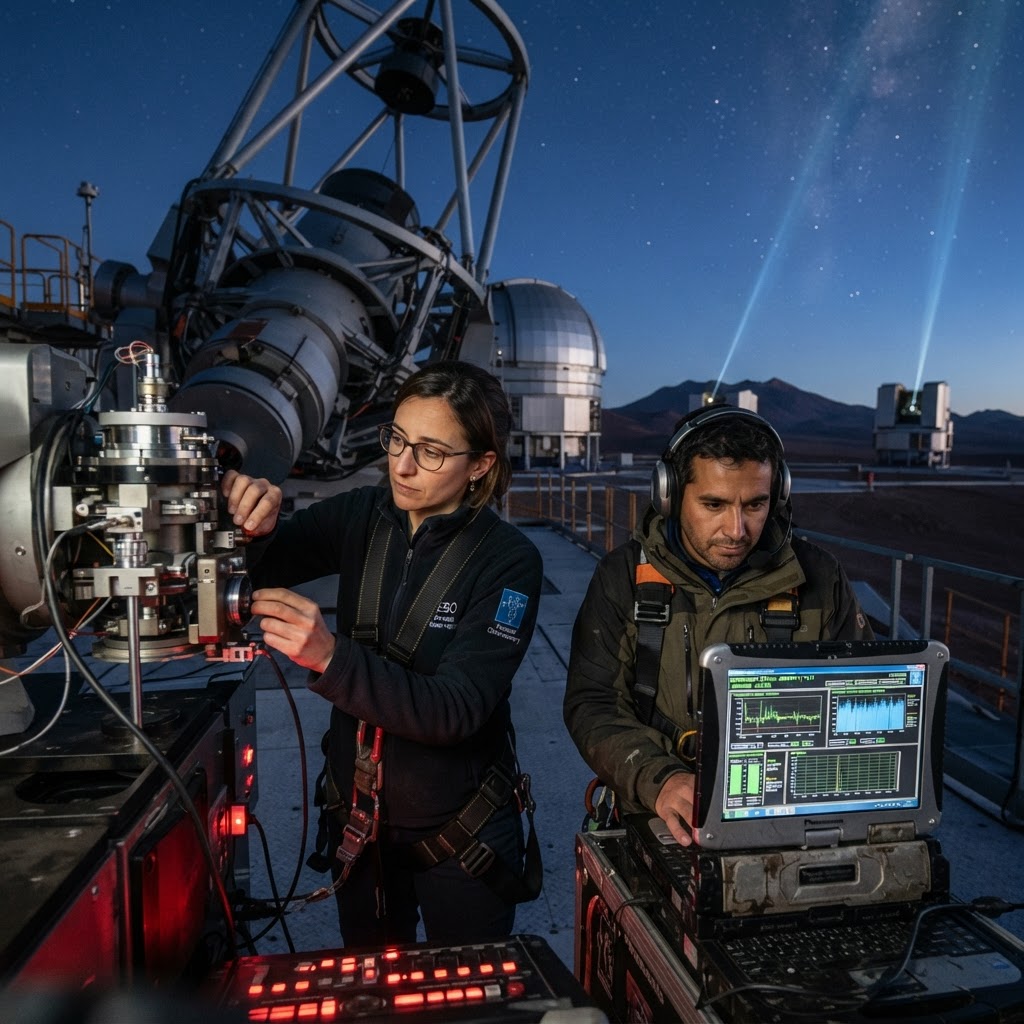
Throughout the history of science, the emergence of radical new insights has rarely been the product of pure contemplation alone. Instead, as a study published in Humanities and Social Sciences Communications emphasizes, major scientific leaps are overwhelmingly catalyzed by the development of novel tools, methods, and measurement apparatuses. By enabling researchers to observe, quantify, and manipulate phenomena previously veiled from view, new instrumentation forms the empirical backbone of modern breakthroughs across disciplines ranging from astrophysics to cellular biology.
This tool-driven paradigm is currently on full display across global research hubs. From sophisticated orbital experiments to bioengineering platforms capable of tracing molecular conversations in living tissue, scientists are leveraging high-precision technologies to solve long-standing puzzles about human physiology, cellular senescence, and the cosmos.
Milestones in Long-Duration Spaceflight and Human Endurance
In aerospace and space biology, empirical observation under extreme conditions reached a significant benchmark with the safe return of NASA astronauts following extended orbital deployments. Missions like the SpaceX Crew-12 flight, which spanned more than 237 days in orbit and covered over 100 million miles across nearly 3,800 Earth orbits, serve as essential testbeds for human physiology according to reporting on ScienceDaily.
Long-duration microgravity environments present unique biomedical challenges, from bone demineralization and fluid redistribution to neuro-vestibular shifts and cosmic radiation exposure. By gathering longitudinal clinical and biomolecular metrics from astronauts completing these multi-month tours, researchers are assembling the physiological baselines required to protect human crews during eventual missions to the lunar surface and Mars. These spaceflight insights also feed directly into terrestrial medicine, providing fresh models for muscle atrophy and age-related physical decline.
Precision Oncology: Targeted Therapies and Cellular Mechanics
Concurrently, clinical oncology is experiencing a transformation through targeted molecular interventions. As highlighted by The Week, oncologists have achieved notable improvements in managing difficult-to-treat malignancies using targeted pharmaceuticals such as daraxonrasib. Evaluated for metastatic pancreatic cancer—traditionally among the deadliest and most drug-resistant solid tumors—the targeted agent has demonstrated marked improvements in overall survival during clinical trials while presenting manageable side-effect profiles compared to conventional, systemic cytotoxic chemotherapies.
At the fundamental molecular level, investigations into cellular mortality and integrity are providing the mechanistic backing for these clinical advances. Researchers at The Rockefeller University have highlighted key advances in understanding chromosome preservation. Central to this work is the delicate equilibrium required to regulate telomeres—the protective nucleotide caps at the ends of linear chromosomes. If telomeres degrade too quickly, cells enter premature senescence and trigger accelerated tissue aging; conversely, if telomere maintenance runs unchecked, cells achieve harmful replicative immortality, a foundational hallmark of malignant transformation. Unraveling the cooperative enzymatic machinery that governs telomere stability offers actionable roadmaps for dual-pronged therapies targeting degenerative diseases and cancer.
Mapping the Living Network: From Cell Tracking to Artificial Neurons
Understanding biology also demands tools capable of observing how disparate cells coordinate in vivo. The introduction of platforms like uLIPSTIC—a universal labeling system detailed by The Rockefeller University—enables investigators to record fleeting, direct cell-to-cell contacts within living systems. By capturing biochemical interactions as they happen, the technology helps map the intercellular communication networks that orchestrate immune responses and tissue regeneration.
These biological mapping capabilities are increasingly interfacing with synthetic bioengineering. Researchers have recently engineered synthetic neurons that physically interface with and elicit functional responses from genuine biological neurons. These bio-hybrid interfaces, featured in The Week, blur the boundary between biological neural tissue and synthetic computational frameworks, setting the stage for next-generation neural prosthetics capable of repairing damaged nervous circuits.
A Unified Trajectory of Discovery
Whether examining the cellular interplay inside a living lymph node, the behavior of biological systems after months in low Earth orbit, or the precise genetic mechanisms driving tumor growth, modern science is moving forward at an accelerated pace. By designing sharper investigative tools, deploying targeted interventions, and expanding the environments in which empirical science takes place, global researchers are establishing a more robust, actionable understanding of life and the physical universe.
Recommended for you
Similar to “Scientific Research”
Frontiers of Precision: How New Insights in Cellular Biology, Physics, and Chronometry Are Reshaping Science
Recent scientific advances spanning neuroimmunology, fundamental magnetism, and planetary soil mapping highlight how precision measurement and structural biology are solving long-standing global challenges.

Frontiers of Discovery: How AI Biolabs, Metabolic Research, and Endosymbiosis Are Redefining Modern Science
Recent advances across biotechnology, cellular evolution, and targeted therapeutics are transforming our understanding of living systems and opening new horizons for global medicine.
Frontiers of Discovery: Breakthroughs in Quantum Materials, Deep Ocean Heat, and Precision Oncology
Recent advances across physics, climate oceanography, and oncology highlight how atomic-scale manipulations, deep-sea tracking, and molecular genetic discoveries are reshaping modern science.