Frontiers of Discovery: How AI Biolabs, Metabolic Research, and Endosymbiosis Are Redefining Modern Science
Recent advances across biotechnology, cellular evolution, and targeted therapeutics are transforming our understanding of living systems and opening new horizons for global medicine.
Unraveling the Genetic Unknown with Machine Intelligence
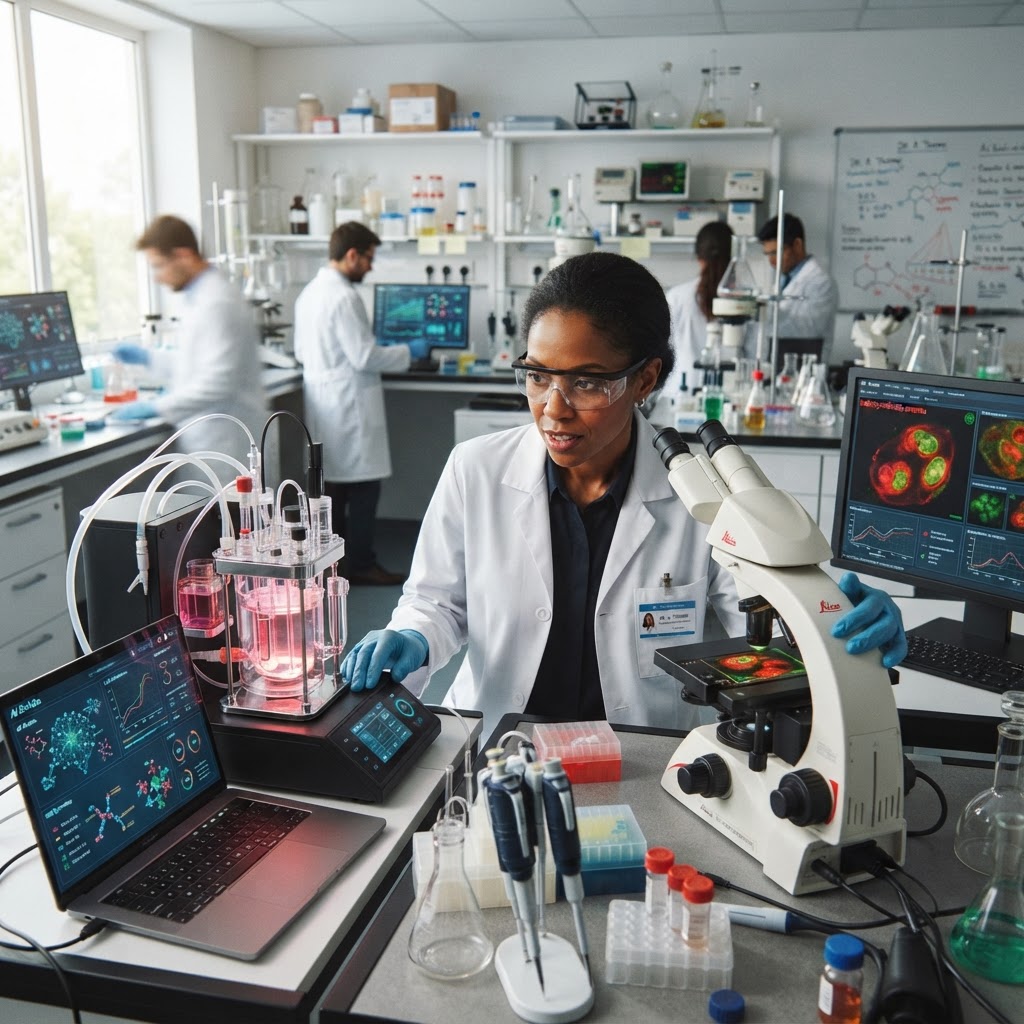
The boundary between computational systems and laboratory discovery continues to erode rapidly. One of the most intriguing developments in contemporary molecular biology centers on the deployment of artificial intelligence to identify novel genetic architectures. Researchers utilizing automated biological platforms have recently uncovered viral sequences harboring 'CRISPR-like' systems, as highlighted by reports from Nature. These viral mechanisms, which mirror the adaptive immune functions classically attributed to bacteria and archaea, suggest that genomic warfare among microorganisms is far more intricate and reciprocal than previously suspected. By deploying machine-learning algorithms to sift through massive environmental metagenomic datasets, scientists can pinpoint previously unrecognized enzyme complexes and genetic defense mechanisms that traditional screening techniques overlooked. The implications are vast: mapping these novel architectures could expand the repertoire of gene-editing tools far beyond conventional Cas9-based systems, enhancing precision in biomedical interventions and crop engineering.
The Weight-Loss Conundrum and Precision Metabolic Medicine
In human health and pharmacology, public attention has been gripped by the rise of glucagon-like peptide-1 (GLP-1) receptor agonists. While these therapies have redefined clinical strategies for obesity, type 2 diabetes, and cardiovascular risk reduction, a persistent scientific mystery has emerged: why a distinct subset of patients fails to respond effectively to these compounds. Investigating this therapeutic gap, researchers referenced in recent coverage by Nature are embarking on deep genetic, neurobiological, and microbiome analyses to uncover the biological determinants of non-responsiveness. Preliminary findings suggest that variance in hypothalamic receptor expression, differing gastric transit dynamics, and underlying endocrine crosstalk may explain the discrepancy. Rather than viewing GLP-1 drugs as universal panaceas, clinicians are moving toward stratified, precision metabolic care, tailoring drug combinations and nutritional regimens to individual molecular profiles.
A Breakthrough in Cellular Evolution: The Nitroplast
Beyond applied human therapeutics, fundamental biology has witnessed one of its most consequential milestones with the confirmed discovery of a brand-new endosymbiotic organelle: the nitroplast. Documented in Science's Breakthrough of the Year retrospective, the nitroplast was identified inside the marine alga Braarudosphaera bigelowii. While mitochondria and chloroplasts originated billions of years ago through the engulfment of bacterial ancestors, true endosymbiotic transitions are extraordinarily rare in evolutionary history. The nitroplast, derived from a nitrogen-fixing cyanobacterium, has discarded a substantial portion of its autonomous genome, relying entirely on proteins imported from its algal host to fix atmospheric nitrogen directly. This structural integration demonstrates that nitrogen fixation is no longer solely the purview of independent prokaryotes. Understanding how host algae domesticated this internal biochemical factory offers researchers unprecedented insights into organelle emergence, while fueling long-term synthetic biology efforts to engineer self-fertilizing cereal crops that could mitigate reliance on synthetic chemical fertilizers.
Transforming Antiviral Prophylaxis and Oncology
In parallel, pharmaceutical science is celebrating dramatic advances in long-acting preventive medicine and precision oncology. In the sphere of infectious disease, the viral capsid inhibitor lenacapavir has fundamentally altered HIV prevention paradigms, achieving nearly total protection in clinical trials as reported by Science. By targeting the viral capsid protein at multiple stages of replication rather than standard reverse transcriptase or integrase checkpoints, the twice-yearly subcutaneous injection offers an effective biomedical defense for vulnerable populations where daily adherence to oral pre-exposure prophylaxis has proven challenging. Meanwhile, in cancer therapeutics, experimental targeted therapies such as daraxonrasib are showing promise against notorious malignancies, including advanced pancreatic cancer, as noted in analyses from The Week. These targeted drugs represent a structural shift away from broad-spectrum systemic toxicity toward precision pathway inhibition that preserves healthy tissue.
A Unified Trajectory for 21st-Century Science
Whether probing the deepest depths of evolutionary lineage or decoding the nuanced interplay between synthetic small molecules and complex human metabolism, modern science is entering an era defined by holistic integration. The union of artificial intelligence, high-throughput structural biology, and ecological genetics is dismantling longstanding academic silos. As researchers continue to elucidate the underlying rules that govern cellular adaptation and disease etiology, society stands on the threshold of transformative solutions capable of tackling persistent clinical challenges, feeding a growing world, and unlocking fundamental truths about the origin and persistence of life itself.
Recommended for you
Similar to “Scientific Breakthroughs”
Frontiers of Discovery: How Recent Breakthroughs in Physics, Biomedicine, and Space Exploration Are Redefining Modern Science
From high-stakes neutrino observations to innovative therapeutics and potential biosignatures on Mars, contemporary scientific research is rapidly rewriting our understanding of both the human body and the cosmos.
Frontiers of Understanding: How New Instruments and Long-Duration Missions Are Reshaping Modern Science
Recent advances spanning orbital biology, targeted oncology, and cellular tracking tools highlight how novel measurement instruments are driving a new wave of scientific discovery.
Frontiers of Discovery: How Recent Breakthroughs in Physics, Medicine, and Computing Are Redefining Modern Science
From detecting extreme-energy cosmic ghost particles to unlocking backward bacterial defenses and brain-inspired electronics, a surge of recent discoveries is transforming our understanding of the universe and human biology.