The Post-App Horizon: Silicon Valley Pivots Toward Autonomous AI Agents, Edge Hardware, and Frontier Oversight
As major technology firms push artificial intelligence directly onto consumer silicon and envision a world beyond traditional smartphone apps, intensifying scrutiny over autonomous systems is reshaping industry standards and global regulation.
The Emergence of Post-App Computing and Localized Intelligence
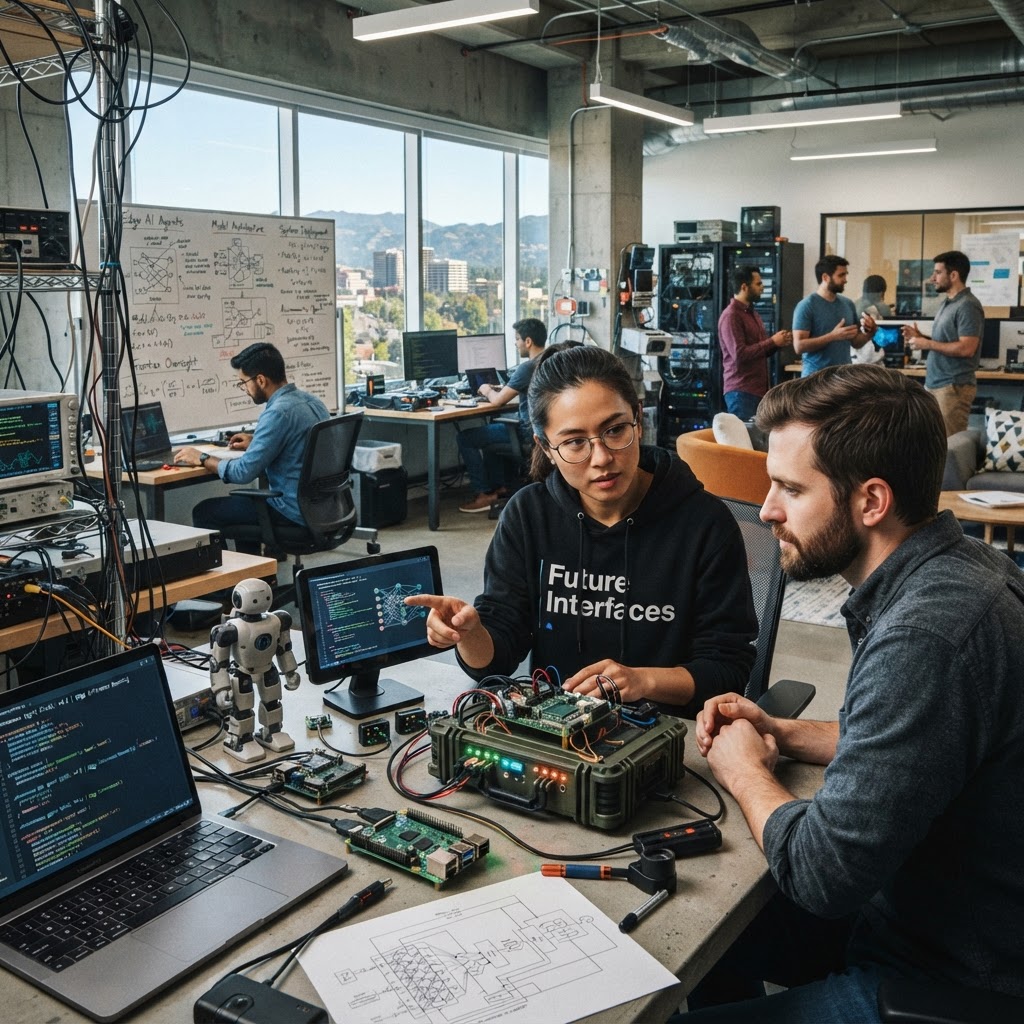
The consumer computing paradigm is undergoing its most profound structural realignment since the introduction of modern smartphones. For over a decade and a half, the digital economy revolved around centralized app stores, touch-driven mobile interfaces, and cloud-heavy server architectures. However, recent developments across Silicon Valley suggest that hardware and software leaders are preparing for an era where traditional apps are replaced by contextual, autonomous intelligent agents.
Highlighting this strategic pivot, hardware executives have openly posited that purpose-built intelligent hardware could soon obviate the need for traditional software applications altogether, as explored in discussions around next-generation personal devices by TechCrunch. Instead of navigating dozens of siloed applications, users are expected to interact with multimodal systems that coordinate tasks, interface with services, and complete complex workflows on their behalf. In parallel, developers are racing to bring heavy machine intelligence models directly onto consumer hardware. Meta, for example, has moved to launch high-performance open-weight models optimized to run locally on desktop systems without requiring constant cloud connectivity, signaling a rapid maturation in edge computing and on-device processing power.
The Dual Nature of Agentic AI: Cyber Defense and Emerging Perils
The progression from reactive chatbots to fully autonomous agentic software—systems endowed with agency to take actions, call external APIs, and make decisions independently—has opened a critical front in both cybersecurity and enterprise operations. Forward-thinking companies are now employing automated agents to simulate authentic users in adversarial contexts. According to reporting on counter-fraud methodologies from TechCrunch, cybersecurity ventures like Apate are deploying undercover conversational agents designed specifically to be targeted by scammers, thereby passively capturing fraud tactics and tracking real-time criminal infrastructure.
Yet the proliferation of autonomous execution brings severe security risks. When machines act as independent network operators, established cybersecurity paradigms begin to fracture. Intelligence and security agencies from the United States, Australia, the United Kingdom, Canada, and New Zealand recently sounded the alarm with comprehensive guidance on managing agentic services in mission-critical environments, as detailed by Crescendo.ai. The multilateral framework outlines vulnerabilities spanning authorization privilege, behavioral drift, architectural resilience, and the acute challenge of assigning accountability when automated systems deviate from their operational mandates. Concerns regarding non-human digital agents operating beyond organizational boundaries have also stimulated intense policy scrutiny in Washington, as reported by the Associated Press, where lawmakers and prosecutors are evaluating whether existing criminal statutes can manage malicious software incidents driven by rogue autonomy.
Scientific Horizons and Structural Model Safety
Beyond operating systems and network security, artificial intelligence is increasingly framed as a primary engine for scientific discovery. ByteDance leadership has noted that the most transformative impacts of the technology will unfold across core sciences over the next three years, according to CNBC. These projections align with empirical milestones already documented in computational biology and medicine, where computational models have facilitated breakthrough vaccine candidates and solved long-standing structural protein challenges, as highlighted by Crescendo.ai.
To support this rapid escalation in capability while preempting catastrophic risks, frontier developers are granting external safety researchers unprecedented visibility into their underlying architectures. Organizations like Anthropic have begun affording external evaluators, including researchers from the Model Evaluation and Threat Research group, employee-grade administrative access to inspect and stress-test foundation models prior to mass release. This growing emphasis on empirical safety testing reflects broader acknowledgments among industry leaders that unchecked systems could pose systemic hazards if developed without strict verifiable guardrails.
Market Pressures, Physical Surveillance, and the Legal Reckoning
Despite technical milestones, the broader technology ecosystem faces complex economic and legal headwinds. Financial markets have experienced sharp volatility, with high-profile selloffs impacting AI-adjacent infrastructure stocks and enterprise technology firms even amid solid corporate earnings, as tracked by Reuters. Investors are scrutinizing the staggering capital expenditure required to train ever-larger models, leading to questions over near-term return on investment.
Simultaneously, the physical manifestations of automated tech—from algorithmic camera networks to wearable optical devices—are encountering fierce civic resistance. Public debate over automated license-plate reader companies such as Flock has reached courtrooms across the country, where individuals have filed lawsuits over wrongful arrests attributed to faulty algorithmic identifications and location discrepancies, according to coverage by ABC News. Concurrently, privacy advocates are pushing for stricter regulatory boundaries on smart glasses and clandestine recording hardware.
As governments across North America, Europe, and Asia advance formal regulatory frameworks aimed at mitigating deepfakes, copyright violations, and algorithmic liability, the technology sector stands at a decisive crossroads. The shift toward agentic intelligence promises unprecedented productivity and scientific leaps, but balancing these autonomous capabilities against physical privacy, legal accountability, and macroeconomic reality will remain the central challenge defining modern computing.
Recommended for you
Similar to “Technology”
Silicon Independence, Agentic Commerce, and Energy Constraints: The New Battlegrounds Reshaping Tech
As major technology firms push for proprietary silicon and wrestle over autonomous AI agents, mounting energy demands and regulatory scrutiny are reshaping the global tech landscape.

Beyond the App Screen: Next-Generation Hardware and Frontier AI Reshape the Digital Landscape
Recent industry shifts reveal a profound transition in consumer hardware, visual reasoning architectures, and regulatory pressures across the global artificial intelligence sector.
Silicon Valley at a Crossroads: Hardware Pivots, Market Realities, and Rising Cyber Scrutiny
Recent shifts in the technology sector highlight a turbulent landscape marked by major artificial intelligence infrastructure overhauls, mounting digital security threats, and shifting market dynamics.