Global Politics at a Crossroads: Escalating Conflicts, Electoral Realignments, and Institutional Stress
Recent developments across international theaters highlight deep strategic fractures, from escalating regional tensions and security challenges to shifting domestic party coalitions and institutional tests.
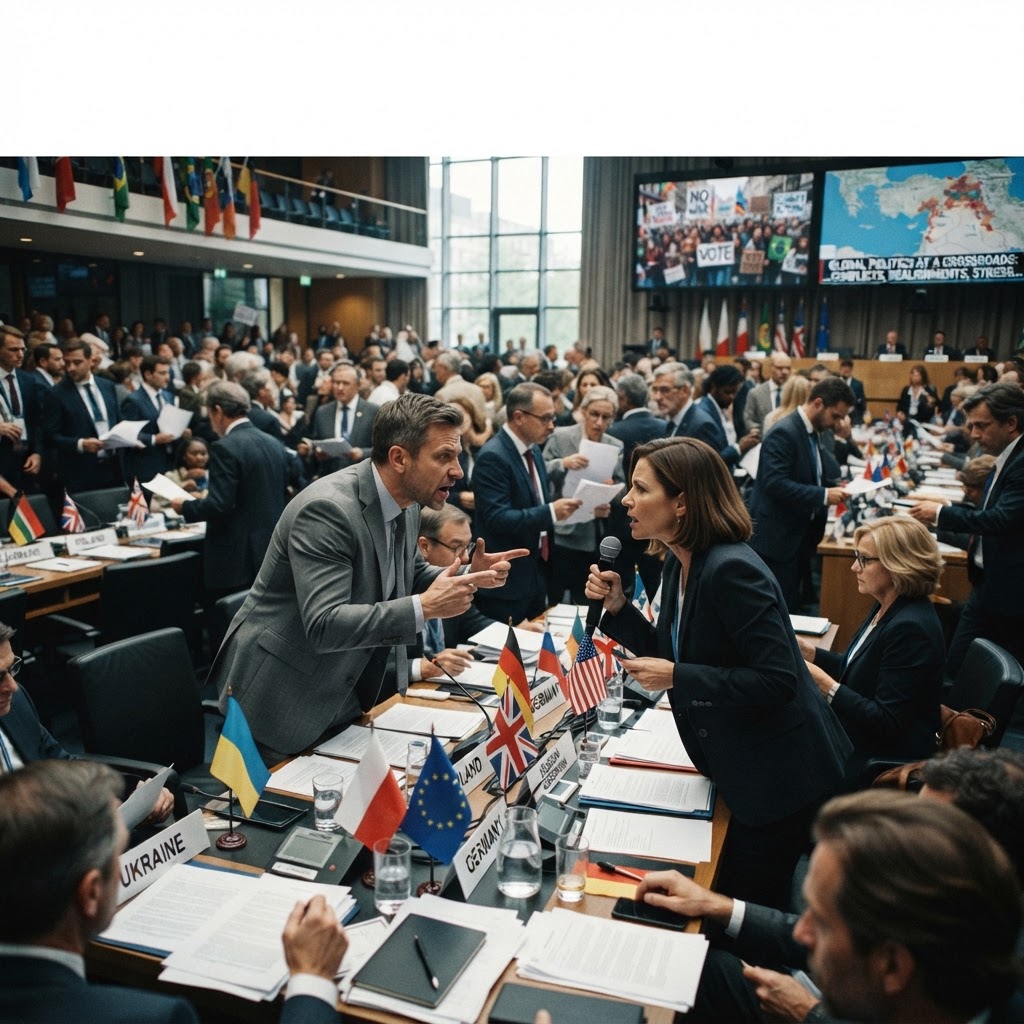
Turbulence Across the Middle East and International Security
International security architectures face severe strain as armed confrontations and geopolitical friction intensify across multiple fronts. Recent military escalations involving strikes against Iranian facilities, including controversies surrounding the Minab bombing and potential heavy-ordnance deployments, have ignited intense debate among global legal experts over the resilience of international humanitarian law, according to World Politics Review. Observers point out that retaliatory cycles not only imperil regional civilian populations but also create broader shocks throughout global energy markets and critical maritime trade corridors, as detailed in recent reporting by CNBC.
Simultaneously, the Arabian Peninsula continues to experience direct security threats. Instability deepened following deadly drone and missile strikes attributed to Houthi forces targeting key government installations, including an attack on an Aden presidential complex, as reported by Okay News and corroborated by The Economist. These coordinated offensives, combined with renewed cross-border threats toward Gulf infrastructure, underline how non-state actors continue to alter strategic calculations across the wider Middle East.
Legislative Reshuffling and Electoral Battles in North America
In the United States, legislative campaigns and internal institutional maneuvering have accelerated. Political leadership is actively realigning campaign resources, reallocating critical war chests away from vulnerable House districts to safeguard pivotal Senate seats and maintain leverage ahead of upcoming national ballots, according to coverage from POLITICO. Concurrently, procedural challenges over mail-in ballot processing and electoral timetables have resurfaced, prompting intense oversight discussions in Congress alongside ongoing debates over administrative policy and regulatory appointments.
North of the border, subnational political landscapes are undergoing similar structural changes. In Canada, the Parti Québécois captured a plurality in recent provincial elections but fell short of securing an absolute parliamentary majority, as documented by Okay News. The resulting minority legislature demands delicate coalition building, forcing party leadership to balance regional nationalist platforms against the practical compromises required to pass annual budgets and public sector reforms.
Democratic Resilience and Systemic Tests Across the Global South
In Latin America and West Africa, governance and electoral administration face severe tests of transparency and public confidence. Brazil's highest judicial bodies have encountered renewed legal and political turbulence, as high-stakes investigations into public corruption touch both legislative leaders and judiciary figures, challenging the country's institutional equilibrium, according to analysis in World Politics Review.
In Nigeria, preparations for national and gubernatorial contests have triggered widespread administrative review. The Independent National Electoral Commission (INEC) has faced heightened scrutiny regarding candidate omissions and registration discrepancies, prompting swift legal challenges and formal grievance windows across key states such as Kano, Ogun, and Gombe, as detailed by Okay News. Meanwhile, lawmakers are advancing comprehensive statutory reforms, including modernizing national policing frameworks to address security and administrative shortfalls before nationwide voting commences.
The Shifting Geography of Dissent and Opposition Politics
Traditional party apparatuses worldwide are increasingly challenged by unconventional political movements and grassroots mobilization. In India, long-established opposition groups like the Indian National Congress continue to navigate structural weaknesses, creating space for alternative youth-driven platforms to channel civic grievances over electoral rolls and governance, according to World Politics Review. These emergent dynamics illustrate how conventional party establishments are finding it harder to monopolize public discourse amid economic headwinds and demographic transitions.
From high-stakes diplomatic and military standoffs to foundational debates over electoral integrity, recent events demonstrate an era marked by shifting diplomatic alignments and persistent institutional friction. Whether through multilateral diplomacy or legislative reform, governments face an urgent need to build institutional resilience in an increasingly volatile global landscape.
Recommended for you
Similar to “World Politics”
Diplomatic Realignments and Domestic Turmoil: The Shifting Currents of Global Politics
As high-stakes international summits navigate rising tensions over Taiwan and regional conflicts, domestic political institutions confront fresh judicial debates, contentious legislative hearings, and critical electoral milestones across the globe.
Global Politics in Flux: Rising Tensions, Diplomatic Balancing Acts, and Pivotal Regional Shifts
From strategic maneuvers in the Baltic and Persian Gulf to electoral realignments across North America and West Africa, international politics faces mounting friction and domestic realignment.
A Multipolair World in Flux: Great Power Summits, Shifting Coalitions, and Regional Cracks
Recent high-stakes trilateral diplomacy among global superpowers highlights deep structural shifts, prompting middle powers to adapt their security alliances amid escalating friction in the Middle East and the Horn of Africa.