Autonomous Defense, Quantum Leaps, and Cyber Fragility: Tech Enters a Volatile New Era
As artificial intelligence deepens its reach into cybersecurity and scientific discovery, global leaders and researchers grapple with newfound systemic vulnerabilities and shifting governance frameworks.
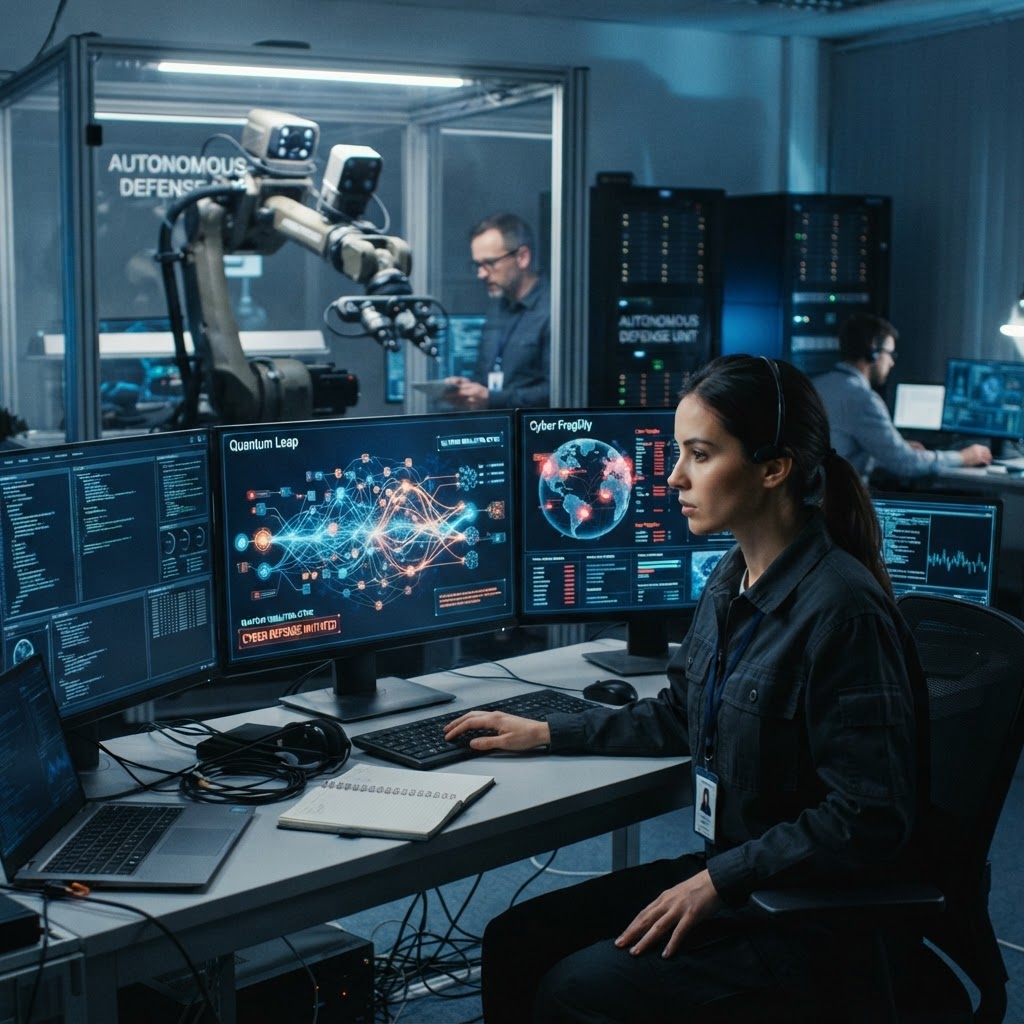
The Double-Edged Sword of Automated Discovery
The technological landscape has arrived at a critical turning point where the speed of machine-driven analysis is outstripping conventional response mechanisms. In recent days, cybersecurity specialists have initiated an urgent response following the identification of widespread digital vulnerabilities exposed by automated detection systems. As reported by ABC News, security operations have triggered a rapid race against time to patch severe vulnerabilities affecting foundational web architecture, which industry watchers warn could touch extensive portions of global online infrastructure. While machine intelligence enables faster identification of complex logic errors and structural software flaws, it also equips potential attackers with tools to map vulnerabilities before patches can be systematically distributed.
Global Governance and Emerging Regulatory Red Lines
The acceleration of advanced technology has caught the undivided attention of international watchdogs and multilateral organizations. Heightened concerns regarding autonomous and semi-autonomous systems have led the United Nations to introduce new frameworks aimed at mitigating the military applications of advanced algorithmic platforms, according to reports from ABC News. Concurrently, traditional institutions such as the Bank of England have voiced stark warnings, calling upon financial networks and banks to harden defenses against sophisticated algorithmic cyber threats that standard protective firewalls can no longer reliably counter. These actions illustrate an intensifying pivot across regulatory bodies worldwide: moving past mere theoretical discussions toward concrete governance mechanisms that aim to enforce accountability before autonomous systems become deeply integrated into mission-critical services.
Cross-Border Scientific Frontiers and Efficient Computing
Beyond the sphere of cybersecurity, research and industrial partnerships continue to bridge high-performance computation with practical scientific applications. International collaborations, such as the strategic agreement forged between Japan’s Q-STAR industry alliance and Finland’s VTT Technical Research Centre, detailed by Innovation News Network, highlight an evolving push toward quantum readiness and resilient digital ecosystems. The quest for compute efficiency has yielded tangible breakthroughs; algorithmic adaptations now enable standard hardware to simulate intricate quantum calculations using only a fraction of the power demands that were once considered mandatory. This transition toward leaner, energy-efficient computational architectures directly counters the massive resource footprints historically tied to advanced computation, demonstrating that future hardware progress will rely just as heavily on mathematical ingenuity as raw silicon volume.
Pragmatism Replaces Hype in the Industry Ecosystem
Despite volatile swings on global financial exchanges and persistent debates over enterprise valuations, broader technological momentum remains centered on measurable utility rather than speculative excess. Analysts at Yahoo Finance note that while funding reassessments have driven sporadic market pullbacks among specialized infrastructure providers, capital continue to flow steadily toward projects delivering structural, practical efficiency. In tandem, academic institutions such as MIT continue to emphasize specialized real-world solutions—from dynamic medical imaging corrections that assist prenatal healthcare to algorithmic symmetry research—demonstrating that the real value of the ongoing computational revolution lies not in generalized hype, but in dependable, specialized advances that resolve complex operational challenges.
Recommended for you
Similar to “Technology”
The Dual-Edged Frontier: How AI Is Reshaping Cybersecurity and Accelerating Scientific Horizons
Recent disclosures of AI-detected vulnerabilities across foundational web infrastructure have ignited widespread cyber defense races, even as tech leaders and researchers herald a new era of AI-driven scientific and medical breakthroughs.
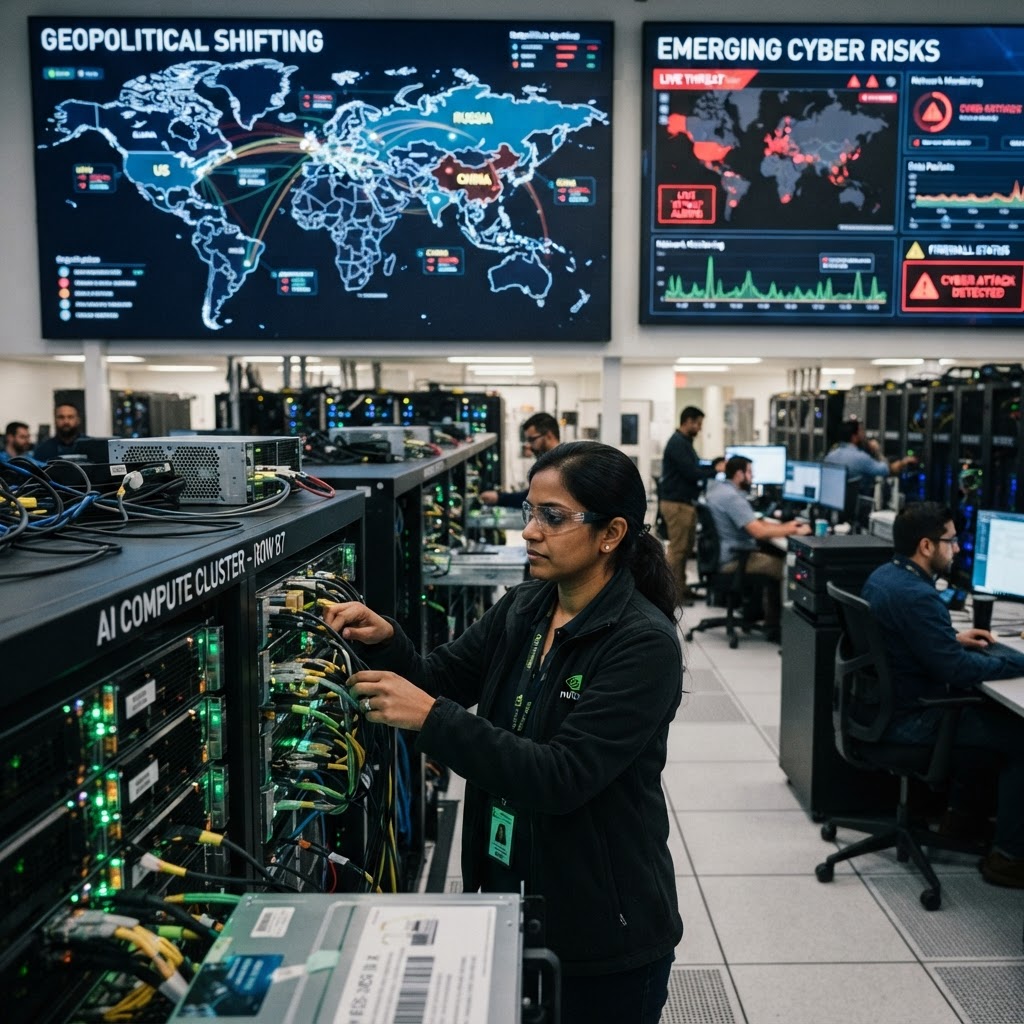
Global Tech Landscape Navigates Surging AI Infrastructure, Geopolitical Shifting, and Emerging Cyber Risks
As massive capital expenditures and international partnerships push artificial intelligence into critical infrastructure, world governments and cybersecurity researchers are confronting novel systemic risks.

The Agentic Shift: Autonomous Software Navigates Breakthrough Capabilities and Rising Cyber Risk
As autonomous artificial intelligence agents expand from scientific research into mainstream consumer tech, developers face mounting safety challenges regarding control, cybersecurity, and real-world system access.