Global Politics in the Balance: U.S. Midterms Collide with Deepening Middle East and Geopolitical Frictions
As American voters cast their ballots in a high-stakes, record-spending midterm election shaped by inflation, volatile international crises across the Middle East, Eastern Europe, and South Asia intensify pressure on world leaders.
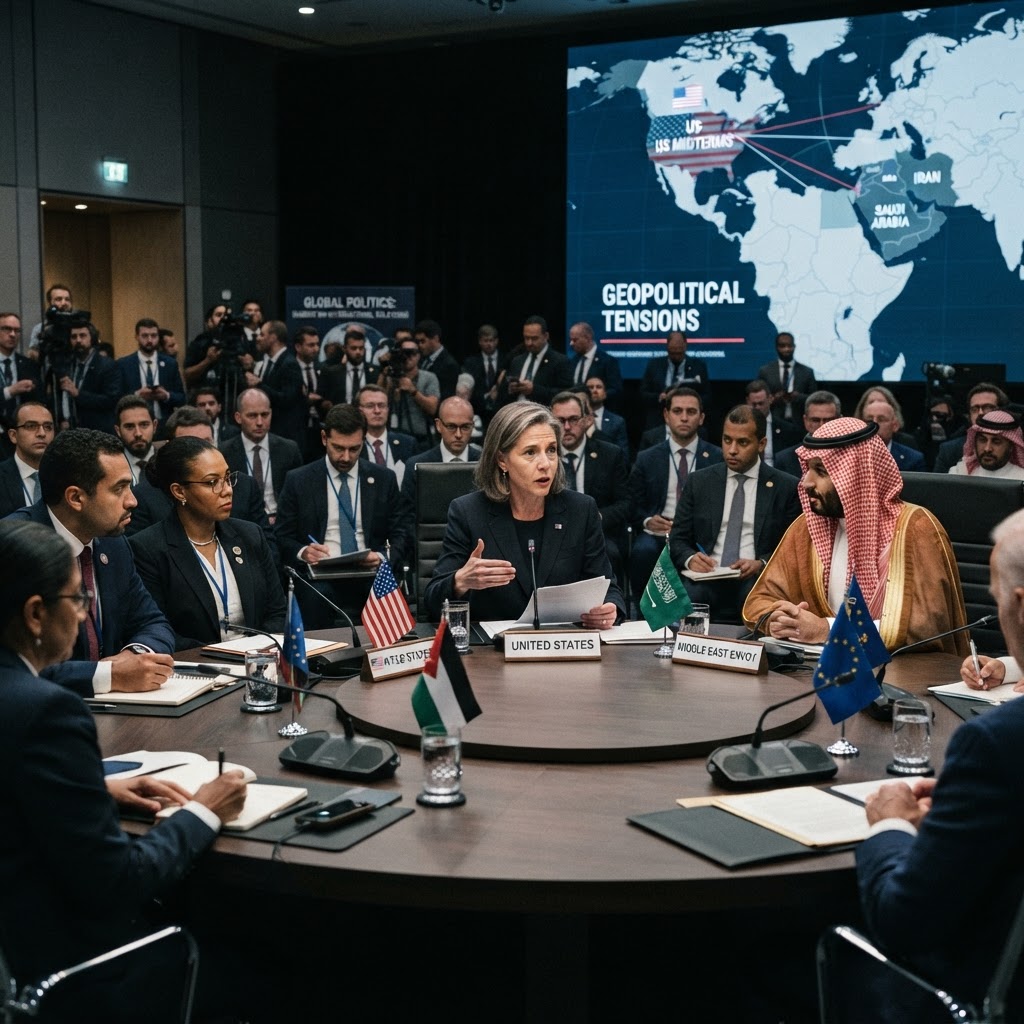
A Watershed Midterm Vote in the United States
Voters across the United States have arrived at polling stations for an exceptionally consequential midterm election cycle, an event widely seen as a verdict on President Donald Trump's administration and a bellwether for the global political climate. According to tracking surveys compiled by 10 Things Global News, political spending across congressional races has surged past an unprecedented twelve billion dollars, underscoring the immense financial stakes invested in legislative control.
Polling indicates that economic concerns remain paramount for the electorate. Nationwide surveys show nearly four out of five voters identifying the rising cost of living as their decisive concern, with the opposition Democratic Party maintaining an advantage on questions of economic management. As reported by WNG News, Democratic candidates hold fragile leads in several pivotal Senate races, including battlegrounds in Michigan, Ohio, Maine, Kansas, and Texas, while the contest for the House of Representatives remains fiercely competitive.
In his closing remarks delivered at the Lincoln Memorial Reflecting Pool, President Trump urged conservative turnout by framing the election as a fundamental choice over national sovereignty, domestic energy production, and tax policy. Meanwhile, congressional races have drawn intense scrutiny due to broader shifts among independent voters and the novel influence of artificial intelligence in campaign communication, as highlighted in reporting from The Japan Times.
Simmering Tensions and Diplomatic Maneuvers in the Middle East
The domestic political drama unfolds against an increasingly perilous international security backdrop. Tensions between Washington and Tehran have reached a precarious juncture following extensive exchanges that targeted American military installations and Gulf shipping routes. Investigative findings reported by the Associated Press revealed that satellite imagery verified damage across regional military sites, elevating scrutiny around air defense capabilities and infrastructure vulnerabilities.
Despite warnings from regional partners regarding the potential destabilization of vital Gulf energy lanes, diplomatic corridors have not closed entirely. Qatari-facilitated indirect negotiations have continued, with Iranian officials floating a framework to ease transit disruptions in the Strait of Hormuz in exchange for renewed security and nuclear discussions. However, ongoing friction—exemplified by reports of naval incidents and retaliatory warnings from Iranian leadership—leaves regional governments preparing for any sudden shifts in U.S. foreign posture once the election outcome crystallizes.
Democratic Strain and Institutional Clashes Across Asia and Europe
Beyond North America and the Middle East, major democracies and strategic alliances are contending with distinct internal pressures. In India, New Delhi witnessed substantial civil demonstrations over the weekend. As covered by The Japan Times and the Associated Press, the opposition INDIA alliance orchestrated massive street protests demanding greater transparency and administrative accountability ahead of upcoming state contests, generating fierce friction with Prime Minister Narendra Modi's government.
In Europe, political polarization continues to test governance models. In Poland, Prime Minister Donald Tusk remains locked in an institutional standoff with judicial figures and the conservative opposition over legal and constitutional reforms. Meanwhile, in Germany, debates within the right-leaning Alternative for Germany (AfD) regarding its economic platforms reflect broader shifts across the European continent, where populist parties balance ideological identity against aspirations of formal governance.
Conflict and Disruption in Eastern Europe
In Eastern Europe, efforts toward de-escalation remain fragile. A recent strike in the Zaporizhzhia region, noted by 10 Things Global News, disrupted humanitarian operations and preceded a series of high-level cyber breaches targeting emergency notification networks in both Ukraine and Russia. Although Western partners continue to coordinate major air defense procurements to bolster Kyiv's resilience, the breakdown of brief localized ceasefires highlights the persistent friction confronting diplomatic envoys.
As voters deliver their verdict in Washington and international actors reassess their diplomatic calculations, the coming weeks will likely set the baseline for international diplomacy, defense spending, and multilateral alliances through the remainder of the decade.
Recommended for you
Similar to “World Politics”
A Global Political Reshuffle: Capitol Hill Power Shifts and Deepening Geopolitical Fault Lines
Recent electoral upheavals in the United States and intense diplomatic realignments across the Middle East, Eastern Europe, and South Asia mark a transformative moment in international politics.
A Volatile Diplomatic Pivot: Great Power Summits, Shifting Coalitions, and Rising Regional Fractures
As high-stakes summits in Asia test alliances and bring global superpowers to Shenzhen and Manila, parallel security crises from Eastern Europe to the Middle East are reshaping international geopolitics.
A Fractured World Order: Power Shifts, Diplomatic Realignments, and Crises Reshape Global Politics
Recent high-stakes diplomacy at regional summits, leadership transitions across major capitals, and escalating confrontations from the Middle East to Eastern Europe mark a defining moment of global realignment.