Frontiers of Discovery: Recent Breakthroughs Reshaping Physics, Genetics, and Earth Science
From unexpected magnetic control at the atomic scale to massive genetic catalogs and deep ocean thermal shifts, recent findings are actively challenging long-held scientific paradigms.

Unlocking Anomalies at the Subatomic Scale
In the discipline of quantum physics, fundamental rules are frequently tested, but occasional findings actively confound prevailing theories. Researchers at the Delft University of Technology recently reported an unforeseen phenomenon while experimenting with single-atom magnetic control, as detailed by ScienceDaily. Using radiofrequency signals from a scanning tunneling microscope, physicists manipulated the magnetic orientation within a single atomic nucleus even when the nuclear and electron spins were disentangled. Theoretical models previously suggested that the atomic nucleus should have been insulated from such electrical stimulation. This surprising manipulation offers promising implications for quantum memory architectures, although physicists acknowledge that the exact physical mechanism driving this nuclear responsiveness remains an open question.
Transforming Biomedical Understanding: Genetics and Aging
Parallel shifts in perspective are sweeping through the life sciences, where novel genomic resources and cellular imaging techniques are upending classical assumptions about biology and senescence. At the Clemson Institute for Human Genetics, scientists unveiled the third version of the Drosophila melanogaster Genetic Reference Panel (DGRP3), documented by Clemson News. Comprising over 1,000 distinct genetic lines and cataloging nearly 8.8 million variations, this expansive panel offers researchers unprecedented resolution into how complex polygenic networks govern aging, disease vulnerability, and behavioral traits.
Simultaneously, researchers at the Jackson Laboratory have challenged foundational beliefs regarding cardiovascular degradation. Reported by ScienceDaily, high-resolution single-cell analysis revealed that cardiac aging does not occur uniformly across the heart muscle as once presumed. Instead, key indicators of cellular senescence, fibrosis, and chronic inflammation congregate primarily within the valves and primary blood vessels. The study also highlighted divergent aging pathways between biological sexes—with male tissues demonstrating heightened fibrotic remodeling and female tissues displaying alterations in developmental pathways—suggesting that future cardiovascular therapeutics must adopt more anatomically and biologically nuanced strategies.
Hidden Dynamics in Ocean Systems and Environmental Health
Environmental and planetary sciences have experienced equally critical developments. While atmospheric temperature fluctuations frequently dominate public attention, a comprehensive study published in npj Climate and Atmospheric Science revealed the vast and persistent nature of subsurface marine heatwaves. By evaluating four-dimensional ocean temperature reanalysis across three decades, climate scientists identified more than 500 large-scale thermal anomalies extending hundreds of meters beneath the surface. These hidden thermal extremes, closely linked to broader climate mechanisms such as the El Niño–Southern Oscillation, often linger for months or years beneath the ocean mixed layer, exerting unseen physiological pressures on marine biomes.
On land, escalating evidence points toward widespread environmental chemical exposures. According to a joint assessment from the United Nations Environment Programme and the World Health Organization, reported by U.S. News & World Report, endocrine-disrupting chemicals found in routine household consumer products and plastics now inflict an estimated global healthcare burden surpassing $1.1 trillion each year. The authors called for harmonized international policies to mitigate exposures that disrupt critical hormone pathways.
The Trajectory of Cross-Disciplinary Science
Across physical laboratories, deep ocean monitoring networks, and medical research institutes, modern scientific inquiry is increasingly moving beyond isolated observations. Whether unraveling quantum contradictions inside a single nucleus or mapping millions of genetic variations, contemporary research continues to demonstrate that natural systems possess layers of nuance that standard models are only beginning to capture.
Recommended for you
Similar to “Science”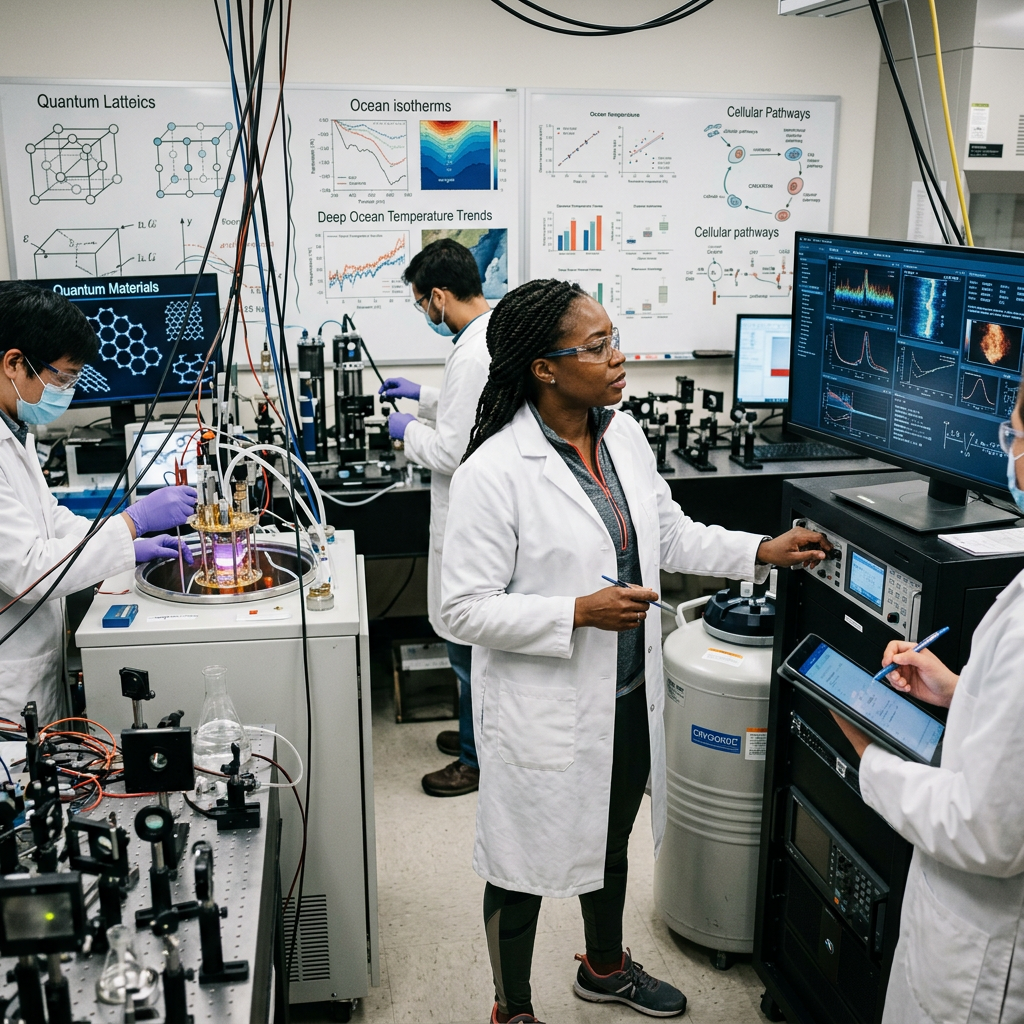
Frontiers of Discovery: Breakthroughs in Quantum Materials, Deep Ocean Heat, and Precision Oncology
Recent advances across physics, climate oceanography, and oncology highlight how atomic-scale manipulations, deep-sea tracking, and molecular genetic discoveries are reshaping modern science.
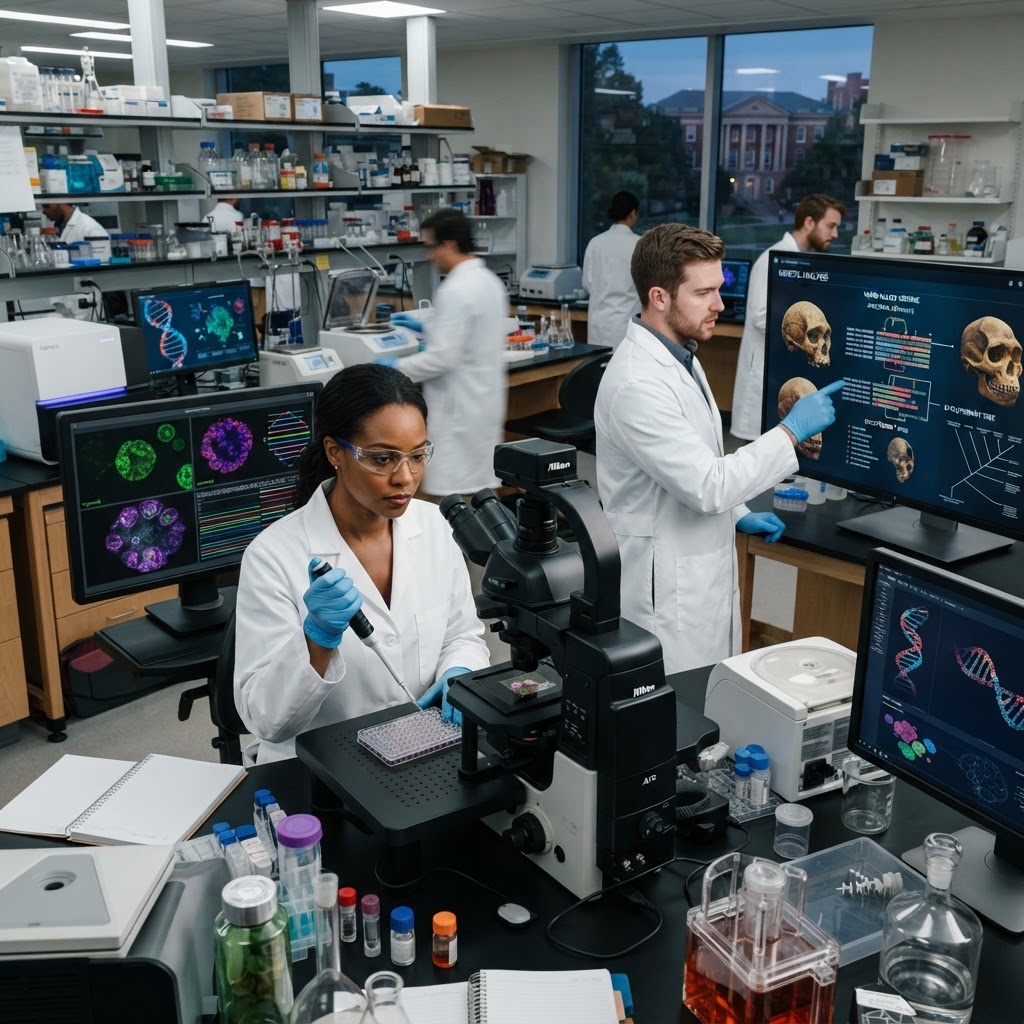
Frontiers of Discovery: Recent Breakthroughs Reshaping Medicine, Genetics, and Evolutionary History
Recent scientific advances highlight unprecedented precision in CRISPR gene editing inside living humans, promising clinical milestones in cancer immunotherapy, and remarkable fossil findings that overturn long-held evolutionary assumptions.

Frontiers of Discovery: How Recent Breakthroughs in Physics, Medicine, and Deep-Sea Biology Are Reshaping Science
From microchip-transforming magnetic physics and orbital construction to breakthroughs in cancer genomics and ocean carbon capture, recent discoveries highlight an accelerating era of cross-disciplinary innovation.