A Fractured Consensus: How Competing Editorial Visions Are Defining Modern Geopolitics
As global flashpoints intensify across the Middle East, Eastern Europe, and the Indo-Pacific, international editorial commentary reveals a deepening divide over deterrence, multilateral alliances, and domestic governance.
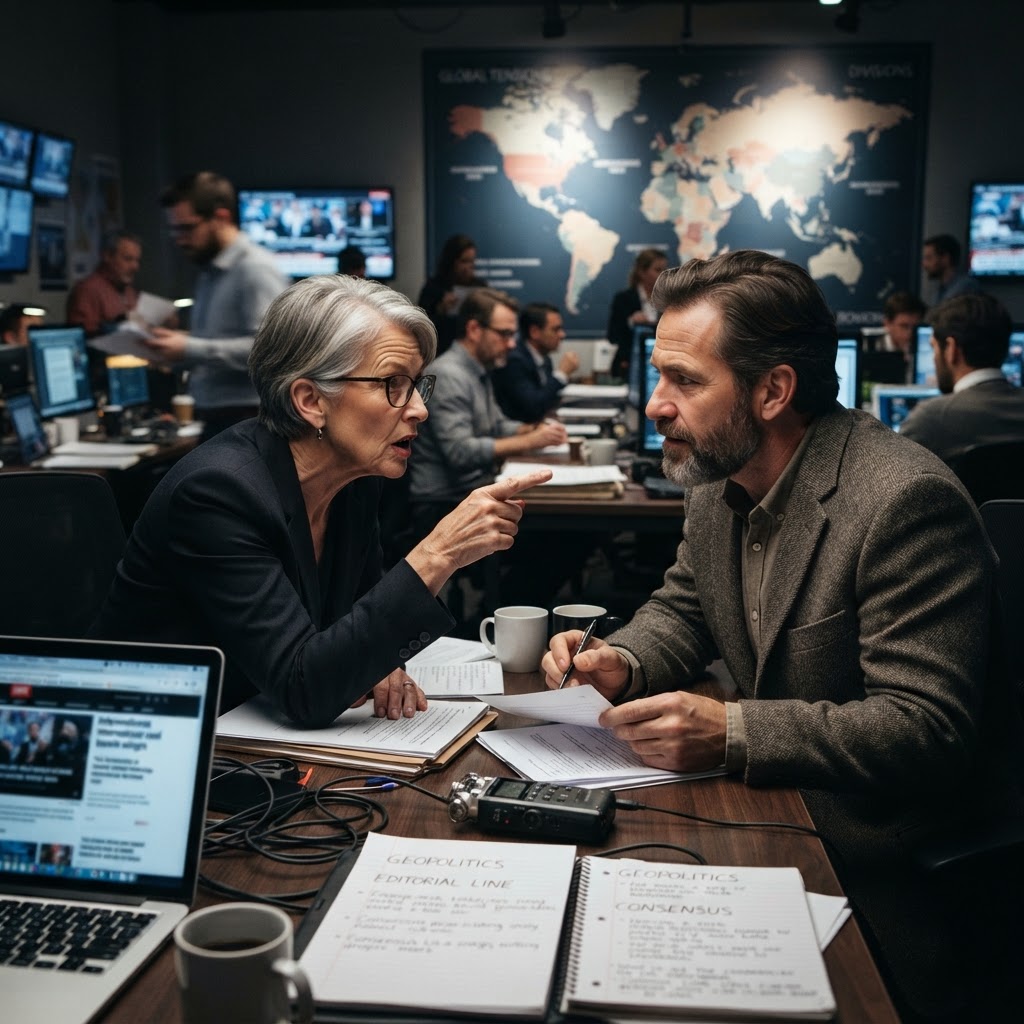
The Divergence of Modern Opinion
In an increasingly multipolar world, international commentary has ceased to speak with a single institutional cadence. Recent commentaries across major global outlets reflect acute anxiety over eroding global security architectures, systemic democratic stress, and the unintended fallout of strategic confrontation. From Washington to Riyadh and Beijing, opinion writers are no longer simply assessing events as detached observers; they are actively charting the boundaries of an unstable international order where regional conflicts continually challenge established alliances.
Sovereignty, Defense, and the Middle Eastern Crucible
In the Middle East, editorial analysis continues to revolve around structural vulnerability and national resilience. Analysis from regional publications like Arab News highlights persistent flashpoints, emphasizing that collective security frameworks are no longer optional but an existential necessity for regional stability. As cross-border missile strikes and asymmetric drone assaults continue to strain civil infrastructure, regional commentators argue that sovereign security pacts must be treated as standard protocol rather than situational exceptions.
Simultaneously, broader analytical coverage across platforms such as Al Jazeera underscores the enduring human cost that underpins these security crises. Essays highlighting protracted humanitarian fallout in war-ravaged zones reveal a deep skepticism toward international diplomatic mechanisms. Editorial writers point out that when multilateral mediation mechanisms stall, civilian resilience reaches a breaking point, creating deep structural traumas that long outlast formal ceasefires.
Polarization and Economic Anxiety in Western Democracies
Across North America and Europe, opinion columns reveal a domestic consensus under intense pressure. As reflected in commentary from Eurasia Review and POLITICO, domestic governance debates are increasingly dominated by mounting fiscal deficits, legislative polarization, and controversies surrounding taxation and executive reform. Observers caution that escalating sovereign debt and political fragmentation are actively restricting the capacity of Western governments to project stable long-term foreign policies.
Moreover, institutional debates over representative fairness remain a focal point. Recent editorial interventions by institutions like The New York Times continue to press the urgency of electoral reform, arguing that unaddressed issues such as hyper-partisan gerrymandering fundamentally degrade the credibility of democratic institutions. The consensus among these domestic commentators is straightforward: when internal governance structures erode, international credibility and diplomatic leverage inevitably follow.
The Pacific Horizon and Great-Power Rivalry
Nowhere is rhetorical tension sharper than in Indo-Pacific editorial pages. Outlets reflecting official perspectives in Asia, such as the Global Times, increasingly warn against Western-led deterrence strategies and expanded forward deployments, portraying missile deployments and joint maneuvers as destabilizing militarism rather than defensive measures. This contrasts directly with commentary originating from Western-aligned capitals, which frame these same deployments as critical deterrents against revisionist expansionism.
These sharp discursive contradictions illustrate a broader trend: the complete fragmentation of a shared narrative around international law and regional deterrence. In its place lies an editorial landscape characterized by zero-sum assessments, where defensive postures in one capital are invariably interpreted as hostile brinkmanship by another.
Conclusion: The Urgency of Synthesis
As commentary from think tanks and global analysts in Global Panorama suggests, the world is navigating a transition away from traditional peace frameworks toward a fragmented peace economy. Editorial pages do not merely record this shift; they amplify the anxieties, disputes, and hard choices confronting leadership across the globe. For observers seeking clarity, understanding these diverse and often contradictory viewpoints remains the only reliable route toward navigating an increasingly unpredictable global landscape.
Recommended for you
Similar to “Global Opinion”
A World Turning Inward: How Fractured Alliances and Economic Nationalism Are Redefining Global Governance
Recent commentary across leading global editorial pages reveals an escalating anxiety over economic nationalism, shifting migration compacts, and the gradual disintegration of post-war international frameworks.

A Fractured Equilibrium: How Emerging Hotspots and Frontier Tech Are Reshaping the Global Op-Ed Arena
Recent international commentary reveals deep anxieties over escalating Middle East tensions, high energy prices, and the urgent necessity for stringent frontier artificial intelligence governance.

A Fractured Horizon: Global Opinion Grapples with Trade Wars, Middle East Escalation, and Economic Disquiet
Recent commentary and opinion polling across major global outlets reflect acute public anxiety over persistent economic strain, escalating Middle Eastern confrontations, and the fragile state of international alliances.