Frontiers of Discovery: Molecular Asymmetry, Microbiome Therapeutics, and the Quantum Boundary
Recent breakthroughs spanning stereochemistry, gut microbiome metabolomics, and quantum error mitigation highlight how interdisciplinary science is solving longstanding puzzles in medicine and physics.
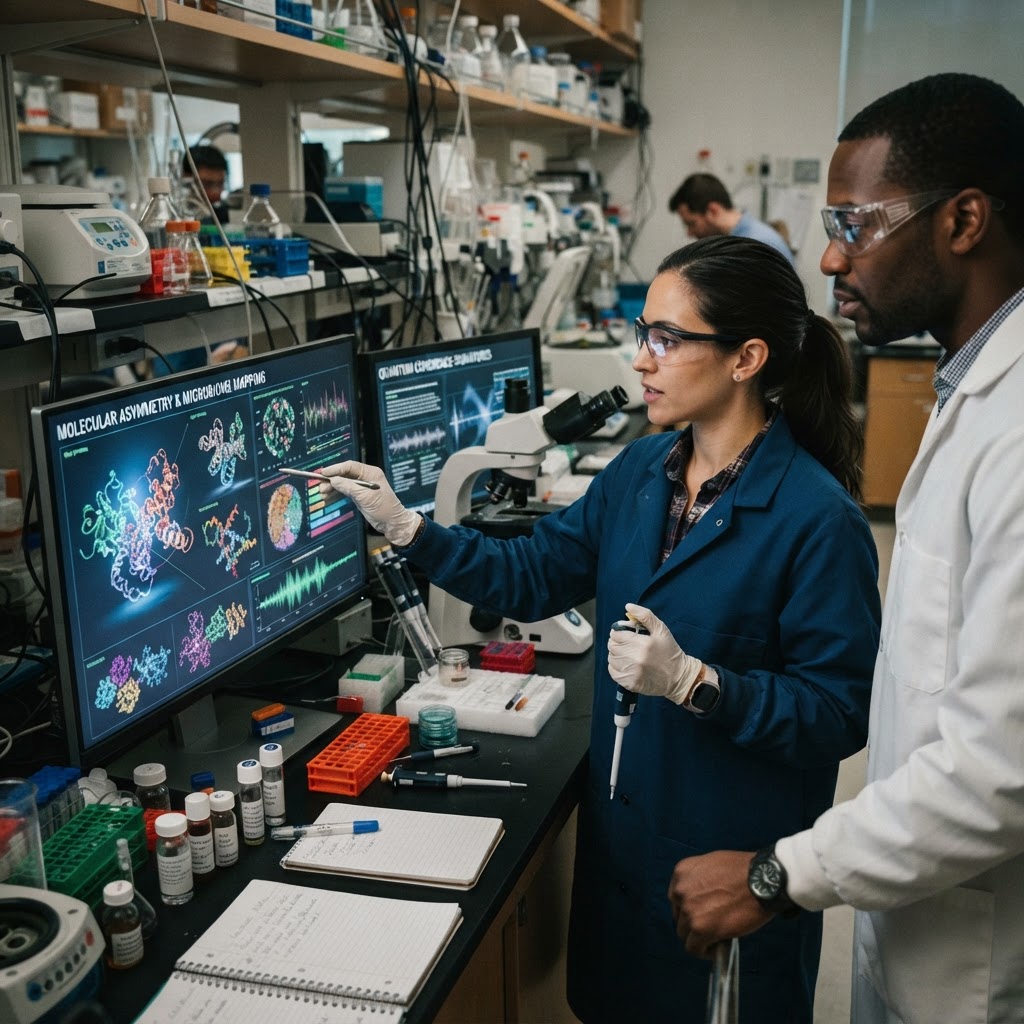
Unlocking the Mystery of Molecular Handedness
In recent days, the scientific community has turned its spotlight toward fundamental chemistry, celebrating monumental strides in solving homochirality—one of the universe’s most resilient puzzles. Homochirality describes how biological molecules overwhelmingly favor a specific 'handedness' or mirror-image orientation, such as left-handed amino acids and right-handed sugars. While traditional synthetic chemistry often produces equal mixtures of enantiomers, breakthrough work in chiral amplification has demonstrated how subtle asymmetric influences can catalyze cascade reactions, enabling a single mirror-image molecule to dominate entire organic systems.
Understanding this molecular asymmetry does not simply answer profound evolutionary questions about the origin of life on prebiotic Earth; it also carries transformative implications for modern pharmacology. Many drug molecules exhibit drastically different therapeutic or toxic effects depending on their spatial configuration. By mastering the pathways that dictate molecular symmetry, researchers can now design targeted syntheses with unprecedented precision, cutting down on toxic byproducts and paving the way for next-generation chiral therapeutics.
The Gut Microbiome as a Metabolic Shield
Parallel to triumphs in physical and molecular chemistry, biomedical science has reported crucial progress regarding the relationship between the human gastrointestinal ecosystem and cardiovascular health. Landmark findings published in Nature detail how specific commensal bacteria residing within the gut produce bioactive compounds capable of suppressing endogenous cholesterol synthesis.
Using advanced preclinical models, researchers identified a bacterial metabolic secretion that directly modulates lipid homeostasis, dampening systemic cholesterol levels without the adverse side effects often observed with high-dose synthetic inhibitors. This discovery reinforces a paradigm shift in therapeutic medicine: the realization that the microbiome functions not merely as a passive digestive facilitator, but as an active endocrine and metabolic organ. Translating these microbe-derived molecules into targeted interventions opens a promising frontier for reducing arterial plaque build-up and combating heart disease, which remains the leading cause of mortality worldwide.
Tackling the Neurogenesis and Neurodegeneration Conundrum
Within neuroscience, recent publications have revisited the century-old debate surrounding adult neurogenesis—specifically whether the mature human brain can sprout new neurons in response to stimuli or trauma. Advanced single-cell sequencing and spatial transcriptomics are providing nuanced insights, revealing that while neurogenesis in the adult hippocampus is tightly constrained, specific microenvironments harbor latent plasticity capable of reactivation.
This renewed focus on cellular regeneration dovetails with accelerated efforts against devastating neurodegenerative disorders such as amyotrophic lateral sclerosis (ALS) and Alzheimer's disease. Building on recently approved gene-silencing technologies like targeted antisense oligonucleotides, neuroscientists are actively mapping newly identified genetic pathways, including NEK1 mutations, to stabilize microtubule integrity and halt motor neuron degeneration. By integrating structural insights with genetic therapies, researchers are shifting the clinical objective from palliative symptom relief to fundamental cellular repair.
Quantum Resilience and Scalable Computation
Beyond the biological sphere, the physical sciences are navigating a decisive inflection point with respect to quantum error mitigation and hardware scalability. As reported in recent tracking by The Business Standard and Phys.org, physicists and computer scientists are transitioning from fragile, noisy physical qubits toward resilient, fault-tolerant logical qubits through advanced algorithmic error correction.
Quantum computing platforms have long struggled with decoherence, where external noise disrupts calculations. Recent architectures pairing neutral-atom arrays and trapped ions with real-time syndrome detection algorithms have successfully demonstrated sustained coherence times, suppressing computational error rather than amplifying it. Achieving this milestone brings practical quantum simulation within reach. In the foreseeable future, such computational power will allow researchers to simulate complex enzyme kinetics, model high-temperature superconductors, and optimize carbon-capture materials with absolute chemical fidelity.
A Synergistic Horizon
Across every discipline—from environmental cryosphere monitoring documenting swift ice sheet transformations to quantum mechanics and molecular biology—the boundaries separating individual sciences are rapidly dissolving. High-throughput machine learning now analyzes molecular structures in hours rather than decades, while advanced physical instruments reveal the dynamics of cellular life at atomic resolution. As researchers synthesize insights across these varied fields, they not only address the immediate questions of clinical disease and ecological stability but also refine humanity's foundational understanding of the physical cosmos.
Recommended for you
Similar to “Science”
Frontiers of Discovery: Recent Breakthroughs Reshaping Medicine, Molecular Biology, and Quantum Physics
Recent major developments across global laboratories highlight extraordinary momentum in modern research, ranging from optical control of cellular mechanisms and gut microbiome discoveries to unprecedented leaps in quantum hardware and preventative medicine.
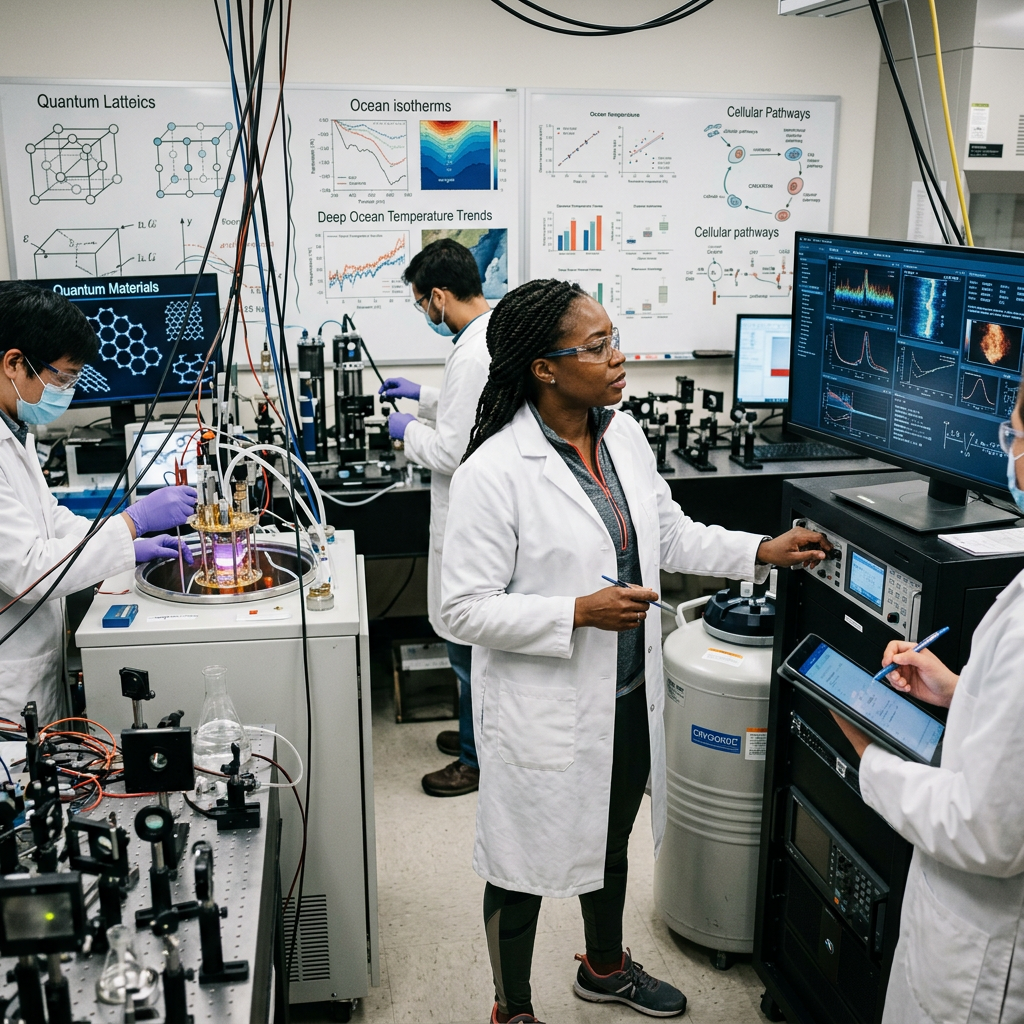
Frontiers of Discovery: Breakthroughs in Quantum Materials, Deep Ocean Heat, and Precision Oncology
Recent advances across physics, climate oceanography, and oncology highlight how atomic-scale manipulations, deep-sea tracking, and molecular genetic discoveries are reshaping modern science.
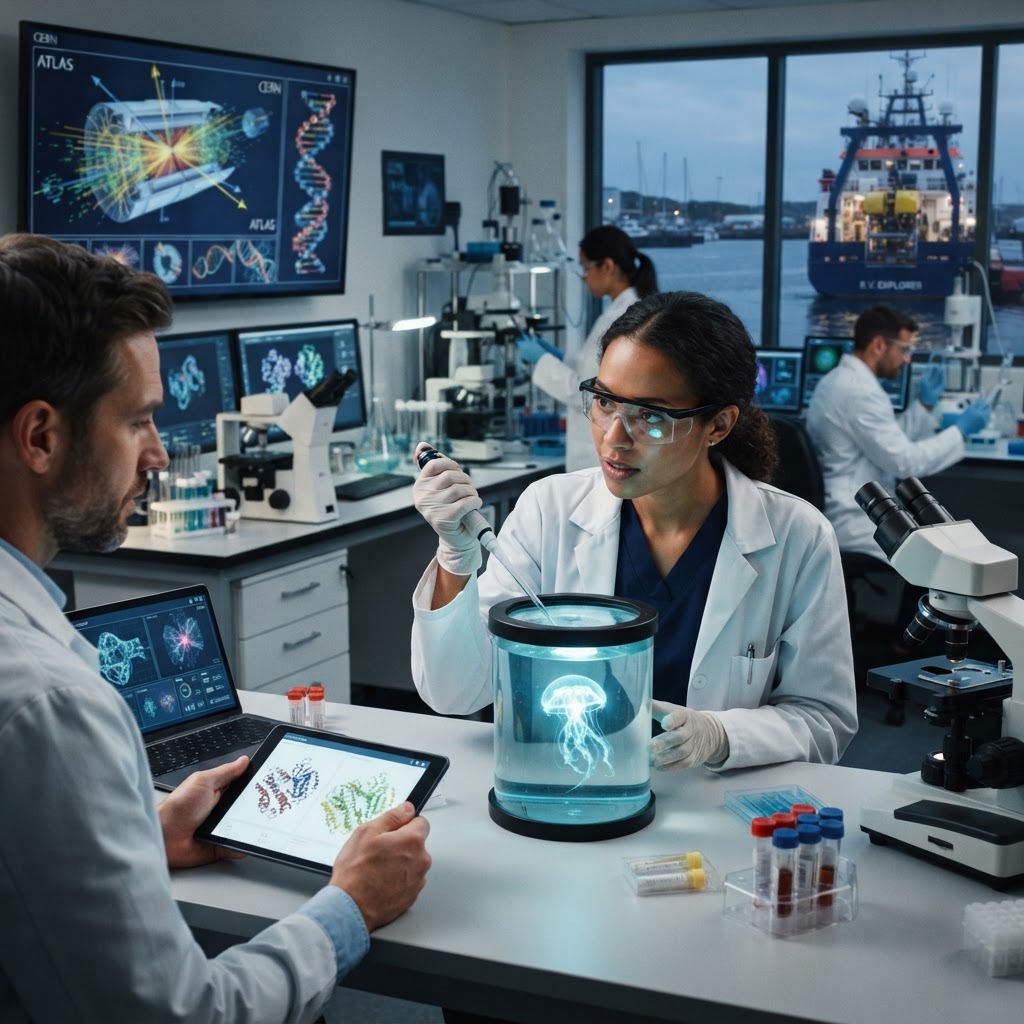
Frontiers of Discovery: How Recent Breakthroughs in Physics, Medicine, and Deep-Sea Biology Are Reshaping Science
From microchip-transforming magnetic physics and orbital construction to breakthroughs in cancer genomics and ocean carbon capture, recent discoveries highlight an accelerating era of cross-disciplinary innovation.