Frontiers in Discovery: From Nuclear Precision Clocks to Novel Cellular Organelles
Recent advances across physics, medicine, and evolutionary biology highlight a transformative period for modern scientific discovery, marked by quantum leaps and fundamental cellular revelations.
A New Baseline for Precision: Beyond Atomic Time
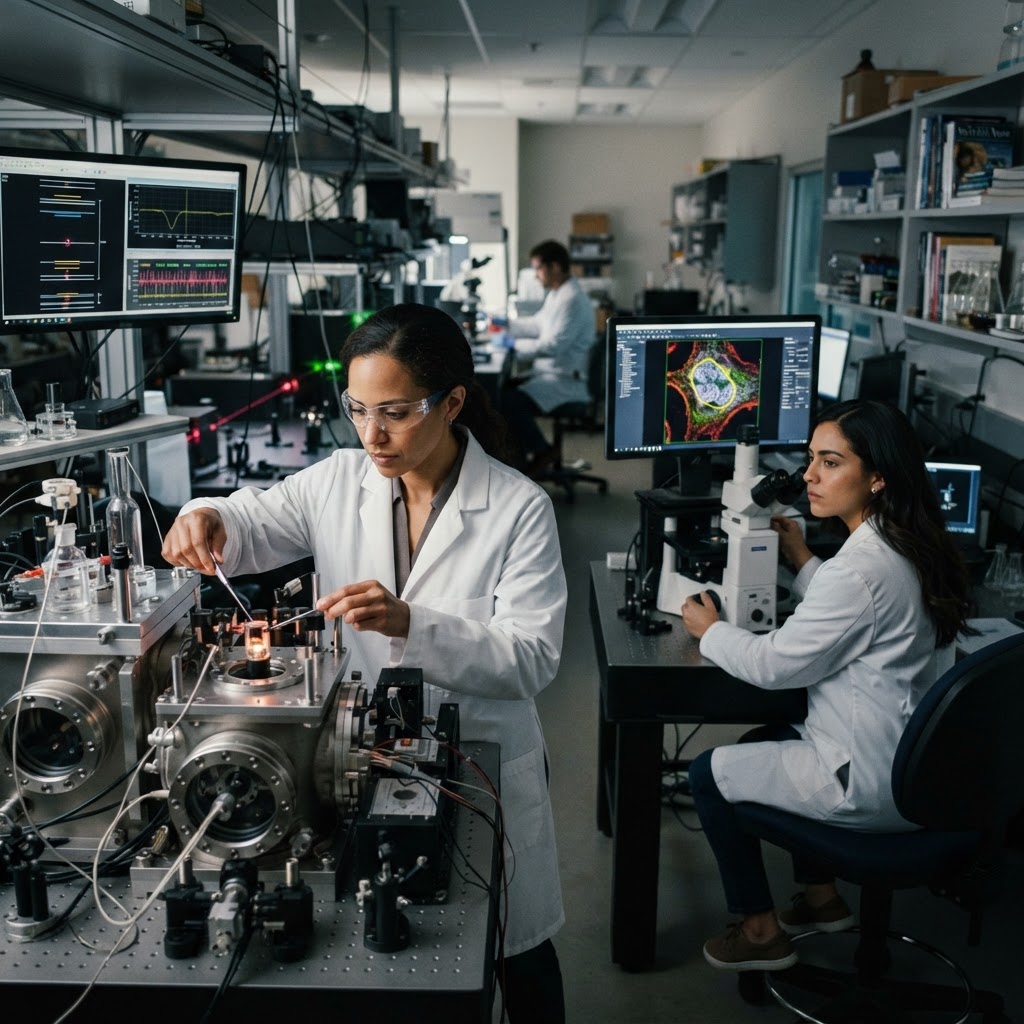
In the realm of fundamental physics, researchers have reached a milestone long considered an elusive frontier: the construction of a operational nuclear clock. Reported by researchers in Vienna via ScienceDaily, this self-stabilizing device bypasses conventional reliance on the electron shells of atoms, instead focusing directly on transitions within the atomic nucleus itself. Because the nucleus is far more compact and tightly bound than valence electrons, it remains significantly less susceptible to external electromagnetic interference. This leap in chronometry promises unprecedented precision, potentially unseating state-of-the-art optical lattice atomic clocks and opening new doors to testing fundamental constants of nature, such as whether physical constants fluctuate over cosmic timescales.
Quantum Control and High-Dimensional Entanglement
Parallel breakthroughs in quantum physics are redefining the limits of computation and information science. Recent experimental work highlighted by Interesting Engineering demonstrated genuine 13-qubit entanglement achieved non-destructively using photons. By preserving photon states during entanglement verification, physicists have solved a perennial stumbling block in photonic quantum architectures, where measurement traditionally leads to state collapse. Coupled with advancements such as full-stack neutral-atom quantum processors utilizing optical tweezers to manipulate individual atoms, the field is rapidly assembling the necessary modular building blocks for fault-tolerant quantum error correction.
Redefining the Tree of Life: The Nitroplast
While physical sciences probe the extremes of time and coherence, evolutionary biology has encountered an extraordinary paradigm shift of its own. As synthesized in retrospective findings by Science, researchers studying the marine alga Braarudosphaera bigelowii confirmed the presence of the 'nitroplast'—a fully integrated nitrogen-fixing organelle. Traditionally, eukaryotic life was believed to lack the capability to directly fix atmospheric nitrogen, relying exclusively on external chemical fertilizers or symbiotic bacterial relationships in legume roots. The emergence of an endosymbiotic entity that has crossed the threshold from separate microbe to true cellular organelle represents the first known instance of organelle evolution of its kind in hundreds of millions of years, offering tantalizing long-term prospects for bioengineering self-fertilizing crops.
Medical and Structural Biology: Capsid Therapeutics
In medical biology, the translation of fundamental structural chemistry into clinical triumphs continues to yield monumental results. The clinical and biochemical success of lenacapavir, recognized as a landmark achievement by Science, illustrates how structural mapping of viral architectures can yield entirely new classes of therapeutics. By targeting the HIV capsid protein—the protective geometric shell enclosing the viral genome—the drug operates as an ultra-long-acting prophylactic option, disrupting multiple phases of the viral life cycle. Because protein capsids are structural hallmarks of numerous other human pathogens, researchers are now applying similar capsid-inhibition principles to develop broader antiviral platforms.
Global Headwinds and the Collaborative Path Forward
Despite these technological and conceptual strides, the broader landscape of global science faces persistent geopolitical and institutional friction. Budgetary contractions in several nations, paired with infrastructure disruptions in conflict zones, have placed severe strain on collaborative initiatives, synchrotron facilities, and academic appointments across multiple continents. However, the resilient flow of discoveries across disciplines—from quantum mechanics and chronometry to evolutionary biology and antiviral design—reaffirms that modern scientific progress remains an interconnected, global enterprise driven by systematic peer review, experimental precision, and relentless curiosity.
Recommended for you
Similar to “Scientific Discoveries”
Frontiers of Discovery: Recent Breakthroughs Reshaping Medicine, Molecular Biology, and Quantum Physics
Recent major developments across global laboratories highlight extraordinary momentum in modern research, ranging from optical control of cellular mechanisms and gut microbiome discoveries to unprecedented leaps in quantum hardware and preventative medicine.
Frontiers of Discovery: Breakthroughs in Quantum Materials, Deep Ocean Heat, and Precision Oncology
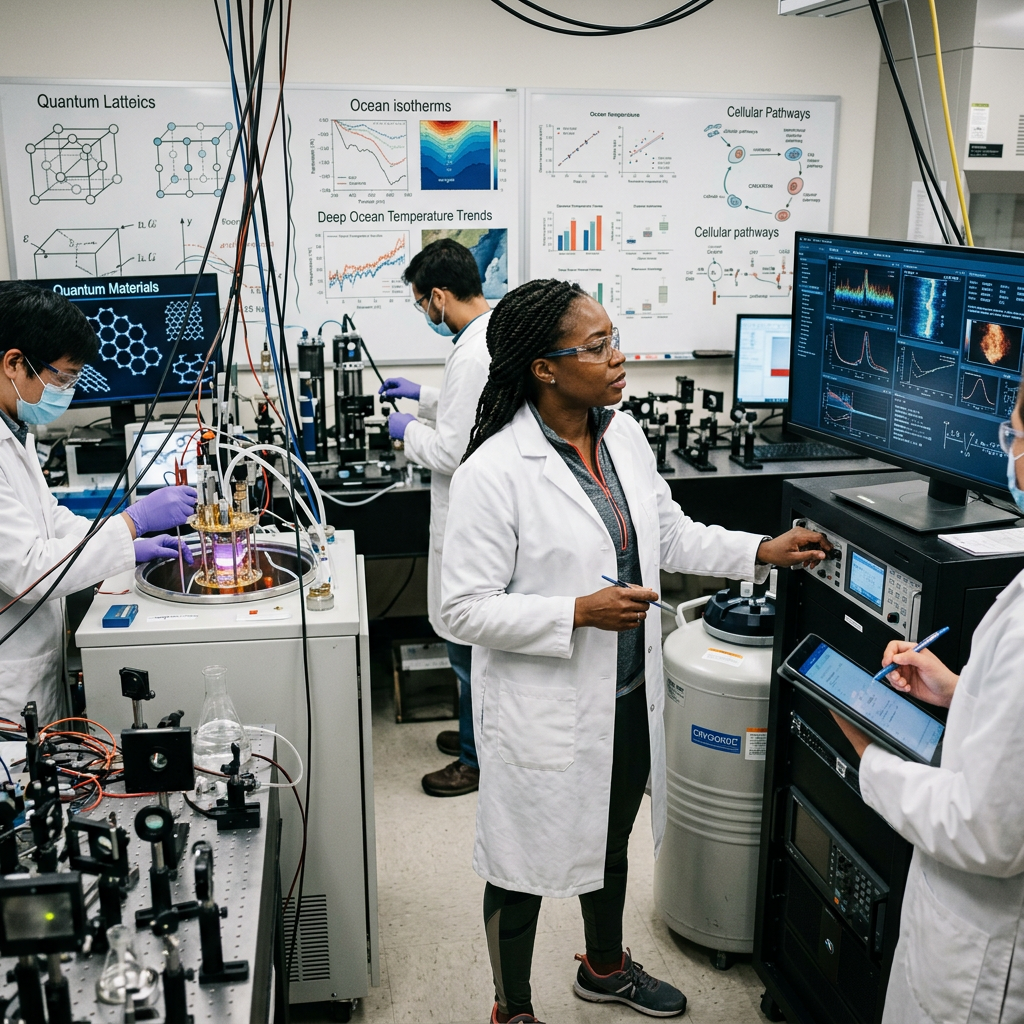
Recent advances across physics, climate oceanography, and oncology highlight how atomic-scale manipulations, deep-sea tracking, and molecular genetic discoveries are reshaping modern science.
Mapping Life and Time: Recent Breakthroughs Reshape Cellular Biology, Marine Ecology, and Physics
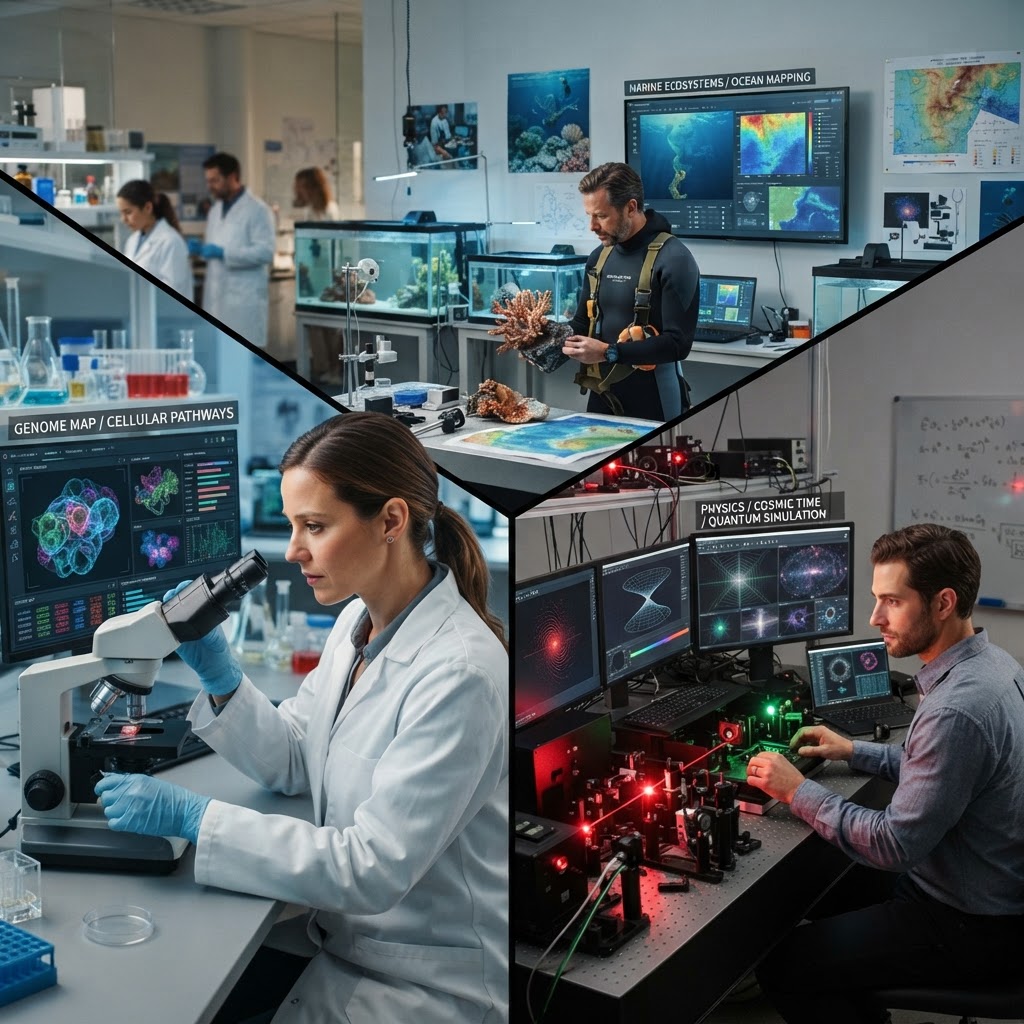
From the complete cell-by-cell tracing of mammalian embryos to nuclear clocks that redefine precision timekeeping, recent scientific discoveries are transforming our understanding of living systems and fundamental physical laws.