Quantum Frontiers and Biohybrid Horizons: How Cross-Disciplinary Breakthroughs Are Reshaping Modern Science
Recent discoveries spanning quantum physics, biological computing, and deep-earth geophysics are challenging longstanding assumptions and accelerating technological integration across scientific fields.

A Redefinition of Scientific Boundaries
In recent days, the scientific community has witnessed a surge of transformative discoveries that defy conventional domain boundaries. From the subatomic realm to the deep interiors of our planet, researchers are demonstrating how precision measurement and computational models can overturn established scientific paradigms. The converging themes across the week’s news highlight an increasing synthesis between physical systems, neurobiology, and data integrity.
Preserving Quantum Coherence on Ultra-Clean Surfaces
Among the most notable physical breakthroughs reported by researchers at ScienceDaily is the creation of an ultra-clean molecular surface capable of maintaining quantum properties at fundamental physical limits. Under typical laboratory conditions, microscopic environmental noise quickly destroys delicate quantum superpositions, a process known as decoherence that has long hindered scalable quantum technology. By isolating individual molecules on pristine substrates, physicists have demonstrated unprecedented control over molecular quantum states. This milestone opens new possibilities for ultra-sensitive quantum sensors, high-fidelity quantum simulation, and novel chemical synthesis pathways where reactions can be manipulated molecule by molecule.
Biohybrid Architectures and Neural Advances
While quantum physicists tame molecular noise, biological scientists are pushing the frontiers of synthetic integration. Reports from Frontiers highlight critical advancements in biohybrid systems, exemplified by mini brain organoids trained to process complex tactile patterns, including interpreting Braille inputs. These biohybrid models demonstrate that laboratory-grown neural clusters can not only interact with external physical stimuli but also process structured information in real time. Coupled with new cellular discoveries reported in PNAS—which elucidate the precise genetic and immune controls of microglial synaptic pruning during stress responses—researchers are uncovering the intricate mechanisms that govern biological resilience and computation.
AI Governance and Research Vulnerabilities
The acceleration of discovery is also forcing the scientific community to reassess its digital infrastructure. As documented by Nature and Science, academic institutions are wrestling with the profound impact of generative artificial intelligence on publishing workflows and intellectual security. While major initiatives like Frontiers’ €1.6 million pledge aim to make scientific datasets AI-ready, open preprint archives are actively debating submission caps to stem automated, low-quality submissions. Simultaneously, security analyses published by Science warn that conversational AI interfaces could inadvertently disclose proprietary experimental design strategies to competitors, sparking calls for stricter operational guidelines in AI-assisted scientific inquiries.
Planetary Dynamics and Deep-Earth Secrets
Beyond the laboratory bench, planetary geophysics has also yielded surprising revelations. Fresh investigations highlighted by Phys.org suggest that the Earth’s core may have been continuously leaking hydrogen into the mantle and crust for billions of years. This finding could alter long-held models of planetary formation, geochemical cycling, and internal heat retention. Together with recent astronomical milestones, including honors for upcoming deep-space observatories like the Nancy Grace Roman Space Telescope as noted by NASA Science, the contemporary scientific landscape illustrates an era where fundamental inquiry and advanced engineering proceed in lockstep.
Recommended for you
Similar to “Science”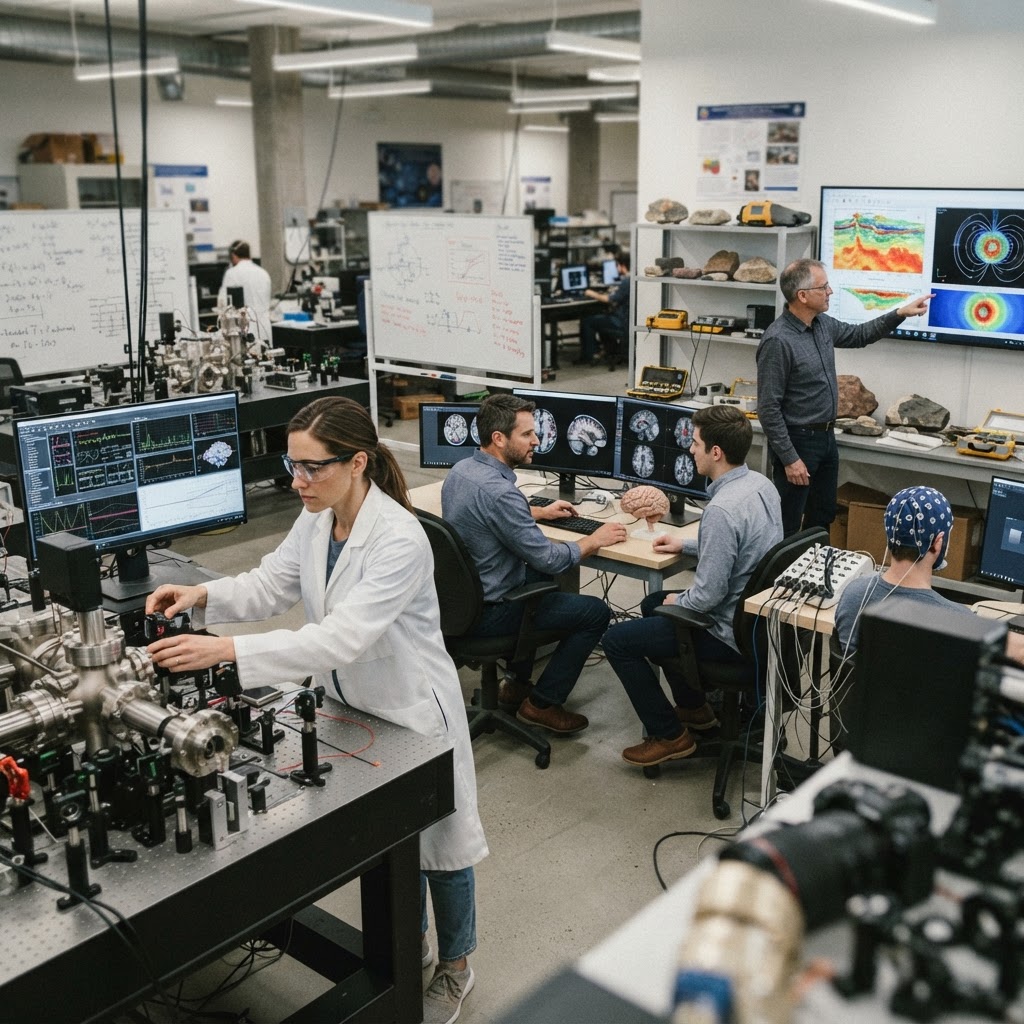
Frontiers of Discovery: How Recent Breakthroughs in Physics, Neuroscience, and Geophysics Are Reshaping Science
From high-energy cosmic ghost particles and non-destructive quantum computing to fluid earthquake faults and brain remapping, recent discoveries are upending decades-old paradigms across multiple disciplines.

Frontiers of Discovery: How AI, Evolutionary Timelines, and Sustainable Engineering Are Reshaping Modern Science
Recent breakthroughs spanning biological communication, ancient evolutionary paleontology, and resource extraction demonstrate how cross-disciplinary research is accelerating global scientific understanding.
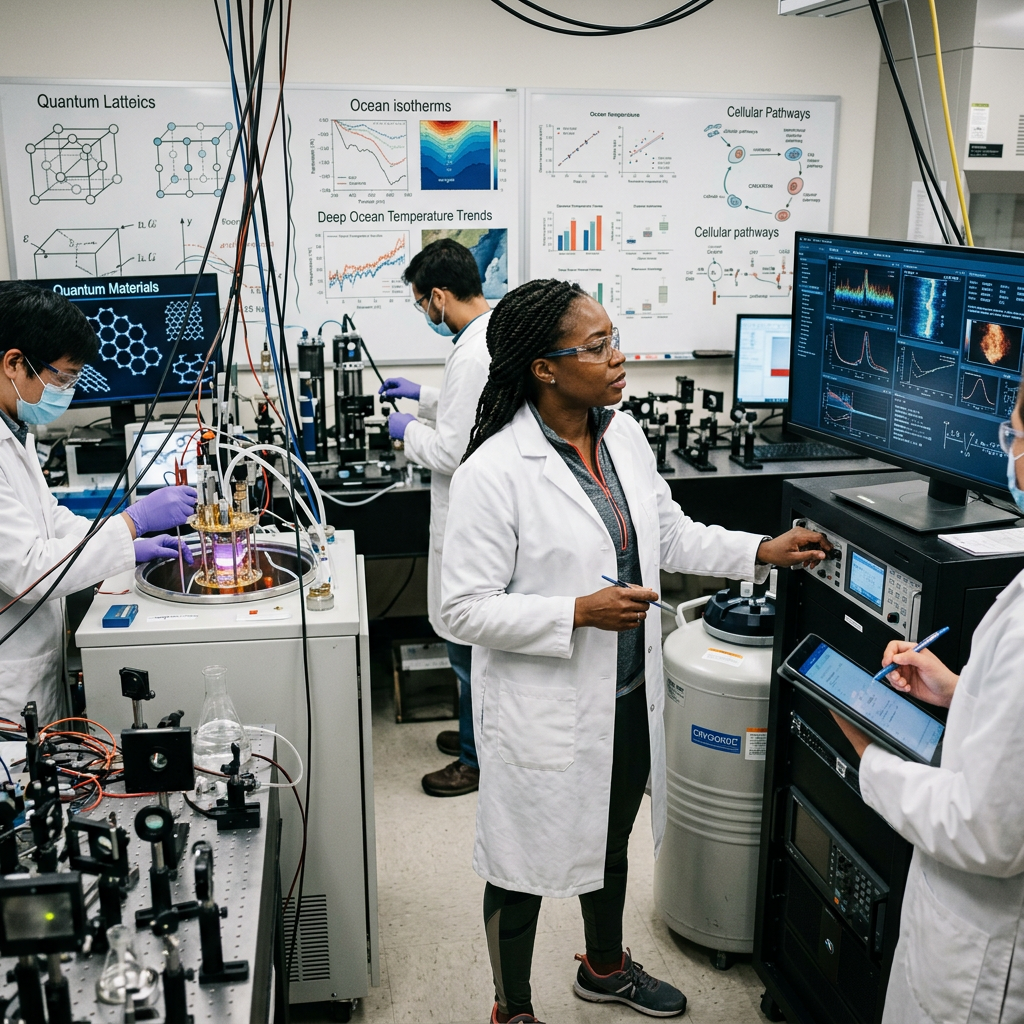
Frontiers of Discovery: Breakthroughs in Quantum Materials, Deep Ocean Heat, and Precision Oncology
Recent advances across physics, climate oceanography, and oncology highlight how atomic-scale manipulations, deep-sea tracking, and molecular genetic discoveries are reshaping modern science.