A Tapestry of Heritage, Provenance, and Reinvention: Global Culture in Focus
From significant archaeological milestones in Europe to institutional reckonings and shifts across contemporary arts and music, the international cultural landscape is navigating the balance between deep history and modern reinvention.
Unearthing Deep History and Archaeological Milestones
In recent days, the field of paleontology and cultural heritage reached a notable milestone following the examination of prehistoric remains in southern Europe. According to research reported by Euronews, bone fragments unearthed from the Abauntz cave in Navarra have been conclusively identified through advanced radiocarbon analysis and genetic profiling as belonging to a Neanderthal dating back approximately 46,000 years. This revelation provides fresh insights into the timelines and habitation patterns of archaic human species during the late Middle Paleolithic, enriching historical understanding of European prehistoric lineage.
Parallel conversations surrounding antiquity and legacy also made waves in the art market. Recent scrutiny around a 2,700-year-old Egyptian statuette of Ptah, presented at Frieze Masters in London, sparked scholarly discussion regarding classical aesthetic forms and their echoes in modern iconography, as noted by Euronews. These discoveries reflect a broader appetite to investigate and protect ancient human stories as key components of global cultural heritage.
Institutional Accountability and Repatriation Debates
While the distant past is being clarified through archaeology, cultural institutions worldwide are grappling with complex questions of provenance, ethics, and national identity. In South Korea, high-level shifts within public cultural bodies came to light as You Hong-june, director of the National Museum of Korea, tendered his resignation following internal controversy over the exhibition of a misattributed calligraphic work originating from a private collection, as reported by Yonhap News Agency. The incident has intensified global discussions regarding curation standards, verification protocols, and public accountability inside prominent museums.
At the same time, issues surrounding national restitution and identity have gained renewed attention across Europe. The high-profile repatriation of the historical remains associated with Bulgaria’s Czar Samuel after nearly a millennium has brought deep-seated regional histories and diplomatic sensitivities to the forefront, as highlighted by Al Jazeera. Combined with international forums, such as UNESCO’s ongoing push to integrate culture directly into global sustainability frameworks through the upcoming Decade of Culture for Sustainable Development, cultural administration is increasingly viewed through the lens of policy, diplomacy, and cross-border integrity, according to UNESCO.
Reinvention Across Contemporary Art, Literature, and Performance
Beyond preservation and politics, contemporary creative industries are experiencing major movements driven by veteran icons and new structural changes. In the musical sphere, long-standing industry relationships continue to evolve. Notably, Jihyo, a longtime member of the globally influential group TWICE, announced her departure from JYP Entertainment after 21 years to establish her own independent creative agency, marking a significant independent chapter in the modern pop ecosystem, as detailed by Yonhap News Agency.
In performing arts and literature, nostalgia and structural disruption coexist. Broadway marked thirty years since the inception of the seminal musical Rent, with retrospective examinations of the Jonathan Larson archive highlighting how stories addressing social hardship and community solidarity continue to resonate across generations, as covered by The New York Times. Simultaneously, the literary world faced both celebration and controversy: while celebrated novelist Isabel Allende made headlines by capturing a prestigious Spanish literary award under a pseudonym, questions surrounding authorship, originality, and the advent of automated writing tools continue to stir fierce debate among international publishing houses and authors alike, according to ArtsJournal.
Whether through uncovering forgotten ancient bones or re-evaluating institutional responsibility, the recent trajectory of global culture demonstrates that the past remains actively intertwined with the present, shaping modern artistic expression across boundaries.
Recommended for you
Similar to “Culture”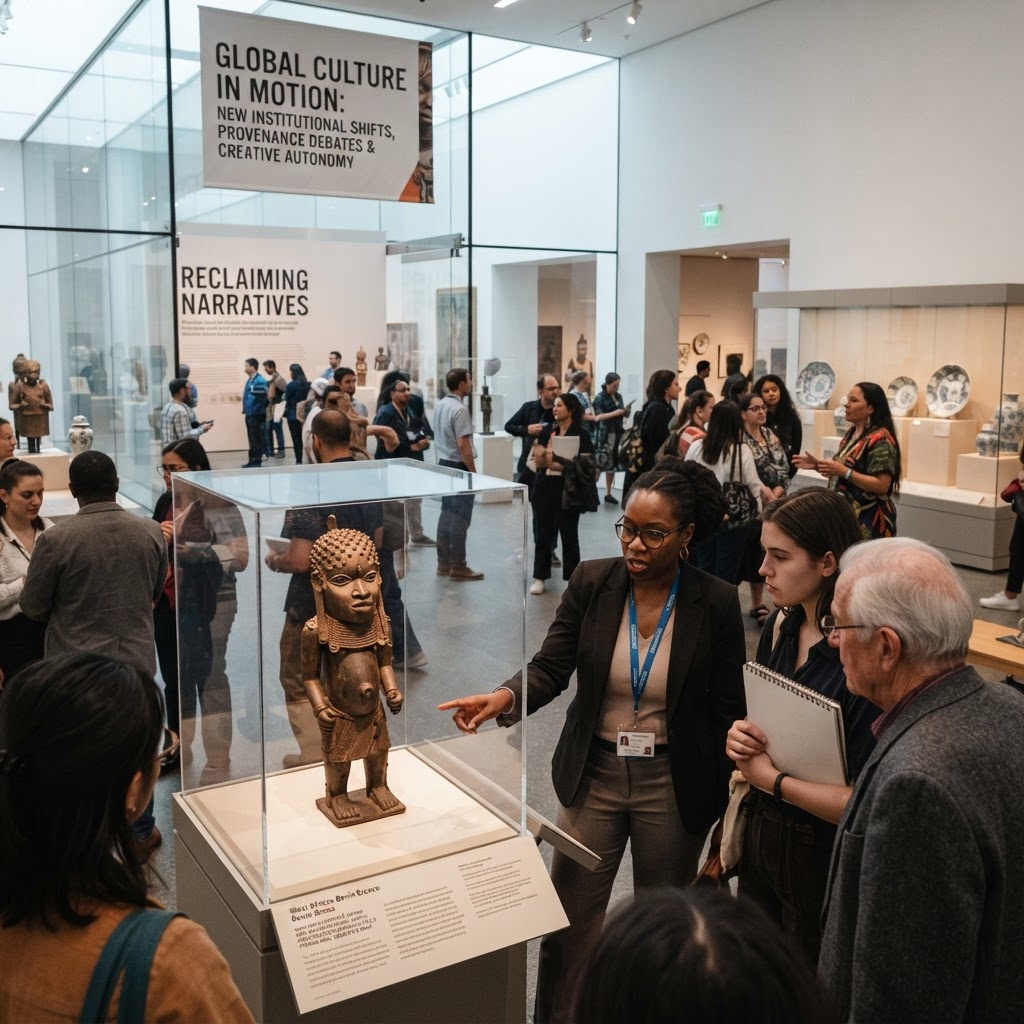
Global Culture in Motion: New Institutional Shifts, Provenance Debates, and Shifting Creative Autonomy
Recent developments across international museums, policy frameworks, and popular music reflect a cultural landscape grappling with transparency, creative independence, and heritage preservation.
Crossroads of Heritage and Independence: Cultural Currents Redefining Global Arts
From landmark shifts in institutional leadership and historical provenance to tectonic movements across the music and entertainment industry, international cultural landscapes are undergoing a profound reimagining.
Culture at the Crossroads: Institutional Strain, Algorithmic Drift, and Global Shifts Redefine Global Arts
The international cultural sector is navigating profound transformations as institutional governance battles, artificial intelligence homogenization concerns, and new hubs of heritage diplomacy challenge established traditions.