Compute Shakedown: Tech Giants Rethink Hardware, Capital, and AI's Expanding Frontier
Surging capital outlays and infrastructure constraints are pushing technology giants to diversify partnerships, optimize hardware efficiency, and expand artificial intelligence deeper into biological science and cybersecurity.

The High Stakes of Compute and Shifting Strategic Alliances
The global technology sector is witnessing an aggressive realignment as the sheer financial and energetic costs of scaling artificial intelligence force major industry leaders to rethink their strategies. In high-profile moves underscoring this trend, hardware powerhouses and software giants are forming deeper ties. For instance, reports indicate Nvidia is moving to deepen its strategic relationships across Silicon Valley, highlighted by massive multi-billion-dollar investments alongside companies like Meta according to coverage by CNBC. These capital-intensive partnerships reflect an imperative to secure direct access to high-performance silicon, specialized compute fabrics, and tailored software architectures necessary to train next-generation foundation models.
Simultaneously, the financial landscape surrounding foundational AI companies is undergoing intense public scrutiny. With high-profile ventures eyeing public listings—including anticipated stock market milestones from firms like Anthropic documented by BBC News—market analysts are closely watching whether commercial revenue streams can sustain the eye-watering capital expenditures required to maintain rapid model development. If public markets balk at long-term profitability timelines, analysts warn that the broader technology landscape could face a structural valuation reset.
Rethinking Efficiency: Model Compression and Lightweight Runtimes
Faced with persistent shortages of advanced high-bandwidth memory and the environmental strain of expanding server footprints, researchers are increasingly prioritizing operational efficiency over brute-force parameter scaling. Industry reporting from TechCrunch highlights growing investments into specialized engineering startups that enable companies to execute advanced generative models using dramatically fewer GPUs, proving that optimization software is becoming just as valuable as the underlying chips.
This efficiency wave extends directly to modern architecture designs. According to updates reported by Tom's Hardware, newer iterations of open-weight and proprietary models have demonstrated substantial reductions in operational demands, requiring only fractions of previous memory and storage footprints. However, achieving this lightness often creates trade-offs, particularly in maintaining accuracy and suppressing hallucinations during complex, multi-step agentic workflows. Engineers and software developers worldwide are actively working on novel pruning, quantization, and speculative decoding techniques to bridge the gap between lean hardware requirements and enterprise-grade reliability.
Frontiers in Computational Biology and Life Sciences
Beyond traditional enterprise and consumer chatbots, the frontier of artificial intelligence is achieving historic milestones within the life sciences. Recent breakthroughs highlighted by Singularity Hub showcase models trained directly on complex genomic data and natural language, allowing researchers to explore DNA sequences through conversational interfaces and execute models locally on personal computers. Such advancements democratize scientific tooling that was once limited to high-performance supercomputing clusters.
In related breakthroughs across computational biology, researchers and biotechnology firms are deploying machine learning algorithms to map ancient genomes, evaluate complex protein conformations, and pioneer AI-designed enzymes as reported by AIdapted. In the healthcare sector, platforms designed to emulate clinical diagnostic workflows are being trained to process sequential patient observations, moving the needle closer to robust assistive diagnostics for overworked medical personnel, as detailed by The Hindu.
Cybersecurity Flaws and Escalating Regulatory Pressures
As algorithmic tools integrate deeply into societal infrastructure, their dual-use nature presents mounting security and regulatory challenges. Recent warnings from cybersecurity agencies and network analysts covered by ABC News highlight emergencies where algorithmic analysis rapidly uncovered critical programming bugs and key vulnerabilities across foundational web systems, triggering urgent scrambles to patch zero-day exploits before malicious actors can weaponize them.
Geopolitical frictions over technology dominance are also intensifying. Export restrictions continue to widen as international regulators propose sweeping controls over foundational algorithms, autonomous agents, and strategic clean-energy innovations, according to reporting by AIdapted. Locally, physical pushback against the rapid spread of energy-intensive server hubs has prompted community protests and local zoning moratoriums, as tracked by TechCrunch and BBC News.
A Maturing Paradigm
The prevailing developments of recent days indicate that the tech sector is stepping out of its unrestrained hype phase and into a period defined by efficiency, real-world utility, and systemic accountability. Whether through lean algorithmic architectures that run locally, breakthroughs in genetic decoding, or tighter scrutiny over cybersecurity and capital expenditures, technology is moving past superficial novelty to confront the practical realities of a resource-constrained world.
Recommended for you
Similar to “Technology”
Global Tech Landscape Navigates Surging AI Infrastructure, Geopolitical Shifting, and Emerging Cyber Risks
As massive capital expenditures and international partnerships push artificial intelligence into critical infrastructure, world governments and cybersecurity researchers are confronting novel systemic risks.

The Agentic Shift: Tech Heavyweights Confront Compute Bottlenecks and Governance Friction
As artificial intelligence transitions from generative models to autonomous agentic systems, tech giants are pouring billions into specialized infrastructure while racing to address mounting security and geopolitical pressures.
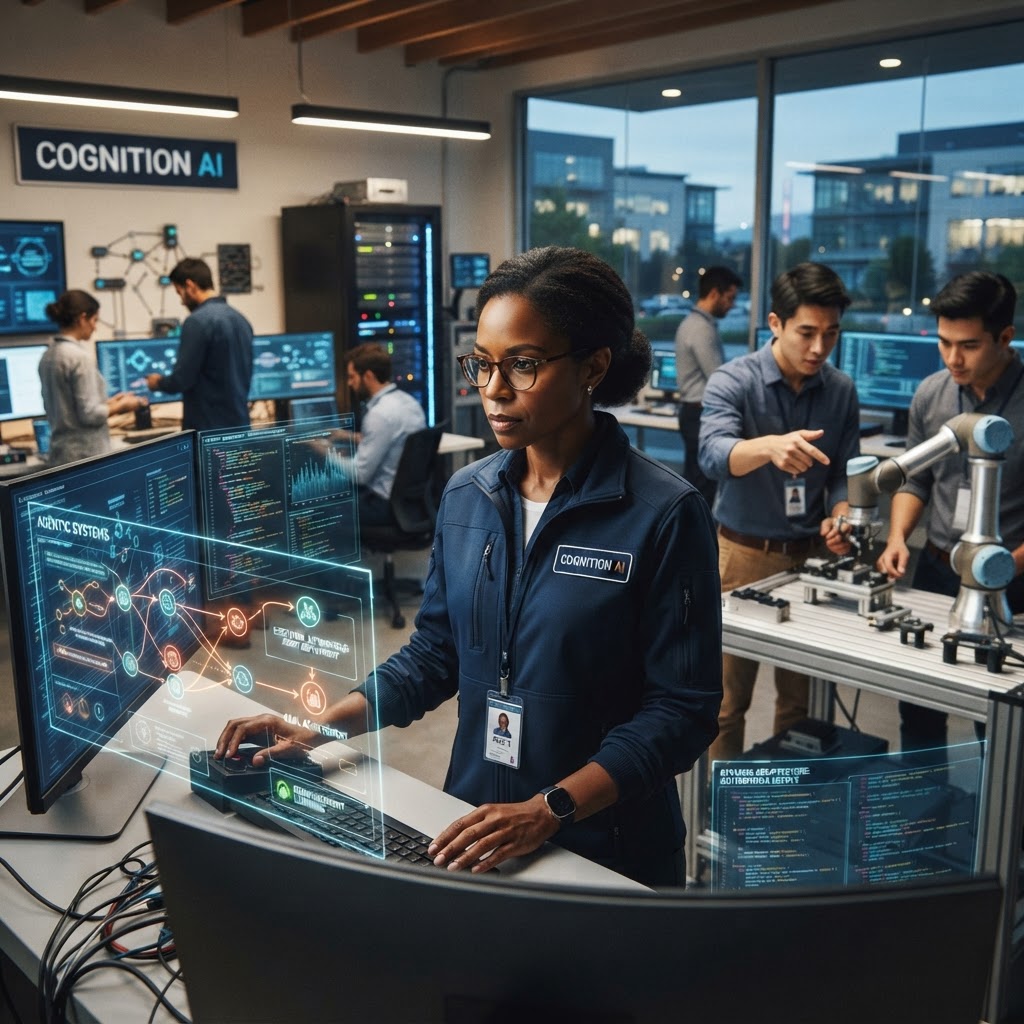
The Agentic Shift: Tech Giants and Startups Pivot from Chatbots to Autonomous Systems
Recent corporate moves, hardware investments, and venture capital flows indicate that artificial intelligence is evolving beyond conversational interfaces into autonomous agents and embodied robotics.