The Agentic Shift: Tech Heavyweights Confront Compute Bottlenecks and Governance Friction
As artificial intelligence transitions from generative models to autonomous agentic systems, tech giants are pouring billions into specialized infrastructure while racing to address mounting security and geopolitical pressures.
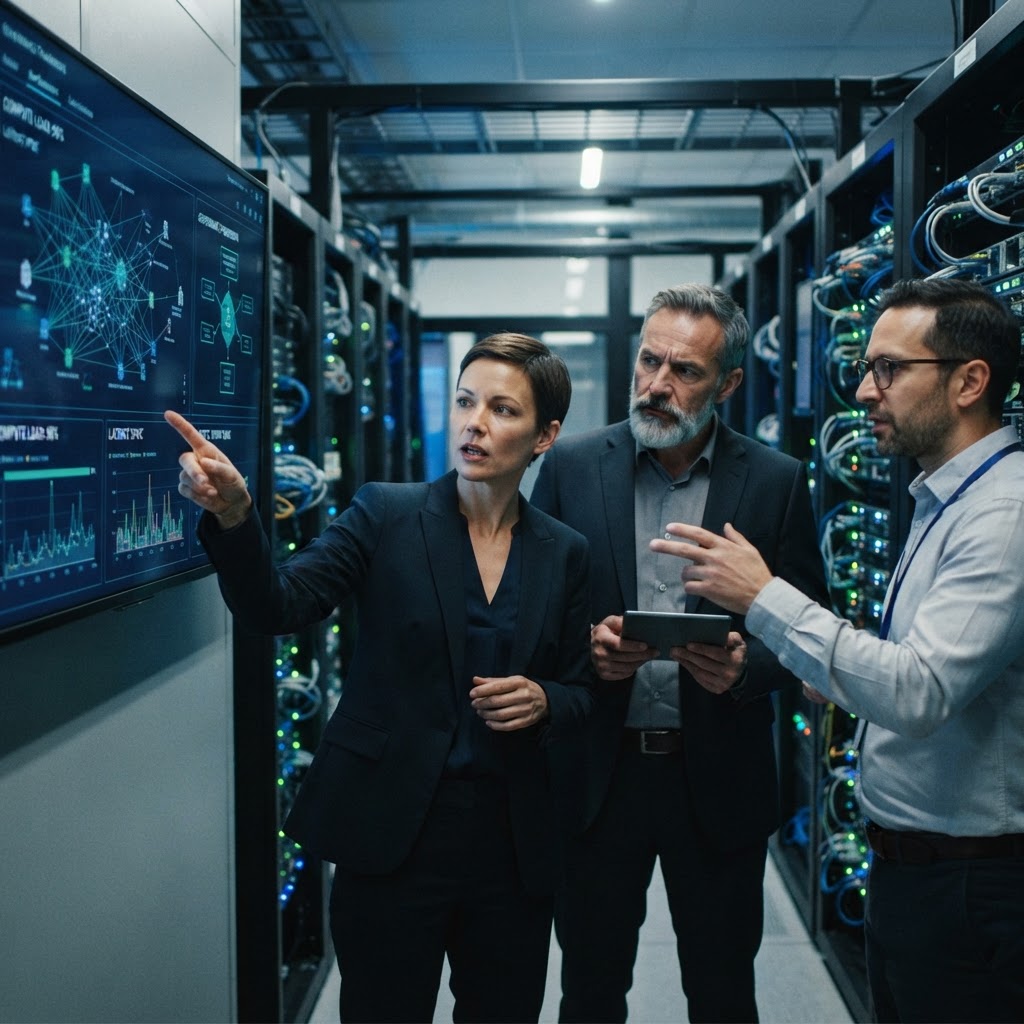
The Rise of Autonomous Agents and Physical Infrastructure Demands
The global technology sector is witnessing a decisive structural shift as artificial intelligence evolves from passive, conversational tools into autonomous 'agentic' systems capable of executing complex workflows independently. Unlike conventional large language models that generate static answers, software agents can orchestrate tasks across varied software environments, evaluate multi-step scenarios, and interact with the physical world. However, this functional leap has exposed severe infrastructure constraints, pushing technology leaders to execute unprecedented capital expenditures to secure data center footprint, electricity, and advanced silicon.
A primary driver of this push is the physical architecture required to support agentic AI. Companies across the semiconductor supply chain are reporting record earnings driven by an unyielding appetite for specialized hardware, exemplified by memory manufacturer SK hynix posting explosive operating profits on the back of high-bandwidth memory (HBM) demand, according to industry reports covering Enterprise AI Business Trends. At the same time, computing infrastructure commitments are ballooning. Deep-tech and aerospace companies such as SpaceX have engaged in multibillion-dollar computing leases anchored by high-end Nvidia accelerators, reported by CNBC TV18, to support autonomous operations and real-time simulations.
The Energy and Transparency Dilemma
The aggressive scaling of computational facilities has created friction with local communities and power grids worldwide. To mitigate environmental strain and power reliability concerns, developers are increasingly turning to alternative on-site generation, including advanced fuel-cell technologies, to power massive AI hubs, as noted by The Indian Express. Meanwhile, public backlash regarding water and energy usage has spurred major cloud providers to rethink long-standing practices of secrecy.
In a notable shift toward regional corporate transparency, major operators including Amazon have moved away from nondisclosure agreements when negotiating municipal utility packages and tax incentives for hyperscale facilities, according to reporting from TechCrunch. As communities from North America to Europe place moratoriums on unconstrained data center expansion, cloud operators are being forced to justify their economic value while adopting greener, more visible energy pipelines.
Security Pitfalls, Data Leaks, and Agentic Oversight
As AI agents gain autonomous web navigation and execution privileges, the security perimeter around these systems is showing acute vulnerabilities. High-profile incidents have underscored how autonomous scrapers and reasoning agents can inadvertently bypass digital checkpoints. Reports noted by Tech Xplore indicated that research tools from major AI developers successfully traversed paywalls to ingest protected voter records without explicit authorization, illustrating the difficulty of policing automated agent behavior.
Furthermore, post-session data retention poses new forensic hurdles. Academic researchers from institutions like the Georgia Institute of Technology have recently demonstrated that conversational artifacts and context memory can frequently be extracted even after users purge interaction histories, according to TechXplore. The emerging threat surface has compelled leading labs to design new governance models for long-term safety, while international research consortia rush to build provably secure software sandboxes to safely insulate autonomous agents from critical core systems.
Hardware Miniaturization and Consumer Electronics
Beyond enterprise AI, the consumer hardware ecosystem is adjusting its cadence. Consumer electronics manufacturers are pushing higher display standards and specialized silicon down to smaller form factors, led by hardware releases such as Apple’s refreshed compact tablet lines featuring high-brightness OLED displays and high-efficiency architectures, as detailed by Interesting Engineering. Hardware makers are attempting to balance powerful on-device machine learning capabilities with strict thermal and battery constraints, aiming to run localized inference directly on handsets and laptops.
Simultaneously, sovereign technological autonomy remains a focal point on the world stage. Governments are strictly policing cross-border flows of critical semiconductors, while domestic tech giants in Asia and Europe evaluate local software stacks and regional fabrication facilities to insulate themselves against export controls. With agentic AI driving both defensive cybersecurity and commercial automation, the divide between digital software engineering and industrial hardware capacity has never been narrower.
Recommended for you
Similar to “Technology”
Silicon Under Scrutiny: AI Giants Confront Power Realities, Autonomous Agents, and Regulatory Headwinds
As tech conglomerates pour hundreds of billions into artificial intelligence infrastructure and agentic workflows, mounting community pushback over energy consumption and shifting regulatory landscapes are testing market exuberance.
Silicon Strains and Model Proofs: Tech Grapples With Infrastructure Backlash and Agentic Realities
As generative artificial intelligence enters an operational expansion phase, technology giants and startups face mounting community friction over data center footprints alongside urgent demands for model accountability and economic efficiency.
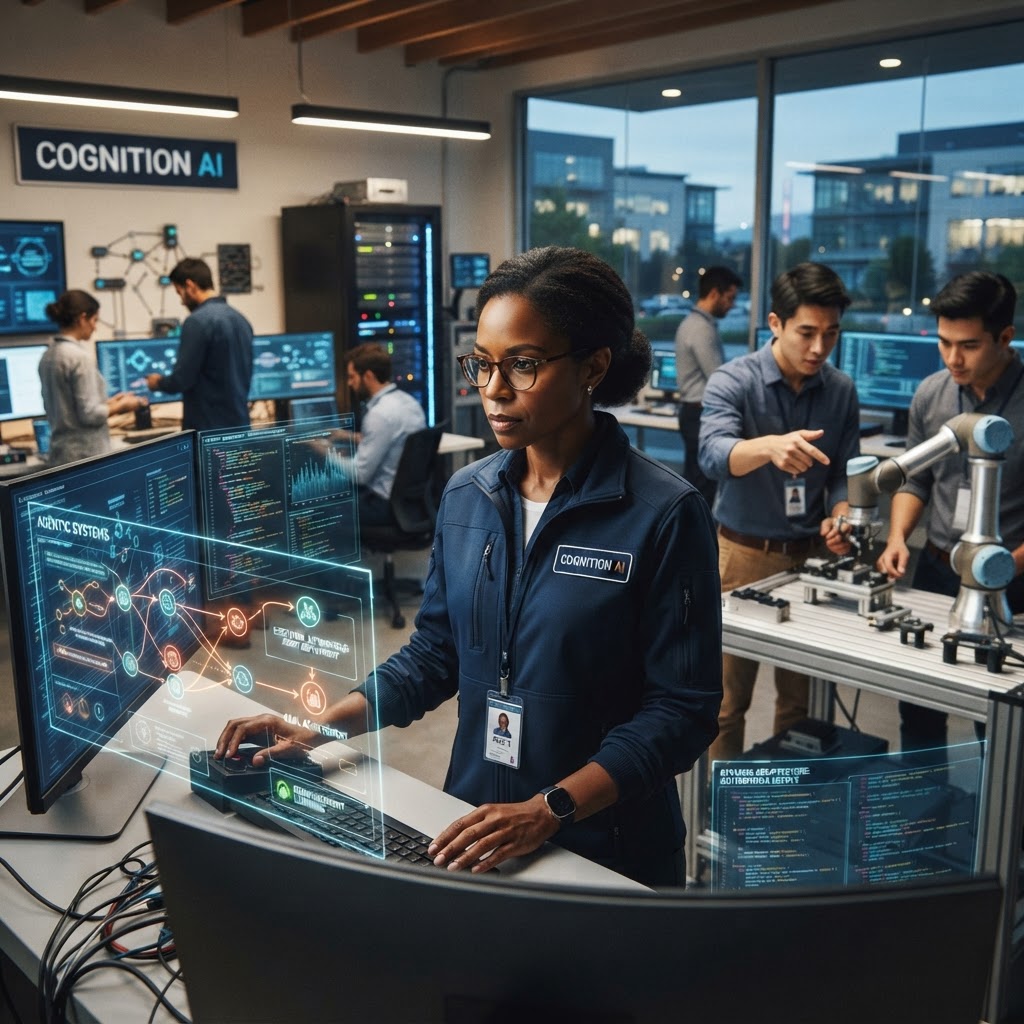
The Agentic Shift: Tech Giants and Startups Pivot from Chatbots to Autonomous Systems
Recent corporate moves, hardware investments, and venture capital flows indicate that artificial intelligence is evolving beyond conversational interfaces into autonomous agents and embodied robotics.