Frontiers of Discovery: Recent Breakthroughs Reshaping Medicine, Genetics, and Evolutionary History
Recent scientific advances highlight unprecedented precision in CRISPR gene editing inside living humans, promising clinical milestones in cancer immunotherapy, and remarkable fossil findings that overturn long-held evolutionary assumptions.
A New Chapter in Gene Editing and Molecular Therapeutics
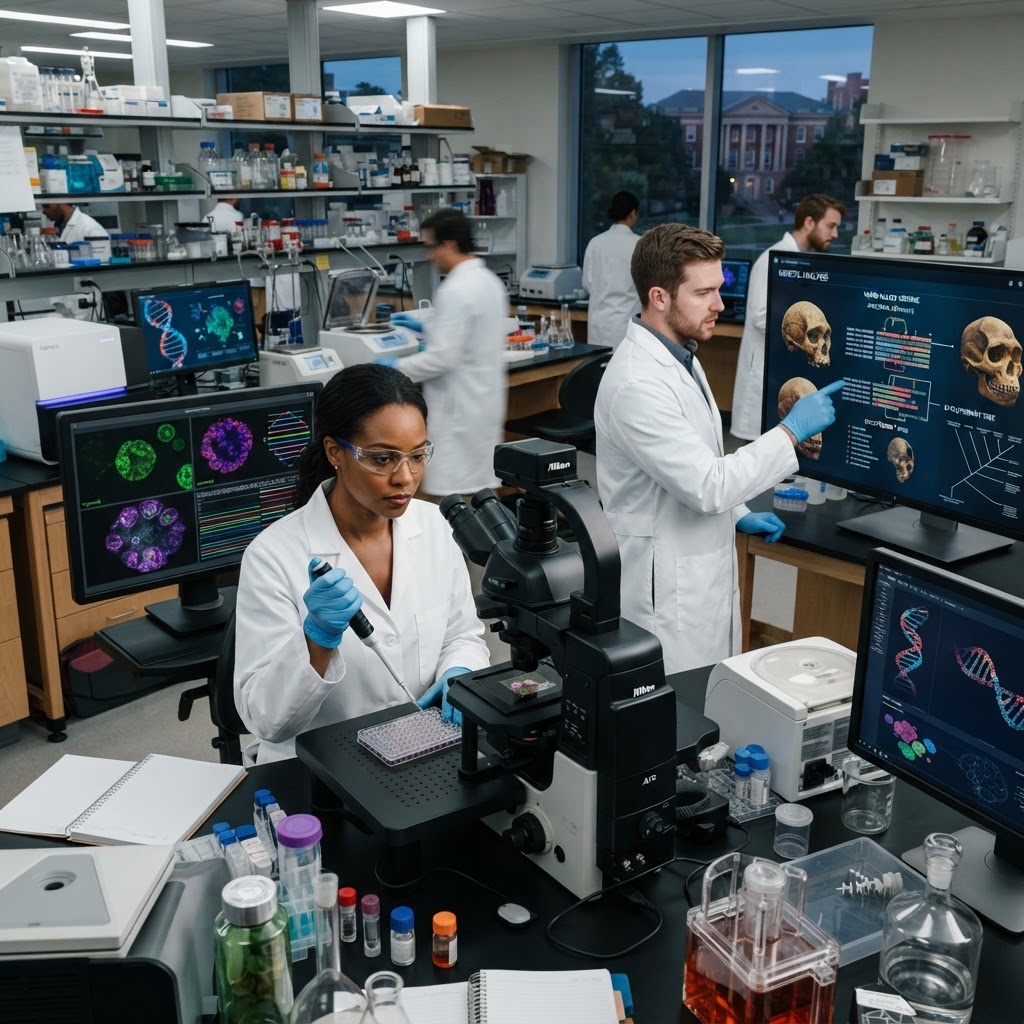
The pace of biomedical innovation has reached unprecedented speed, evidenced by major milestones reported across top scientific journals in recent days. Among the most anticipated achievements is a critical leap forward for genomic medicine: the first successful direct in-body application of prime editing, an advanced derivative of CRISPR technology, detailed by researchers in Nature. While traditional CRISPR-Cas9 mechanisms act like molecular scissors that slice both strands of DNA—sometimes causing unpredictable genetic insertions or deletions—prime editing functions more like a precision word processor. By directly rewriting target sequences inside human tissues without requiring double-strand breaks, this clinical transition opens up new treatment horizons for previously intractable genetic disorders.
Simultaneously, the landscape of oncology and pharmacology is witnessing bold strategic shifts. Investigators are evaluating landmark outcomes from advanced therapeutic cancer vaccines, according to reports published in Science. While these therapeutic formulations show immense promise in stimulating immune defenses against stubborn tumors, researchers emphasize that critical questions regarding long-term durability and broad efficacy remain to be solved. Parallel to these immuno-oncology efforts, pharmaceutical developers are reinvesting billions of dollars into neuroactive and psychedelic-assisted therapies, as highlighted by Nature. Despite previous regulatory setbacks and procedural scrutiny, recent clinical data regarding mood disorders and treatment-resistant depression are fueling renewed confidence in the clinical utility of targeted psychoactive compounds.
Rewriting Paleontology and Deep Evolutionary History
Beyond modern medicine, Earth and evolutionary scientists have unveiled discoveries that challenge conventional timelines. A standout finding highlighted in paleontological reports from Sci.News involves the unexpected identification of an ancient, heavily armored amphibian adapted entirely to life in prehistoric seas. Historically, paleontologists understood ancient amphibians to be almost exclusively restricted to freshwater habitats or moist terrestrial environments due to physiological limitations regarding osmoregulation and saltwater balance.
The newly described fossils demonstrate that specialized adaptations enabled these creatures to navigate fully marine ecosystems during the Triassic period. Such findings force evolutionary biologists to reconsider the ecological adaptability and niche occupation of early tetrapods following mass extinction events, underscoring how life repeatedly found unexpected avenues to repopulate marine biomes.
Harnessing Quantum Mechanics and Artificial Intelligence
The physical sciences and computational technologies are undergoing an equally profound transformation. Physicists have made tangible progress in overcoming one of the most stubborn hurdles in quantum computing: the readout problem. In a report featured on Phys.org, researchers revealed that using supercurrents allows systems to probe and extract quantum information from qubits without inducing immediate wave function collapse or destroying coherence. Coupled with subtle engineering tweaks—such as introducing extra quantum dots to stabilize spin qubits—these findings bring solid-state quantum computers closer to scalable, error-tolerant operation.
Simultaneously, the convergence of artificial intelligence and fundamental research is delivering startling insights. Modern AI models are no longer merely parsing datasets; they are identifying conceptual overlaps and forgotten solutions buried across disparate scientific fields. As noted in Science, specialized machine learning platforms have solved long-standing bottlenecks spanning dozens of subdisciplines by detecting answers hiding in plain sight within existing literature. As analytical tools grow more capable, the boundary between automated discovery and human hypothesis generation continues to dissolve, heralding an era where interdisciplinary breakthroughs occur in weeks rather than decades.
Recommended for you
Similar to “Science”
Frontiers of Precision: New Breakthroughs in Gene Editing, Materials, and Cellular Mapping Transform Science
Recent scientific advances highlight unprecedented precision across disciplines, from in vivo CRISPR therapies and massive brain cell atlases to energy-efficient magnetic nanomaterials.

Frontiers of Discovery: Recent Breakthroughs Reshaping Physics, Genetics, and Earth Science
From unexpected magnetic control at the atomic scale to massive genetic catalogs and deep ocean thermal shifts, recent findings are actively challenging long-held scientific paradigms.
Frontiers in Discovery: From Nuclear Precision Clocks to Novel Cellular Organelles
Recent advances across physics, medicine, and evolutionary biology highlight a transformative period for modern scientific discovery, marked by quantum leaps and fundamental cellular revelations.