A Fractured Mandate: Global Commentaries Confront Electoral Upheaval and Multipolar Drift
Recent opinion columns and editorial boards worldwide reflect a shifting geopolitical and domestic landscape, as commentators digest consequential legislative midterms and grapple with the decline of multilateral rules.
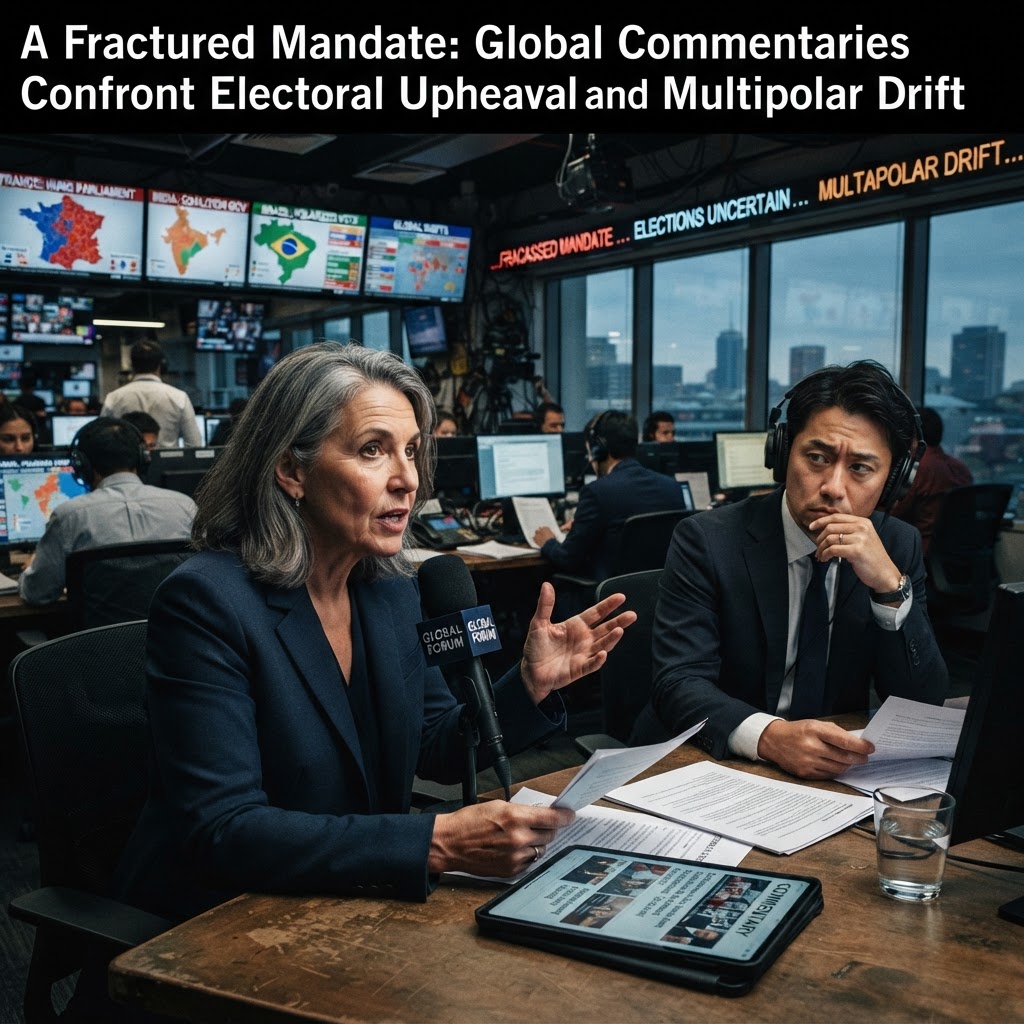
The Shifting Winds of Electoral Politics
In recent days, editorial pages across the globe have pivoted sharply toward the fallout from crucial legislative midterms and political transitions. In the United States, commentary boards have seized on what multiple commentators characterize as a profound rebuke of the prevailing executive agenda. Leading editorial boards, including The New York Times Editorial Board, framed recent voter turnouts as an active defense of democratic autonomy, while regional letter writers and columnists in outlets like the Athol Daily News urge governing coalitions not to overreach or take voter discontent for granted. Columnists are pointing out that midterms are rarely simple rubber stamps; rather, they serve as course-correcting moments where the public pushes back against perceived unilateralism.
International observers are parsing these domestic shifts for signs of their global repercussions. Commentators in allied nations, such as contributors to Philstar.com, note that bilateral strategic treaties and economic alignments often transcend the immediate political fortunes of any single administration. Yet, foreign policy analysts underscore that when an incumbent executive faces divided government or an emergent lame-duck period, international adversaries and partners alike must adapt to sudden gridlock, redirected budget allocations, and recalibrated diplomatic overtures.
The Erosion of Multilateralism and the 'Might-Is-Right' Era
Beyond the ballot box, a predominant theme across international opinion desks is the erosion of standard diplomatic norms and multilateral governance frameworks. Writing for regional forums such as the Asia News Network, experienced diplomats and strategic analysts have detailed the descent into a multipolar reality governed increasingly by coercive leverage rather than established rules. Commentators observe that as traditional enforcement mechanisms fray, medium and smaller powers face heightened risks of marginalization amid territorial disputes and maritime assertiveness.
In East and Southeast Asia, this dynamic is especially visible in debates surrounding maritime security, economic self-reliance, and national sovereignty. Philippine commentators have argued fervently against compromising sovereign claims in the West Philippine Sea merely to soothe larger regional neighbors, insisting instead on strengthening domestic industrial capacity and economic resilience as documented in Inquirer Opinion. Concurrently, commentaries in publications such as China Daily highlight friction with Western trading blocs, targeting double standards in commerce and arguing for alternative interpretations of stability in open markets. These contrasting editorial perspectives reveal a media sphere deeply divided on who bears responsibility for rising geopolitical friction.
Domestic Strains: Institutional Trust and the Press
Running in tandem with international power politics is a growing drumbeat of opinion pieces addressing institutional decay at home. A frequent point of editorial outrage has been the targeting of independent journalists and freedom of the press in developing and transitional democracies. Editorial boards across South Asia and beyond have issued stark warnings to their respective central governments, demanding an immediate halt to newsroom raids, legal harassment, and arbitrary arrests of investigative reporters.
Opinion writers contend that when governance systems undermine the Fourth Estate, it signals broader democratic decay. From debates surrounding judicial appointments and public accountability to controversies over abandoned civil infrastructure and public health neglect, commentators emphasize that public cynicism flourishes when states insulate themselves from scrutiny. When public health investments stall or legal frameworks remain stubbornly out of touch with citizens' everyday hardships, the editorial consensus warns that democratic legitimacy itself begins to fracture.
Sustainability and the Reimagining of Local Resilience
Finally, forward-looking essayists are seeking alternatives to rigid central planning by advocating for grassroots and community-led reforms, particularly concerning environmental sustainability. Platforms such as Eco-Business host commentaries arguing that conventional top-down regulatory frameworks consistently fail vulnerable populations facing accelerating ecological strain. From depleted groundwater tables sinking major coastal cities to the vulnerabilities of global supply chains, ecological thinkers are emphasizing that regenerative agriculture, equitable resource governance, and decentralized capability-building must replace debt-heavy, crisis-driven responses.
Taken together, the current currents of global opinion paint a portrait of a world in renegotiation. Whether analyzing the electoral tides reshaping national parliaments, decrying authoritarian impulses against independent media, or charting new paths through geopolitical rivalry, modern commentators converge on a single realization: the inherited paradigms of post-war stability are being dismantled, and the new models of governance must be forged from the ground up.
Recommended for you
Similar to “Global Opinion”
A Fractured Mandate: Global Commentators Grapple with the Post-Election Reckoning
Opinion pages across the world reflect a tense mixture of relief and deep-seated skepticism following a dramatic political shift in Washington. Analysts argue that while electoral repudiation reshapes domestic power, it does little to repair international trust or resolve escalating global friction.
A Fractured World Weighs Governance, Technology, and Democratic Volatility
Across international editorial boards and opinion columns, commentators are grappling with mounting electoral unease in Western democracies, escalating regulatory debates over artificial intelligence, and deep geopolitical fractures.

The Age of Fractured Certainty: Global Commentators Confront AI Governance and Geopolitical Drift
Across the international opinion landscape, commentators and strategic analysts are debating how emerging technological disruption, energy insecurity, and fragile multilateralism are reshaping global governance.