Global Health at a Crossroads: Breakthrough Therapies Emerge Amid Deepening Public Health and Access Crises
Recent advances in precision oncology and genetic medicine offer unprecedented clinical hope, yet resurgence of preventable infectious diseases and systemic healthcare disparities continue to test global resilience.
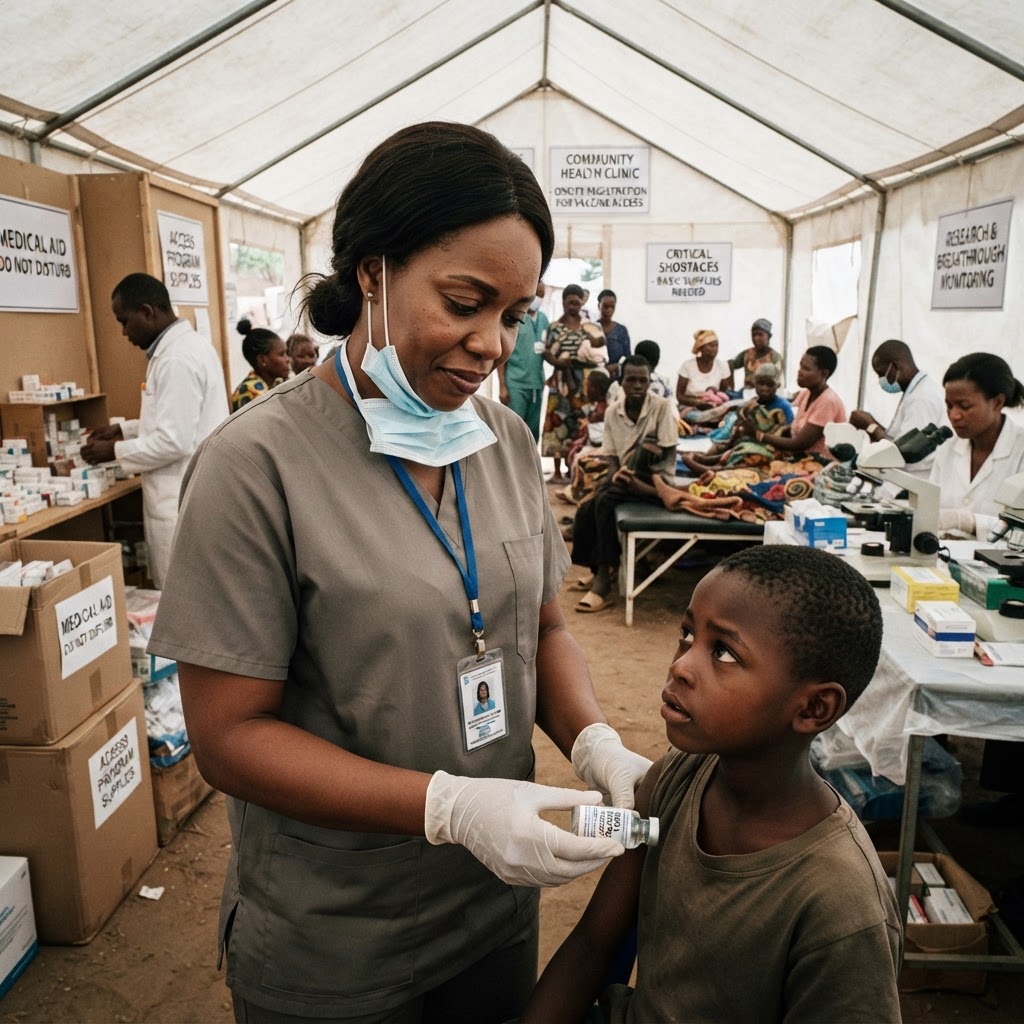
Frontiers in Precision Medicine and Targeted Oncology
In research laboratories across the globe, medical scientists have logged several groundbreaking achievements over recent days, demonstrating how advanced molecular and genetic tools are reshaping modern clinical care. Among the notable developments reported by ScienceDaily, researchers at UC San Francisco have engineered a site-activated cancer therapy that remains dormant in circulation until it breaches the blood-brain barrier, triggering targeted destruction directly within aggressive brain tumors while sparing healthy peripheral tissue. Simultaneously, a bioengineering team at the Massachusetts Institute of Technology announced the development of specialized nanoparticles that reprogram immune cells in vivo, successfully eliminating solid tumors and reversing tissue damage in preclinical liver disease models.
Gene editing has also marked a critical leap from laboratory proof-of-concept into human clinical applications. As covered by FLASH24, Prime Medicine initiated dosing for the first human participant in an in vivo prime-editing trial evaluating PM577a for Wilson disease. If successful, such direct-to-patient genetic corrections could permanently replace lifelong daily medication regimens. Complementing these molecular interventions, regulatory and pediatric trials published in The Lancet HIV affirmed new neonatal dosing protocols for antiretrovirals like dolutegravir, offering early protection for newborns at risk of perinatal transmission.
The Burden of Preventable Infectious Diseases
Despite these technological triumphs, public health institutions face stark warnings regarding basic disease containment. Epidemiological reports compiled by Google News and regional tracking outlets show that the United States is confronting an alarming surge in measles, topping 5,000 cases in its steepest resurgence since 1991. Similar exposure alerts have been issued across transit hubs in Ontario, Canada, underscoring how eroded immunization coverage and international travel can rapidly undermine decades of hard-won herd immunity.
Globally, waterborne and endemic pathogens continue to exploit gaps in local infrastructure. Surveillance updates from the World Health Organization reveal that annual cholera fatalities jumped by 30% worldwide, recording the highest yearly death toll since 1999 despite increased vaccine production capacity. The crisis is compounded by ongoing viral threats, including renewed Ebola containment efforts across central and eastern Africa and persistent dengue outbreaks throughout South Asia, demonstrating that advanced biotechnology alone cannot substitute for sanitation, foundational surveillance, and timely primary interventions.
Systemic Strains on Healthcare Access and Rural Delivery
Bridging the divide between medical potential and clinical reality remains a fraught systemic challenge. Health economists warn that funding volatility threatens the structural viability of clinics across developing regions. According to an analysis published by BenefitsPRO, international development aid reductions are destabilizing local health infrastructure throughout partner nations in Africa, creating operational deficits that ripple through global supply chains and increase corporate healthcare expenditures worldwide.
Domestically, rural populations in industrialized nations face parallel hurdles. In the United States, states like Georgia are actively grappling with expanding maternal care deserts following the closure of rural labor and delivery wards, leaving expectant mothers hours away from emergency obstetric care. In Europe, governments are seeking alternative delivery models to bridge demographic gaps; as reported by France in English, French health authorities plan to roll out 100 mobile clinics by 2027 to deliver essential services directly to underserved rural and peri-urban medical deserts.
Public Health Interventions and Environmental Determinants
In response to soaring cardiovascular disease rates—responsible for nearly twenty million deaths annually—researchers are increasingly emphasizing low-cost, population-wide preventative interventions. A sweeping global modeling study conducted by The George Institute for Global Health and reported by News-Medical found that systematically substituting ordinary table salt with potassium-enriched alternatives could prevent almost three million deaths and ten million cardiovascular and renal events each year across 193 countries. Such structural dietary measures represent one of the most cost-effective avenues for managing hypertension on a planetary scale.
At the same time, newly published studies are bringing environmental stressors into sharper focus. An epidemiological study from Massachusetts General Hospital, highlighted in recent news roundups, established a quantifiable link between sustained residential exposure to high-volume highway noise and elevated rates of serious heart disease. In maternal-fetal health, investigations published in The Observer uncovered that exposure to next-generation plasticizers widely branded as 'safe' chemical alternatives in food packaging remains correlated with reduced birth weight and adverse fetal developmental milestones.
An Imperative for Unified Health Strategies
The contemporary health landscape reflects an ongoing dichotomy between micro-level scientific sophistication and macro-level logistical vulnerability. While synthetic biology, in vivo gene repair, and targeted nanomedicines promise cures for conditions once deemed untreatable, the resurgence of measles and cholera serves as an urgent reminder of foundational public health imperatives. Moving forward, global health leaders emphasize that preserving human longevity will require a dual strategy: continuing to champion cutting-edge therapeutics while aggressively reinforcing equitable access, environmental safeguards, and resilient primary healthcare networks.
Recommended for you
Similar to “Global Health”
Global Health at a Crossroads: Responding to Viral Emergencies Amid Breakthrough Therapeutics
As public health authorities mobilize against escalating infectious outbreaks in Central Africa and the Middle East, simultaneous breakthroughs in gene therapy, affordable HIV prevention, and chronic care management offer hope for systemic resilience.
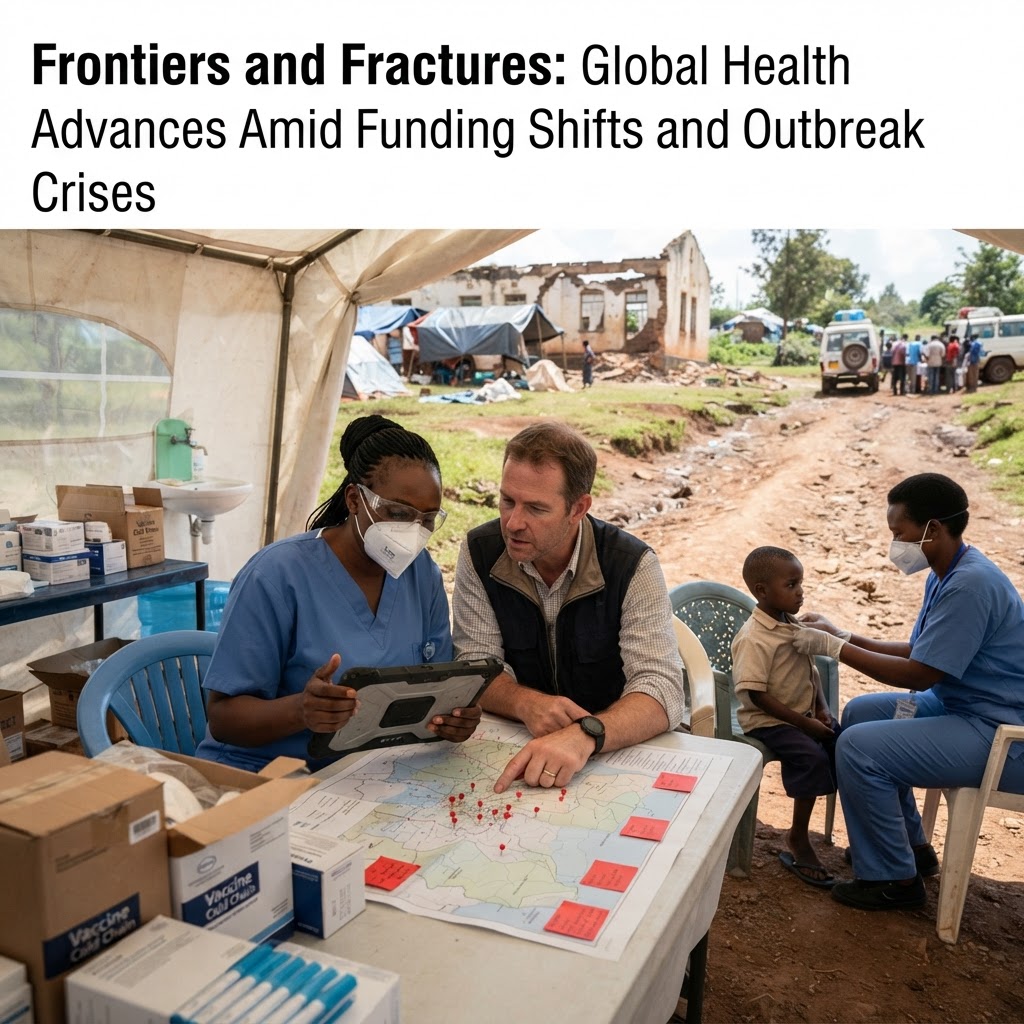
Frontiers and Fractures: Global Health Advances Amid Funding Shifts and Outbreak Crises
Recent breakthroughs in oncology and precision diagnostics are transforming modern medical practice, even as international public health infrastructure grapples with geopolitical funding shifts and persistent infectious disease crises.
Global Health at a Crossroads: Resurgent Outbreaks, Climate Emergencies, and Precision Therapies
International health bodies are responding to an unprecedented regional Ebola crisis and compounding climate hazards, even as breakthroughs in personalized genetic medicine and metabolic therapies offer fresh hope.