A World in Flux: Global Commentary Grapples With Midterm Realignments, Climate Realities, and Fragmented Democracies
Opinion pages around the globe are dissecting a dramatic wave of electoral upheavals and escalating fiscal choices between global security and environmental survival.
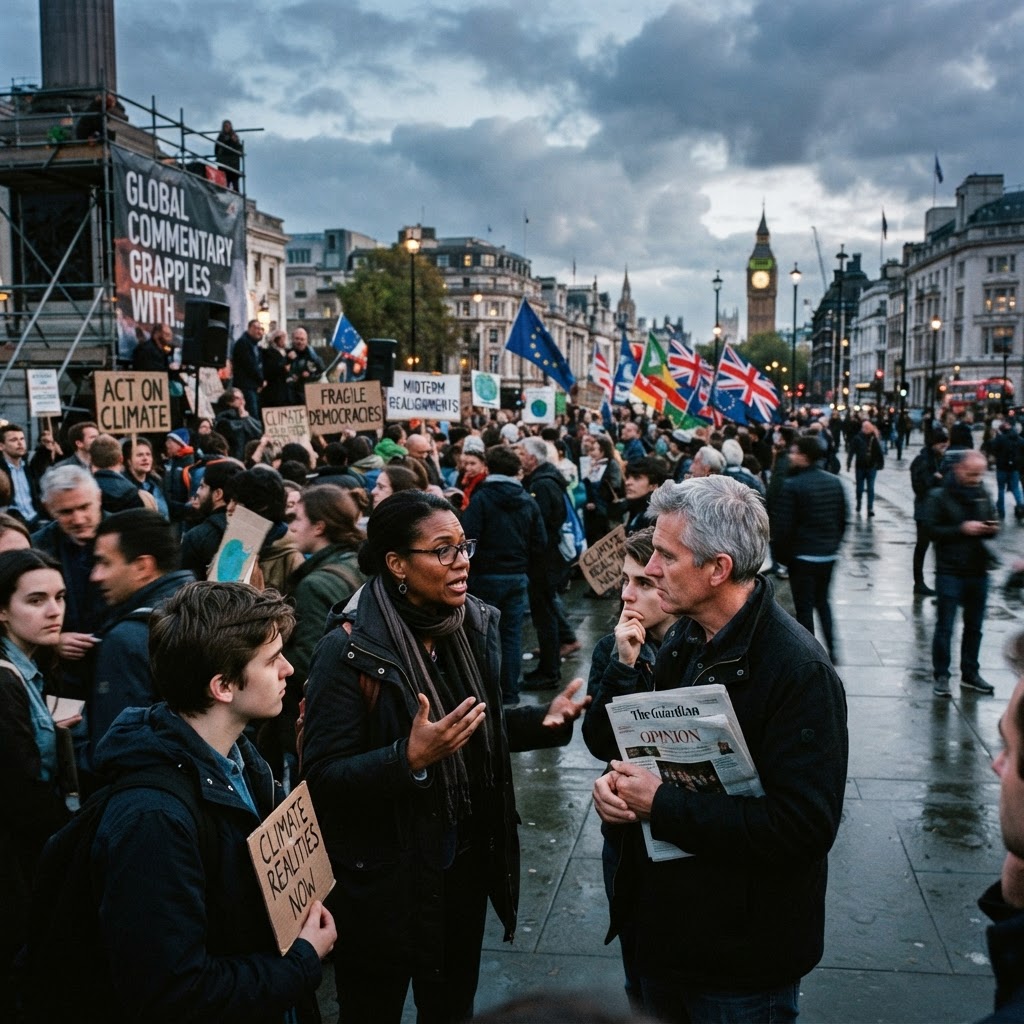
The Shifting Tectonic Plates of Global Governance
In commentary sections across the globe, political analysts and essayists are working overtime to assess a profoundly volatile geopolitical landscape. Much of the discourse over the past week has gravitated toward Washington, where the aftermath of decisive midterm elections has shaken domestic balance and prompted widespread international reflection. Observers are asking whether this moment signals a fleeting political course correction or a foundational realignment in democratic systems, with commentators across forums such as Rasmussen Reports and Project Syndicate framing the results as a severe rebuke of prevailing nationalist tides.
Yet philosophical and strategic interpretations vary wildly. Writing for Project Syndicate, cultural theorist Slavoj Žižek cautioned that writing off populist politics as a settled chapter ignores the deeper, systemic malaise of contemporary representative democracy. Commentators warn that viewing legislative shifts as an automatic panacea risks political complacency, arguing instead that political majorities must address structural inequities and economic anxieties rather than resting on midterm laurels.
Allies, Observers, and International Ripples
Beyond American borders, international commentators are evaluating how reshuffled legislatures will redefine foreign policy, diplomatic commitments, and strategic aid. Across the Indo-Pacific and Latin America, editorial boards are scrutinizing what a divided or recalibrated Washington means for bilateral treaties and security umbrellas. Perspectives highlighted in Philstar underscore that alliances must transcend ephemeral electoral cycles, even as commentators acknowledge that domestic policy gridlock can stall foreign diplomacy.
Meanwhile, in the Caribbean and the Middle East, columnists writing for outlets such as Caribbean News Global and Al Jazeera point out that institutional inertia often caps radical departures in external policy. Key geopolitical fault lines—from Middle Eastern security frameworks to territorial and trade disputes in the South China Sea—rarely shift overnight simply because legislative majorities change hands. Instead, the consensus among regional columnists suggests that partners must learn to navigate sustained unpredictability and self-reliant multilateral coalitions.
The Standoff Between Defence Budgets and Climate Transitions
Beyond traditional partisan battles, a central thread dominating opinion pages is the stark tension between surging defense expenditures and urgent climate investments. Analysis published in the Gulf Times highlights how skyrocketing global arms spending—forecasted to climb into the trillions—is steadily starving broader socioeconomic development and clean energy initiatives. Editorialists note that societies are confronting an existential budgetary tradeoff: fortifying territorial borders against geopolitical rivals or investing to mitigate cross-border planetary crises.
This friction between fiscal realism and environmental commitments is echoed in industry-specific debates. Contributions across Energy Voice point to the persistent friction between ongoing hydrocarbons stewardship and the capital-intensive deployment of green infrastructure. While international conferences like upcoming COP assemblies attempt to channel multilateral goodwill, columnists argue that meaningful progress will require reconciling real-world energy security with aggressive decarbonization targets, rather than treating them as ideological enemies.
Coalition Gridlock and Disillusionment Across Modern Democracies
The broader malaise facing established governance models extends far beyond large superpowers. In New Zealand, commentators following parliamentary stalemates on platforms like The Daily Blog reflect on the growing fragility of coalition politics. With minor factions increasingly wielding kingmaker leverage and major parties struggling to secure outright majorities, opinion writers warn that the resulting horse-trading frequently paralyzes long-term policy formulation on housing, infrastructure, and indigenous representation.
Taken together, current opinion pages reveal a common diagnosis: societies across the globe are caught in an era of rapid institutional transitions. Whether reacting to dramatic electoral upsets, fragmented parliamentary coalitions, or the escalating cost of regional defense, contemporary essayists suggest that the conventional playbooks of both governing and opposition politics are rapidly becoming obsolete.
Recommended for you
Similar to “Global Politics & Commentary”
A World in Flux: How Geopolitics, AI Disruptions, and Climate Realism Are Reshaping Global Opinion
Recent commentary across major international publications reveals a shared reckoning over shifting electoral dynamics, the unvarnished realities of the global climate crisis, and the unchecked footprint of modern technology.
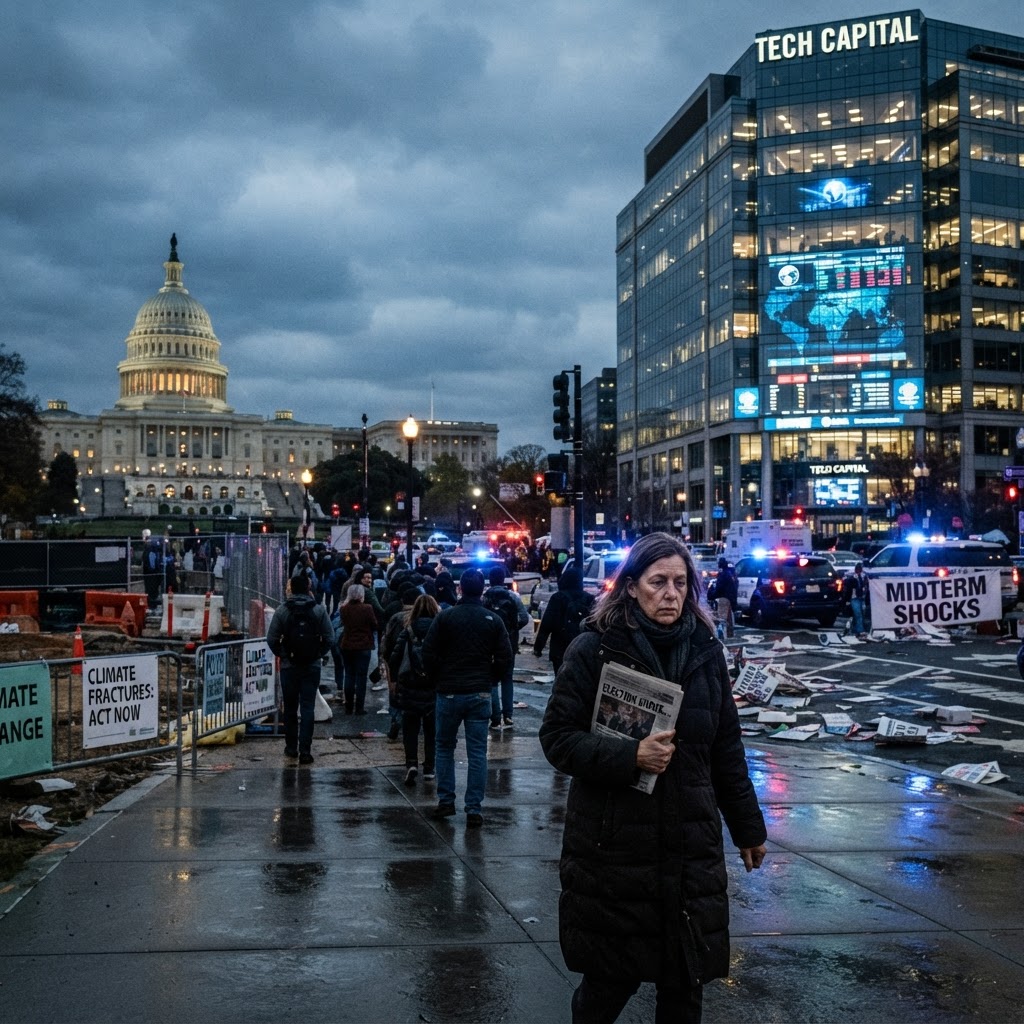
A World in Recalibration: Midterm Shocks, Climate Fractures, and the Perils of Tech Capital
Recent commentary across global opinion pages reveals an international order in deep transition, as U.S. midterm reverberations, new climate diplomacy fractures, and the financial toll of the artificial intelligence boom redefine global stability.
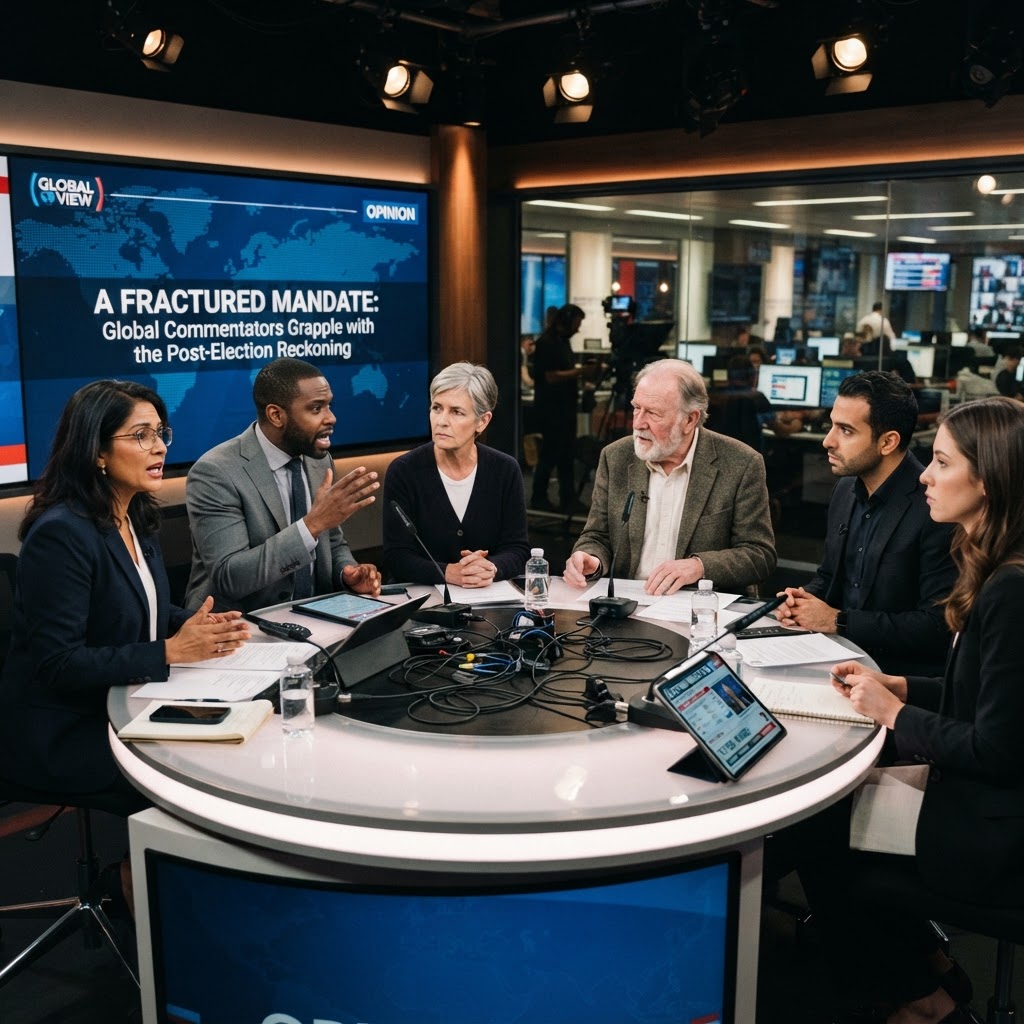
A Fractured Mandate: Global Commentators Grapple with the Post-Election Reckoning
Opinion pages across the world reflect a tense mixture of relief and deep-seated skepticism following a dramatic political shift in Washington. Analysts argue that while electoral repudiation reshapes domestic power, it does little to repair international trust or resolve escalating global friction.