A World in Flux: How Geopolitics, AI Disruptions, and Climate Realism Are Reshaping Global Opinion
Recent commentary across major international publications reveals a shared reckoning over shifting electoral dynamics, the unvarnished realities of the global climate crisis, and the unchecked footprint of modern technology.

The Shifting Post-Election Architecture and Diplomatic Reality
Across the globe, opinion pages and editorial boards have spent recent days dissecting profound transformations in governance and alliance frameworks. Following closely watched electoral shifts—notably the fallout from the U.S. midterm elections and fragile coalition talks in New Zealand—commentators are grappling with what political fragmentation means for global diplomacy. A pervasive theme in international discourse, highlighted by analysts in outlets like The Japan Times and Arab News, is that while high-stakes elections can deliver domestic checks on executive power, they rarely trigger neat, predictable resets in foreign policy. Instead, allies and adversaries alike are recalibrating their expectations, cautious of enduring partisan swings and transactional diplomacy.
In the Middle East and East Asia, columnists emphasize the limits of reading domestic political defeats as immediate precursors to peace or stability. Geopolitical analysts note that regional security commitments, conflicts, and defense pacts are governed by deep systemic pressures that outlast individual election cycles. As commentators point out, international partners must learn to navigate domestic polarization in major powers without destabilizing broader security pacts or multilateral initiatives.
The Collision of Technological Ambition and Societal Pushback
Simultaneously, editorial attention has pivoted sharply toward the governance of emergent technologies, particularly the sprawling footprint of artificial intelligence. While the early phase of the AI boom was celebrated for its economic promise, recent opinion pieces reveal an escalating public backlash against the infrastructure required to sustain it. In discussions touching on the rapid spread of data centers and the resource intensity of generative models, observers in outlets such as POLITICO and Inquirer Opinion argue that policymakers can no longer leave technological architecture entirely in the hands of private capital.
Writers increasingly frame the expansion of AI not as an inevitable march of productivity, but as a contest over physical resources—energy grids, municipal water, and regional land use. Public resistance in communities targeted for hyperscale infrastructure has given rise to arguments that democratic institutions must reassert control. The debate is rapidly expanding beyond content moderation or abstract ethics into the material consequences of tech consolidation, demanding enforceable rules that prevent unchecked corporate entitlement over local resources.
Climate Realism and the Broken Architecture of Finance
Nowhere is editorial consensus more urgently strained than on the topic of climate policy. With global climate targets slipping and international talks approaching, opinion writers around the world are expressing fatigue with symbolic gestures and aspirational language. Commentators writing for platforms like The Daily Star stress that the core impediment to effective climate adaptation remains a deeply inequitable international financial architecture.
For developing and climate-vulnerable countries, financing adaptation remains severely constrained by high borrowing costs and restrictive multilateral credit lines. Analysts observe that private capital routinely gravitates toward swift-return mitigation ventures, leaving vulnerable populations without the critical funding required to withstand recurring environmental disasters. As calls mount to make multilateral development banks more responsive to sovereign debt vulnerabilities, the prevailing perspective among global essayists is clear: without structural finance reform, international climate diplomacy will continue to produce hollow declarations that leave frontline communities exposed.
Conclusion: A Collective Turn Toward Structural Accountability
Taken together, recent opinion and editorial debates reflect a noticeable turn away from superficial political theater toward a demand for structural accountability. Whether evaluating the resilience of international alliances, the unchecked footprint of tech monopolies, or the structural debt hurdles blocking climate adaptation, thinkers across regions share a central thesis: the inherited governance models of the late twentieth century are inadequate for managing twenty-first-century pressures. Across continents, the global commentary signals that restoring public confidence will depend on real institutional reform rather than political rhetoric.
Recommended for you
Similar to “Global Opinion”
The Shifting Currents of Global Debate: How Disillusionment, Climate Realities, and Democratic Pressures Are Reshaping the Opinion Landscape
Recent commentary across leading global publications reveals a sharp inflection point, as essayists and editors grapple with democratic institutional strain, ecological trade-offs, and volatile public opinion.
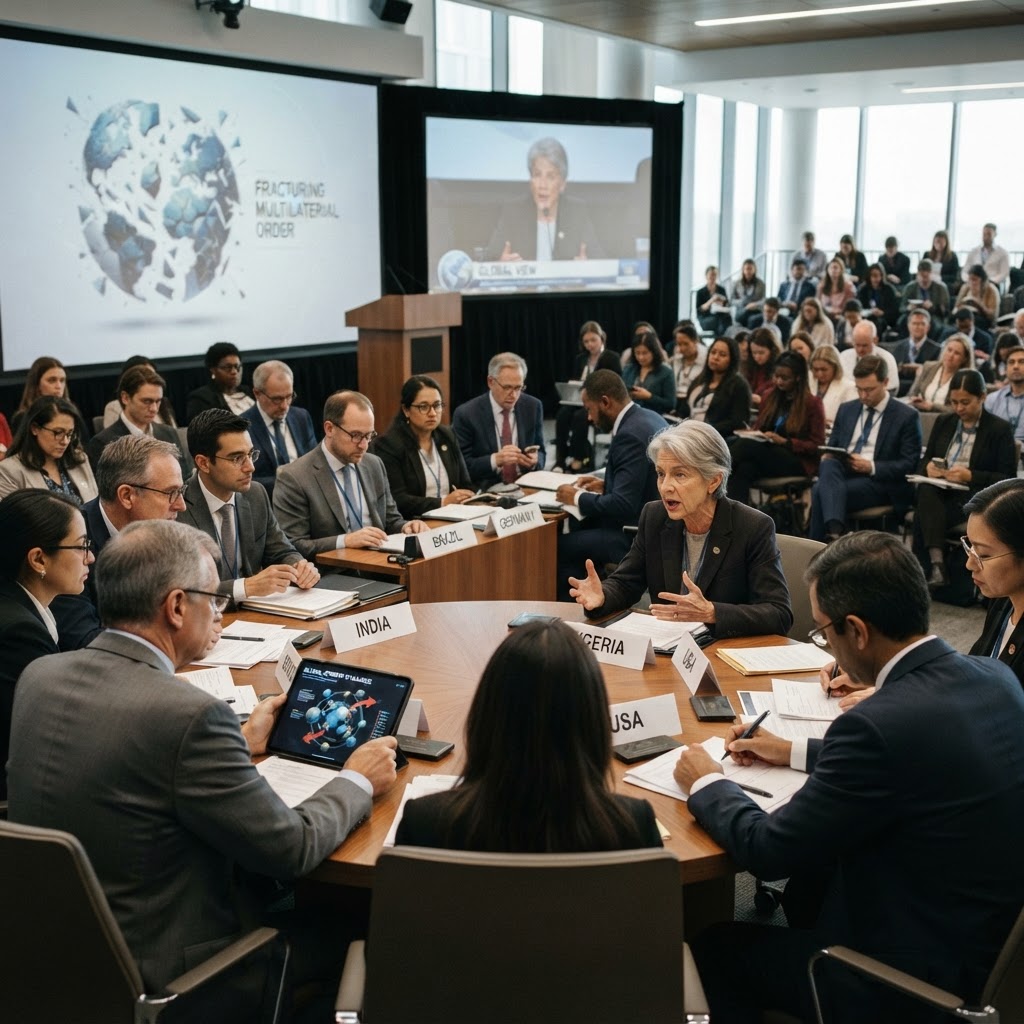
A World in Disjointed Motion: How Global Commentary Views the Fracturing Multilateral Order
Recent international opinion pages reflect growing anxiety over the retreat of major powers from climate commitments, shifting regional alliances, and the moral strains on global institutions.

The Global Rethink: How Geopolitical Fractures and Artificial Intelligence Are Reshaping Opinion Columns
Recent commentary across leading global publications reflects a world reassessing core assumptions, from shifting balance-of-power dynamics in Europe and Asia to the compounding anxieties surrounding artificial intelligence and democratic resilience.