A Volatile World Order: Diplomatic Realignment, Regional Summits, and Domestic Rebellions
Recent days have witnessed high-stakes diplomatic maneuvering from Abu Dhabi to Manila, even as deep domestic political rifts surface across Washington, Tokyo, and Seoul.
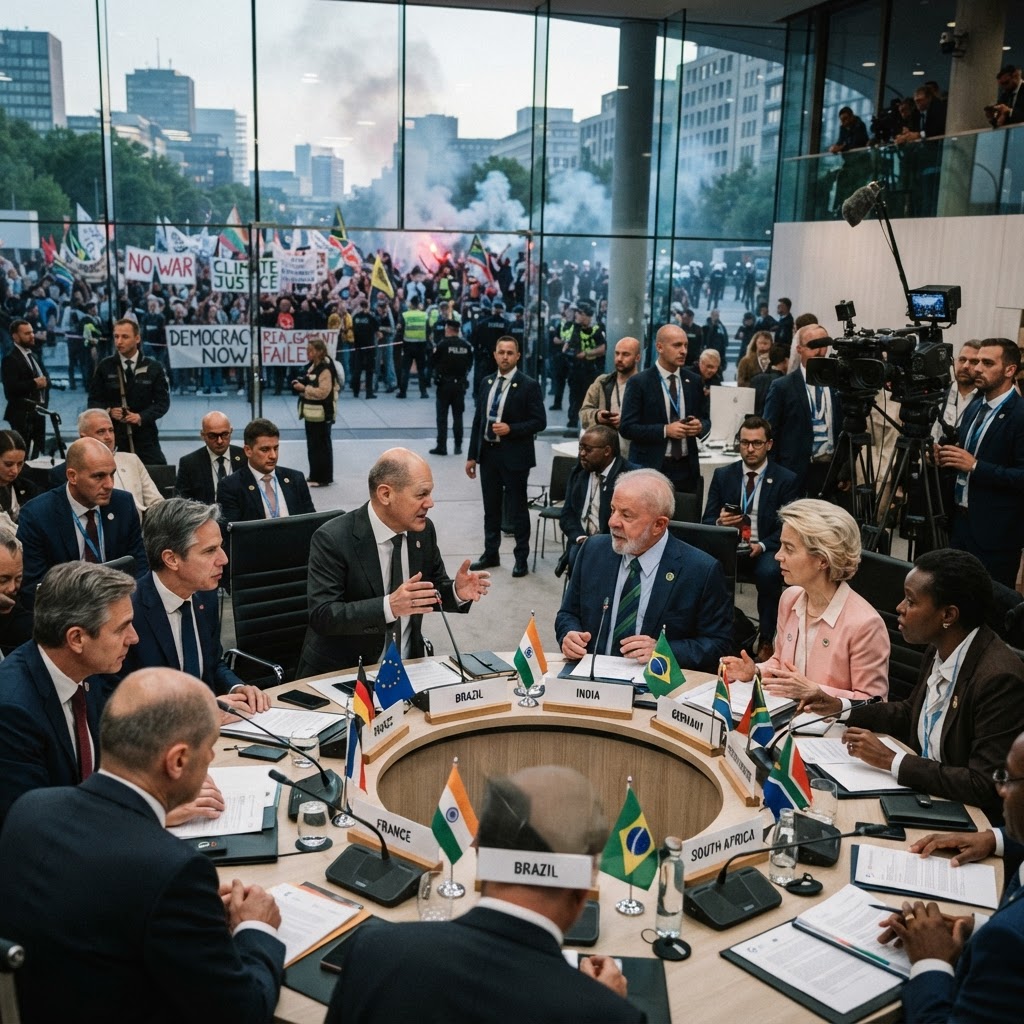
Intensive Diplomacy Across the Eurasian and Indo-Pacific Corridors
International politics entered a turbulent, decisive phase this week as global powers engaged in high-stakes negotiations across multiple continents. In the Middle East and Europe, delicate efforts to address ongoing military conflicts produced initial movement. As reported in The Economist and coverage from the BBC Global News Podcast, Russia and Ukraine conducted their first direct peace talks in nine months during trilateral meetings hosted in Abu Dhabi with United States mediation. While deep divisions regarding territorial integrity and ceasefire sequencing remain entrenched, the negotiations yielded an agreement on an expansive exchange of prisoners of war.
The diplomatic shuttle continued immediately following the talks, with American envoys traveling directly to Moscow to meet Russian President Vladimir Putin, seeking to broaden subsequent negotiations to include European allies. Envoys later briefed Ukrainian President Volodymyr Zelensky in Dublin, who voiced support for European inclusion ahead of eventual EU integration. Meanwhile, leaders are preparing for an unprecedented high-level trilateral engagement, with Seoul Economic Daily reporting scheduled talks among the heads of state of the United States, China, and Russia in Shenzhen.
Indo-Pacific Alignment and Economic Security
Simultaneously, maritime security and supply chain vulnerabilities have driven heightened coordination among Indo-Pacific partners. Leaders from the Quad grouping—uniting the United States, Japan, Australia, and India—are slated to convene in Manila on the sidelines of the ASEAN summit, marking their first joint meeting in two years as covered by Reuters via U.S. News & World Report. Officials familiar with the agenda indicate that safeguarding critical minerals, guaranteeing unimpeded commercial shipping, and securing global energy transit routes in response to sea attacks headline the talks.
Diplomatic calendars are equally congested at the COP31 summit in Antalya, where Turkish President Recep Tayyip Erdogan has engaged in extensive bilateral summits with Middle Eastern, African, and European counterparts, advancing both renewable initiatives and multilateral defense co-production deals, as noted by Yeni Safak. However, the overarching theme among international observers is whether these multilateral dialogues can translate into durable security architectures or if they merely manage immediate escalations.
Domestic Strife and Ideological Clashes
While leaders project resolve abroad, political battles back home are testing institutions across democratic capitals. In Washington, internal party friction erupted in the legislature. Following recent midterms, a prominent challenge against Senate Democratic Leader Chuck Schumer emerged from progressive ranks, with Senator Chris Van Hollen contesting party leadership as detailed by The Japan Times. The contest centers on debates over whether to aggressively defund foreign military actions immediately and confront entrenched corporate interests or maintain an institutionalist posture, mirroring broader strategic realignments inside the White House on Middle East conflict containment.
Across the Pacific, parliamentary politics in Tokyo and Seoul face similar pressures. In Japan, the administration under Prime Minister Sanae Takaichi contends with thorny economic debates over food consumption tax cuts, judicial scrutiny over legislative seat allocations, and debates surrounding long-held defense taboos. In South Korea, factional struggles within the ruling and opposition apparatuses over regulatory spending and ethics investigations highlight how domestic political fragility continues to constrain foreign policy execution.
Recommended for you
Similar to “World Politics”
A Fractured World Order: Power Shifts, Diplomatic Realignments, and Crises Reshape Global Politics
Recent high-stakes diplomacy at regional summits, leadership transitions across major capitals, and escalating confrontations from the Middle East to Eastern Europe mark a defining moment of global realignment.
Diplomatic Chessboards and Shifting Alliances: High-Stakes Summits Unfold Amid Rising Geopolitical Friction
As major world leaders converge across Asia for a critical series of regional forums and an unprecedented trilateral summit, intensifying military tensions and domestic political battles test global stability.
Diplomatic Realignments and Domestic Turmoil: The Shifting Currents of Global Politics
As high-stakes international summits navigate rising tensions over Taiwan and regional conflicts, domestic political institutions confront fresh judicial debates, contentious legislative hearings, and critical electoral milestones across the globe.