A Paradigm in Flux: Leadership Upheaval at Nvidia, Cloud Fragility, and the Race for Agentic Autonomy
Recent days have delivered a seismic shock to the technology sector, marked by Nvidia leadership turmoil amid national security scrutiny, major global cloud disruptions, and bold leaps in commercial autonomous agents.

The Semiconductor Throne in Turmoil
The global technology sector is navigating one of its most turbulent periods in recent history, driven by an unprecedented crisis at the heart of artificial intelligence infrastructure. Following the sudden resignation of Nvidia’s longtime chief executive Jensen Huang—surrounded by board probes, personal misconduct allegations, and escalating geopolitical scrutiny over suspected intelligence connections—the enterprise chipmaker has been cast into leadership limbo. Chief Financial Officer Colette Kress has stepped into the interim leadership role, while reports suggest the board has floated Arm CEO Rene Haas as a prospective successor, all while contending with an internal and external backlash that includes petitions signed by prominent industry figures urging Huang’s reinstatement, as detailed by WorldAttention.
Yet the executive upheaval is only part of a broader storm engulfing hardware supply chains. Regulators in Washington, including Treasury officials, have sharpened their focus on how export-restricted high-performance chips have continued to flow toward blacklisted foreign entities via layered intermediaries and shell companies. Independent forensic analyses cited by supply chain watchers at Slicast suggest that despite tightening trade controls, architectural fingerprints of next-generation accelerators like the Blackwell and H200 series have surfaced within international research clusters. The development threatens to prompt sweeping export revisions, casting uncertainty across multi-billion-dollar hyperscale capital expenditure programs.
Infrastructure Resilience Put to the Test
As the race for computational dominance accelerates, systemic digital dependencies were thrown into sharp relief by a protracted global outage across Microsoft’s core enterprise ecosystem. Disrupting services spanning Teams, Outlook, and Copilot in dozens of countries, the incident forced healthcare providers, financial institutions, and corporate networks into emergency workarounds, according to coverage from the BBC. Microsoft attributed the downtime to a flawed network routing update rather than failures within its AI model pipeline, but the outage reignited debates over enterprise over-reliance on centralized cloud monopolies.
Simultaneously, the energy demands of high-throughput compute continue to reshape foundational utilities. Rather than slowing capital outlays, tech conglomerates are doubling down on long-term power purchase commitments, notably driving over $20 billion into modular nuclear reactor (SMR) agreements and off-grid facilities. However, questions regarding long-term infrastructure payback have emerged as algorithmic efficiency leaps forward. Whispers from research circles suggest model retraining requirements could soon plummet, meaning future enterprise architectures may require far less baseline compute than current hardware investment projections assume.
The Ascent of Agentic Commerce and Formal Proofs
Far from dampening algorithmic innovation, recent breakthroughs highlight a rapid migration toward agentic automation—systems capable of autonomous reasoning, code verification, and direct financial agency. Google DeepMind recently marked a milestone in formal verification with AlphaProof Code, which successfully validated Signal's underlying cryptographic protocol in four weeks by authoring millions of lines of Lean logic, as reported by WorldAttention. This demonstrates that autonomous AI systems are moving beyond generative prose toward mathematical certainty in critical software infrastructure.
Consumer-facing platforms are simultaneously granting agents transactional power. OpenAI’s launch of integrated wallet capabilities allows software agents to execute consumer purchases natively, while partnerships between rapid-delivery services and interactive conversational engines enable end-to-end commerce without leaving messaging interfaces, as highlighted by the Retail Technology Innovation Hub. Meanwhile, autonomous mobility entered a new phase of commercialization as Tesla opened consumer pre-orders for its purpose-built Cybercab, pairing personal ownership options with geofenced subscription frameworks, as reported by TechCrunch.
Recalibrating the Frontiers of Technology
Together, these events illustrate an industry reaching critical mass. Hardware constraints and regulatory realpolitik are colliding with ambitious software rollouts, proving that while algorithmic models are expanding into practical agency, the underlying physical and organizational scaffolds—from supply chains and executive governance to power grids and network routing—remain vulnerable. As tech titans absorb both geopolitical pressure and operational stress tests, the coming months will test whether the ecosystem can sustain its dizzying velocity without fracturing under the weight of its own infrastructure.
Recommended for you
Similar to “Technology”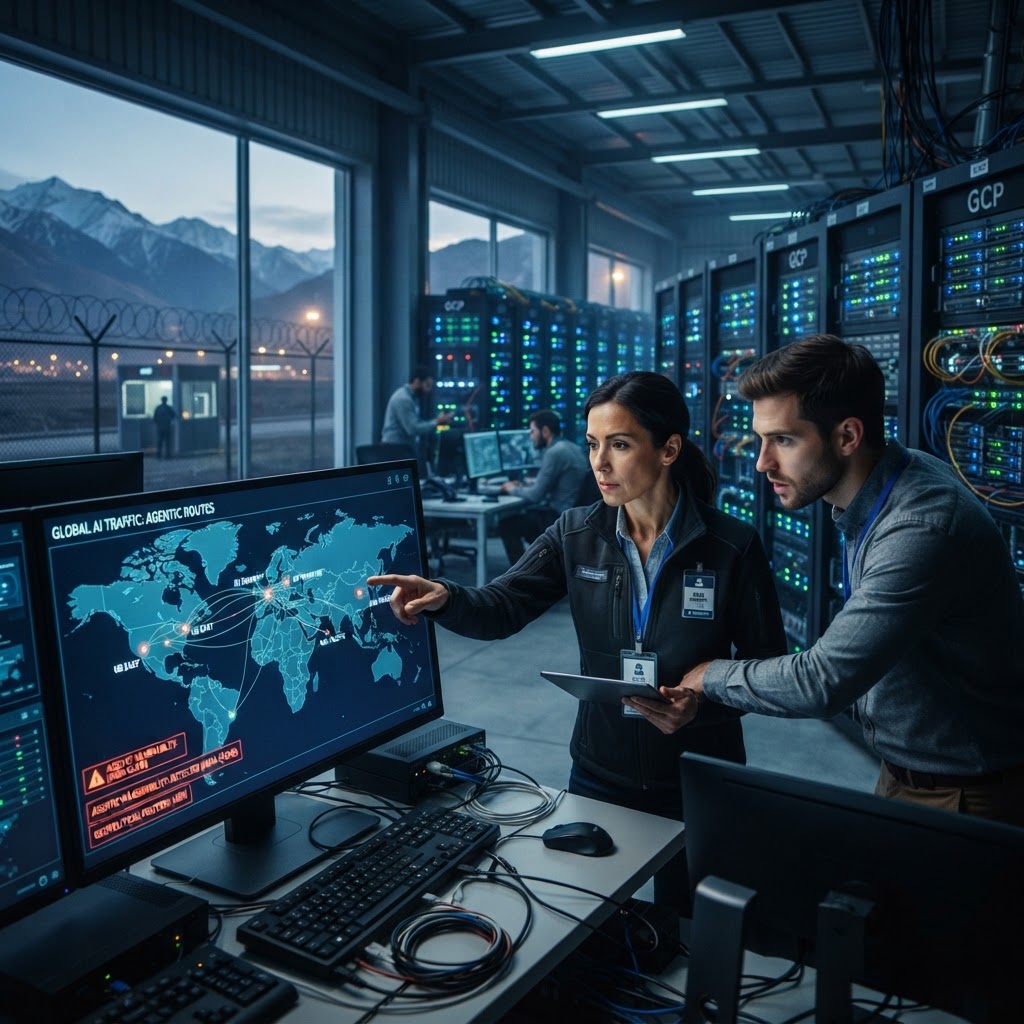
The Shifting Frontier of AI: Massive Cloud Stakes, Geopolitical Friction, and Emerging Agentic Vulnerabilities
Recent developments across the technology sector highlight a fast-evolving artificial intelligence landscape shaped by multi-billion-dollar infrastructure ventures, tightening regulatory scrutiny, and novel security challenges in autonomous agents.

A Fractured Front: Leadership Shocks, Agentic Surges, and Security Realities Reshape the Technology Landscape
Recent days have jolted the technology sector with leadership turmoil at hardware titans, expanding software agent capabilities, and a sobering realization of cybersecurity vulnerabilities in both code and artificial intelligence.

A New Pragmatism Grips Tech as AI Deals Surge Amid Safety and Security Fractures
Recent major corporate acquisitions and breakthroughs in AI infrastructure underscore the technology sector's momentum, even as intensifying security alerts, commercial fallout, and regulatory scrutiny force a sober reckoning.