Mapping the Unknown: From Deep-Space Cosmological Surveys to Inside-the-Body Gene Therapies
Recent scientific breakthroughs are rewriting textbooks across disciplines, highlighted by Euclid's massive cosmic survey, pioneering in vivo CRISPR treatments, and landmark discoveries in fundamental physics.
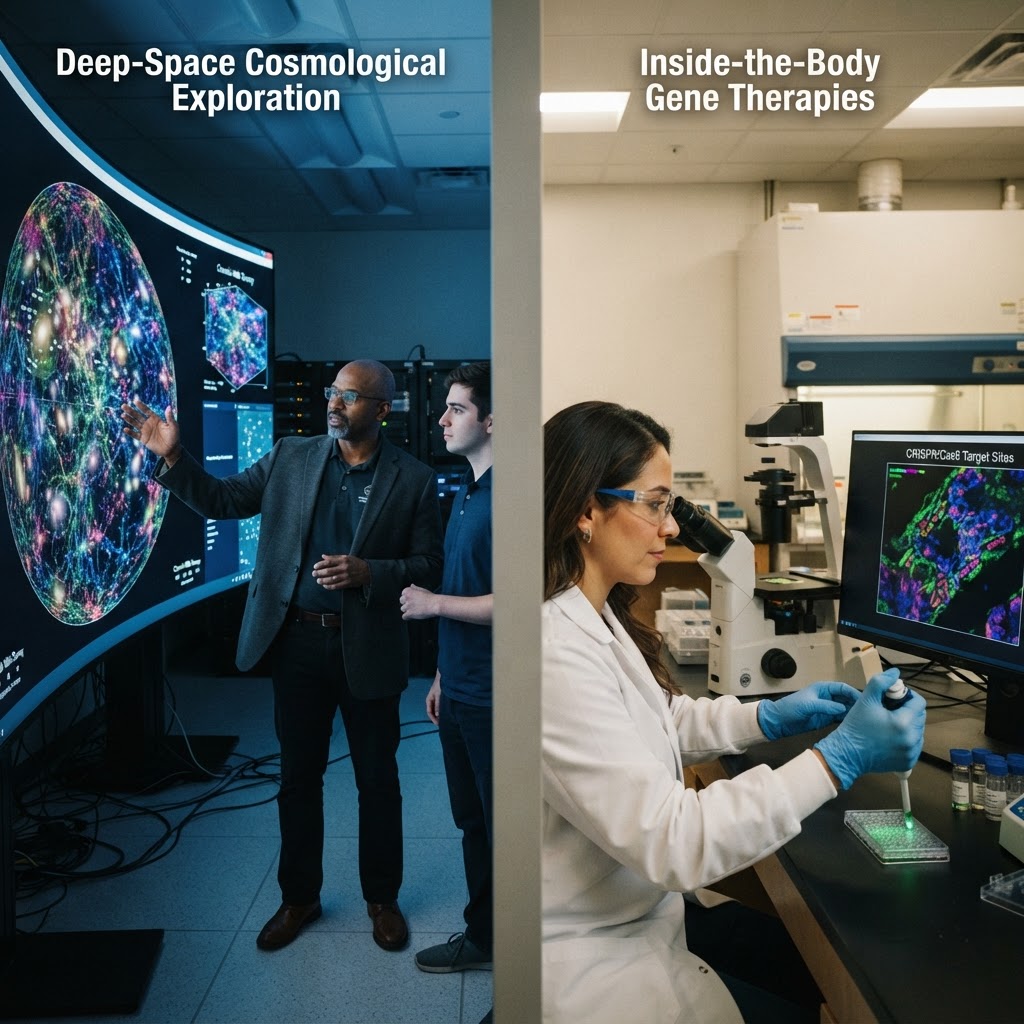
Unveiling the Hidden Architecture of the Cosmos
The past several days have marked a historic leap in our observational understanding of the universe. In astronomical sciences, the European Space Agency’s Euclid space telescope has delivered an unprecedented glimpse into deep space, assembling a colossal multi-hundred-gigapixel mosaic capturing roughly 900 million galaxies, as covered by Google News. Designed specifically to map the enigmatic influence of dark matter and dark energy, Euclid’s baseline dataset promises to redefine precision cosmology by providing astronomers with a statistical powerhouse capable of measuring cosmic expansion and large-scale structural evolution with extraordinary fidelity.
Complementing this wide-angle cosmic census, deep-space observatories like the James Webb Space Telescope have yielded unexpected findings at the temporal edge of our universe. The detection of Nāpōwawāʻenakaulua—a pair of compact, supermassive black-hole-powered quasars operating barely 900 million years following the Big Bang—challenges conventional theories regarding the accretion rates and gravitational collapse required to build giants so early in cosmological history. Together with ongoing missions such as the European Space Agency's Hera probe, which has begun closely inspecting binary asteroid systems, our instruments are offering both sweeping vistas of the macrocosm and granular views of planetary geology.
Molecular Horizons: Editing DNA Within the Human Body
While astrophysicists chart the outer edges of reality, biomedical researchers are advancing deeper into cellular machinery than ever before. Headlines in medical biotechnology report that a groundbreaking CRISPR gene-editing therapy is advancing toward historic regulatory approvals for direct, in vivo genome modification, according to coverage compiled by Nature. Unlike earlier cell-based treatments that necessitated extracting patient cells, modifying them in cleanroom bioreactors, and reinfusing them, this new therapeutic modality delivers molecular editing tools directly inside human tissues to treat genetic anomalies at their physiological origin.
Concurrently, oncological immunology has achieved significant laboratory milestones. Preclinical trials conducted at the University of California, San Francisco have demonstrated engineered immunotherapies that stay dormant in the bloodstream and switch into an active cytotoxic state specifically upon breaching the blood-brain barrier, entirely eliminating aggressive brain tumors in animal models as noted in recent reports by ScienceDaily. Coupled with new investigations demonstrating that viral infections can cause stealth, long-term splenic immune exhaustion that prior vaccination helps alleviate, our grasp of human immune defense and targeted molecular intervention is undergoing an exponential shift.
Subatomic Verifications and Structural Physics
In fundamental physics, researchers continue to subject theoretical frameworks to rigorous experimental tests. Physicists operating the LHCb detector at CERN’s Large Hadron Collider have observed conclusive evidence of an ultra-rare beauty particle decay, ending a four-decade search and verifying the Standard Model with exceptional precision, reported by Sci.News. Although theorists frequently hunt for discrepancies that could point toward exotic 'New Physics,' confirming such minute probabilities validates decades of quantum electrodynamics and electroweak theory.
Simultaneously, materials science is bridging nature and machine learning. Collaborative teams from MIT and Northeastern University have leveraged machine learning models constrained by physical laws to design synthetic cellular metamaterials inspired by the complex architectures of leaf venation and dragonfly wings, reported in structural engineering updates indexed by Google News. These lightweight, shock-absorbing frameworks present remarkable structural integrity under impact, providing practical templates for aerospace components, advanced body armor, and energy-absorbing transport systems.
Planetary Health and the Urgent Climate Balance
These breakthroughs take place alongside sober reminders from Earth systems science. As international representatives gather around global climate summits, newly issued datasets from the World Meteorological Organization and Copernicus affirm that recent monthly averages continue to break records, with 2026 trending as one of the warmest years recorded and the global mean temperature frequently passing 1.5°C above pre-industrial levels, highlighted by the Royal Meteorological Society. Atmospheric analyses indicate cascading shifts across weather regimes: cold spells in temperate regions are growing shorter and less intense, altering hydrological cycles, pest migration patterns, and agricultural predictability.
Moreover, atmospheric particle studies led by the National Centre for Atmospheric Science show that natural particle vectors, including massive transcontinental plumes of Saharan dust, are interacting with urban pollution, impacting renewable energy infrastructure efficiency and public respiratory health, observed by NCAS. These findings demonstrate that modern science is not merely an engine for technological expansion, but a crucial survival tool for monitoring systemic ecological stability and directing resource adaptation across our warming world.
Recommended for you
Similar to “Science”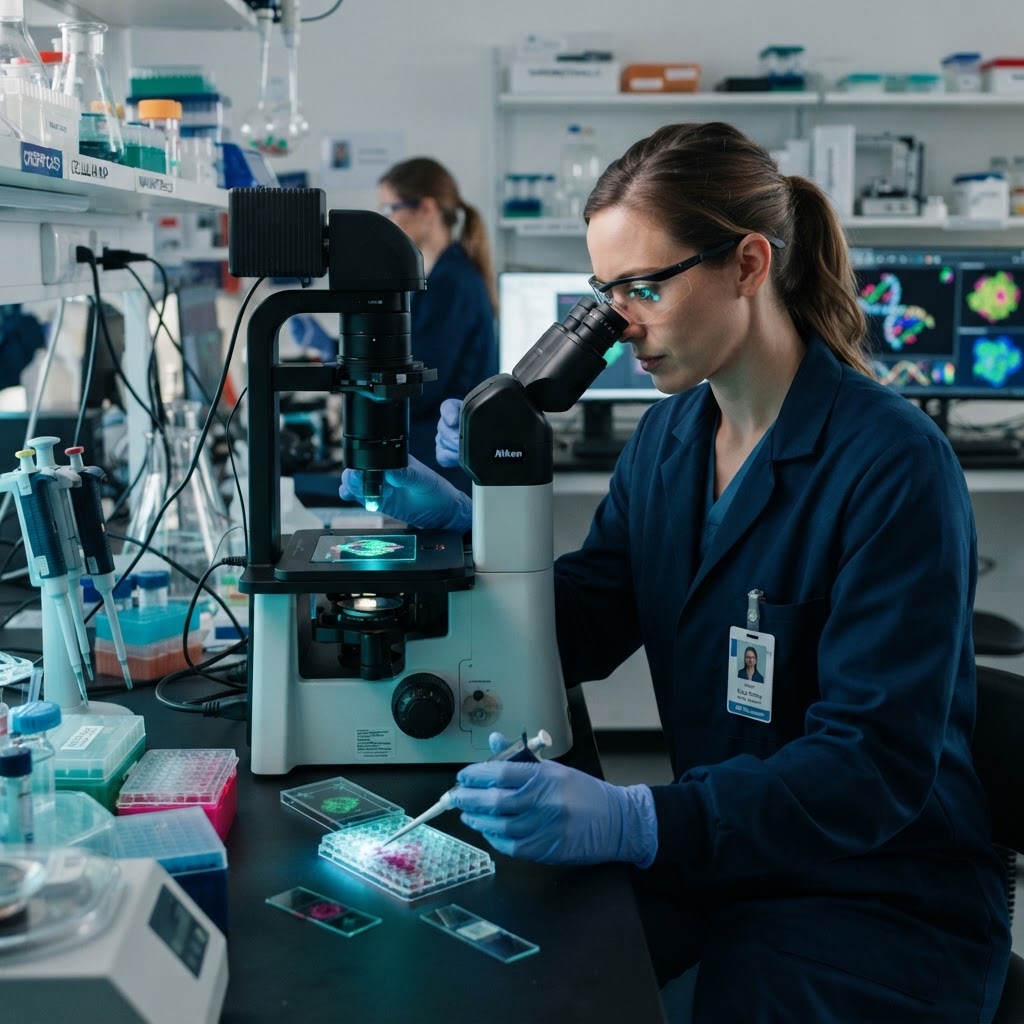
Frontiers of Precision: New Breakthroughs in Gene Editing, Materials, and Cellular Mapping Transform Science
Recent scientific advances highlight unprecedented precision across disciplines, from in vivo CRISPR therapies and massive brain cell atlases to energy-efficient magnetic nanomaterials.
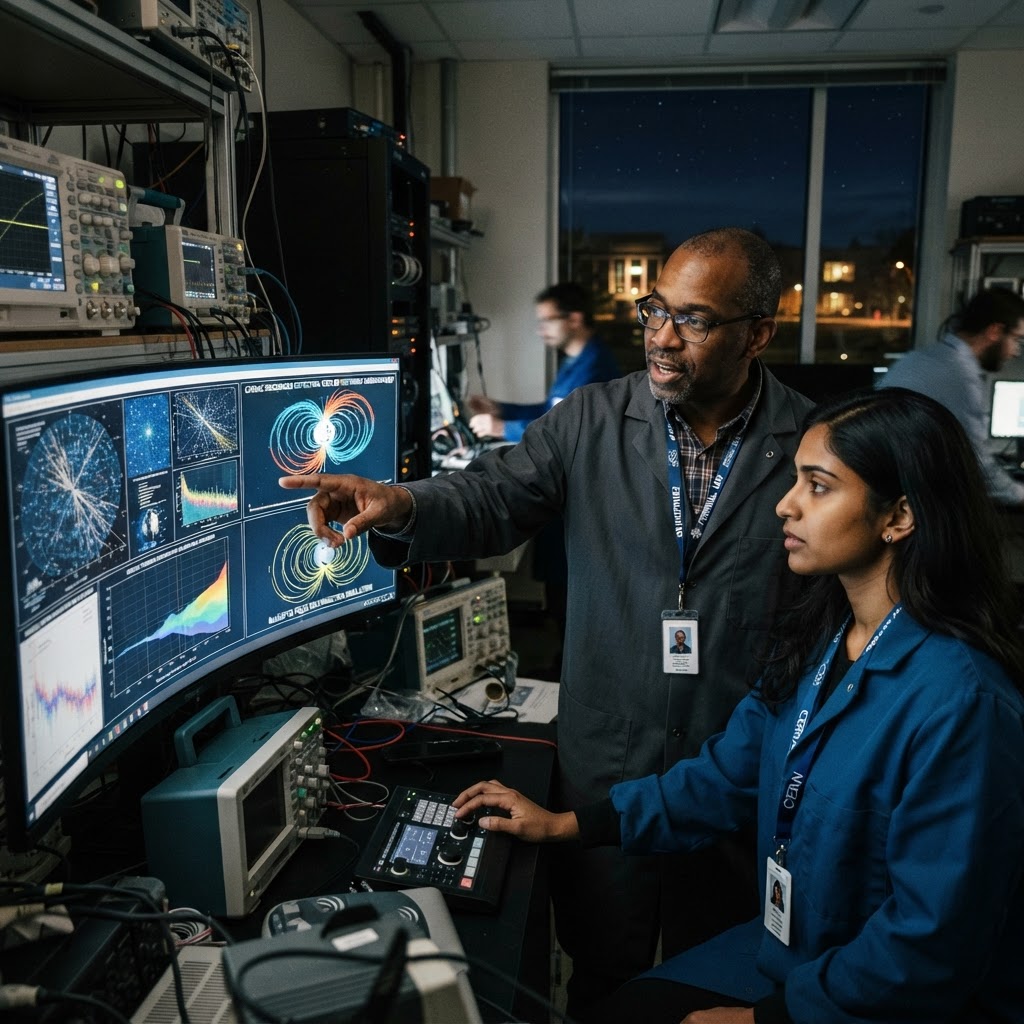
A New Magnetic Reality and Deep-Space Messengers: Inside This Week's Groundbreaking Scientific Shifts
Recent discoveries in physics, astrophysics, and molecular engineering are reshaping fundamental science, headlined by experimental validation of a third magnetic phase and ultra-high-energy cosmic detections.
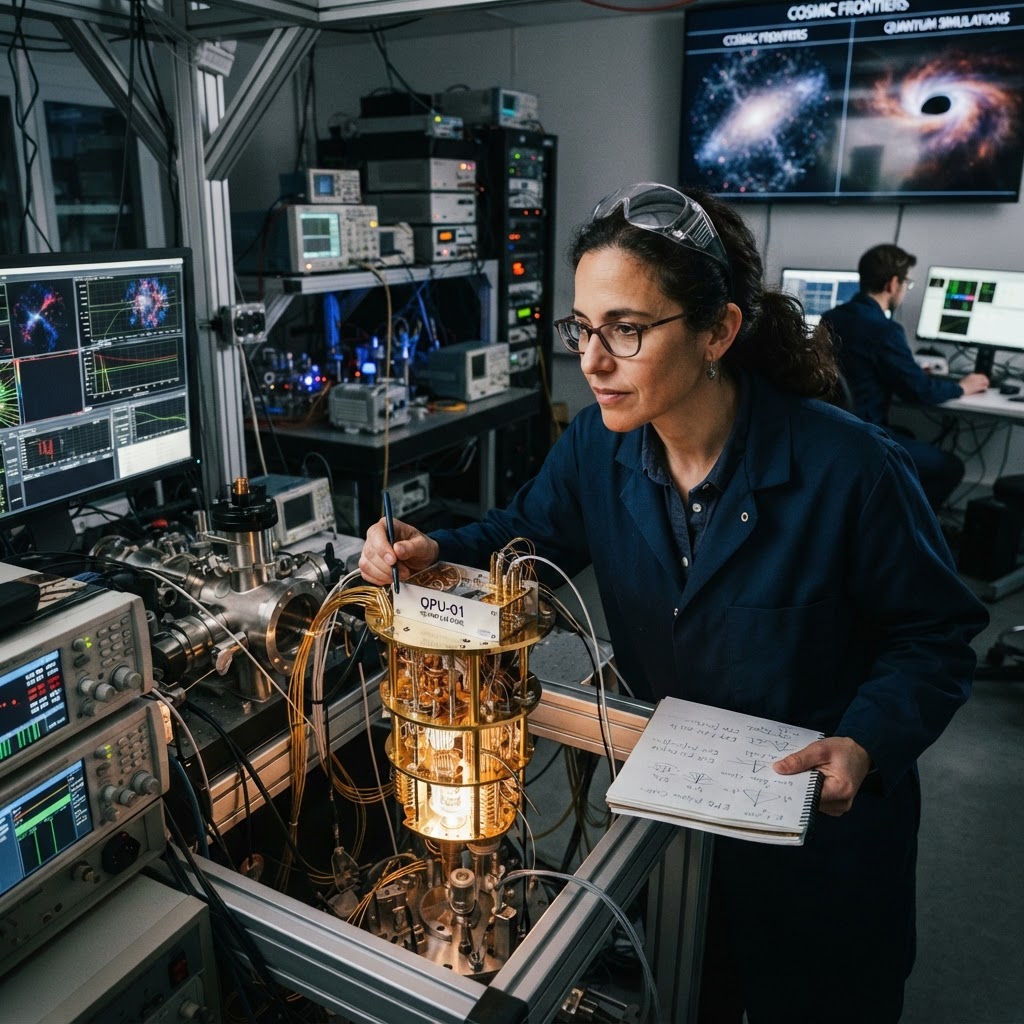
Quantum Frontiers and Cosmic Riddles: Inside the Scientific Breakthroughs Reshaping Physics and Technology
Recent breakthroughs spanning altermagnetic materials for energy-efficient computing, ultracold quantum milestones, and fundamental particle observations are opening dramatic new pathways across modern physics.