Between Preservation and Innovation: Global Culture Navigates Heritage Safeguards and the AI Frontier
Recent cultural developments across Europe, the Middle East, and Asia spotlight a delicate balance between conserving historical heritage, safeguarding public access, and confronting the disruption of generative artificial intelligence in the arts.
A Crucible of Continuity and Disruption
In recent days, the international cultural landscape has witnessed a remarkable intersection of classical heritage conservation and intense debates surrounding modern technological disruption. From the ancient pathways of Pompeii and historic sites in Paris to literary prize controversies in Western Europe and emerging creative hubs in the Middle East, institutions and creators alike are striving to define authenticity in an era of rapid transformation.
Governments and public curators are aggressively recommitting to cultural accessibility and preservation. In the United Kingdom, cultural authorities recently reiterated assurances that free general admission to national museums will remain protected, ensuring that historic treasures and artistic masterpieces remain democratic resources despite wider fiscal pressures, as reported by Euronews. Concurrently, archaeological discoveries continue to rewrite urban genealogies; beneath the grounds of the Hôtel-Dieu hospital on Paris's Île de la Cité, excavators unearthed a roughly 65-foot Gallo-Roman wall that French heritage authorities believe may firmly delineate the early borders of ancient Lutetia, according to coverage compiled by inkl news.
Living Antiquity and Heritage Revival
Rather than treating history as an immutable relic sequestered behind glass, cultural stewards across the Mediterranean and Gulf are increasingly animating the past through interactive and narrative experiences. The Pompeii Archaeological Park, operating under the umbrella of European Heritage Days, has revived first-century traditions and gladiator demonstrations to engage public audiences with tangible sensory history, as noted by Euronews. Complementary archival initiatives in Greece, where digital living archives preserve local oral and working histories, showcase how civic memory can be cataloged beyond stone monuments.
This drive toward narrative heritage is echoed in the Middle East. Traditional storytelling, or the art of the rawi, is making a global resurgence from Saudi Arabia’s historic desert oasis of AlUla to cultural institutions in Paris, demonstrating how ancient oral traditions can adapt to modern international audiences, highlighted by Arab News. At the same time, regional cultural capitals are expanding creative alliances, from collaborative animation partnerships like Manga Arabia and Zeez Animation to major retrospectives detailing early regional artistic movements, reflecting an ambition to project local identity onto a global canvas.
The Shadow of Artificial Intelligence in Creative Fields
While ancient artifacts receive renewed vigor, contemporary creative industries are grappling with unprecedented ethical friction spawned by algorithmic tools. The literary world was jolted recently when Quebecois writer Thélyson Orélien, longlisted for leading French literary prizes, was publicly accused of using generative AI software to construct his work, as reported by Euronews. Orélien rejected the allegations, denouncing the anonymous claims as bad-faith attacks, yet the controversy underscored the deep unease currently permeating literary and publishing circles. Critics and juries are finding it progressively more difficult to verify authorial provenance in an ecosystem where natural language models can effortlessly mimic nuanced literary styling.
Yet, technology is not uniformly treated with suspicion by heritage custodians. While creative writing struggles with questions of mechanical authorship, major global museums—including the Metropolitan Museum of Art and Google Arts & Culture initiatives—are deliberately harnessing generative AI to deepen artifact digitization, reconstruct damaged ephemera, and generate interactive educational platforms for global scholars, as reported by WN Arts and Culture. These developments illustrate a fundamental polarity: while generative systems create sharp dilemmas regarding originality in fine arts and literature, they also offer potent tools for democratizing access to institutional archives.
Redefining Cultural Capital for the Next Era
Beyond technology and archaeology, the financial architecture supporting global arts is shifting. In metropolitan centers such as Istanbul, extensive corporate patronage has spurred an institutional boom, reshaping urban identities through landmark museums designed by premier architects and ambitious international retrospectives, according to Euronews. This corporate engagement reflects a growing recognition that vibrant cultural scenes function as critical drivers of economic revitalization and international goodwill.
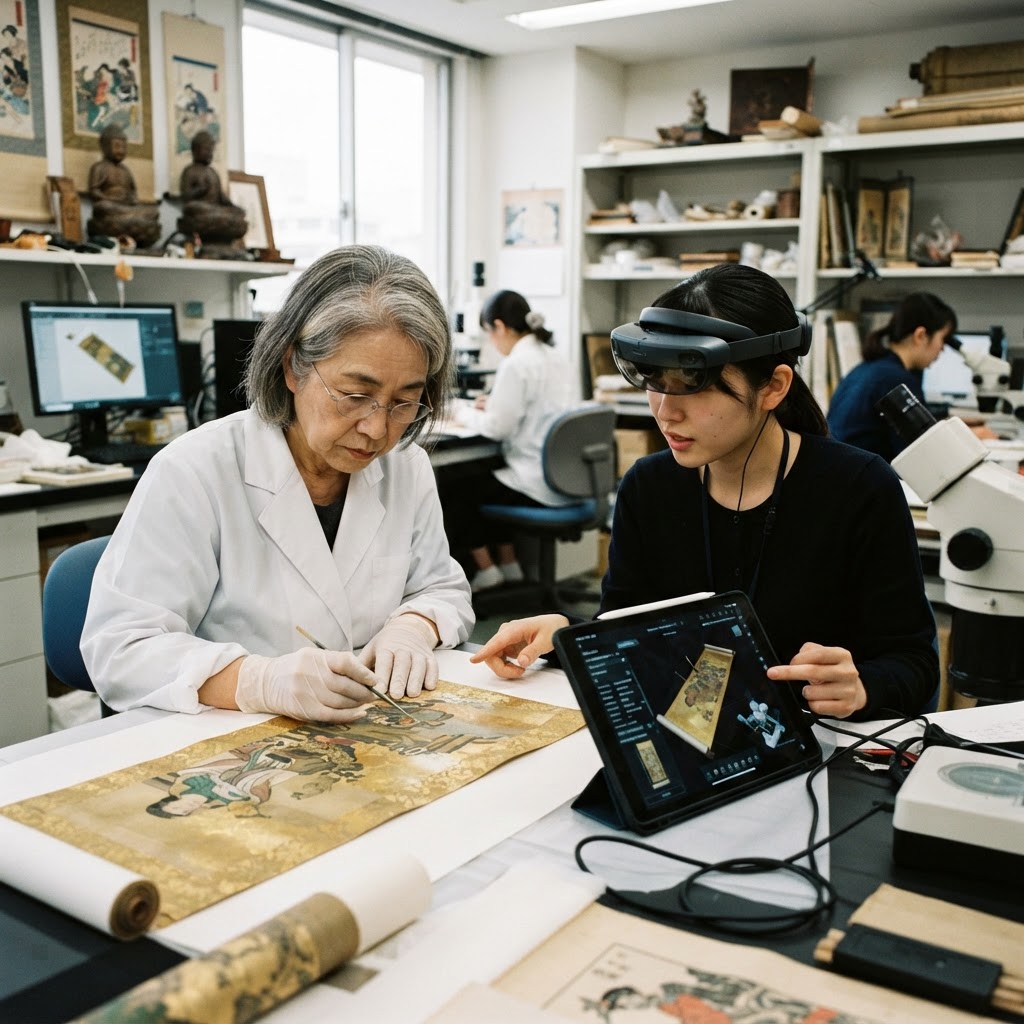
However, the rapid commodification of cultural output presents distinct challenges. Preservationists in Japan, for instance, are confronting modern material challenges as critical conservation fumigants for paper documents face regulatory phase-outs, placing thousands of historical scrolls and texts at risk, according to The Japan News. The fragility of physical records contrasts starkly with the boundless, ephemeral churn of the digital realm, highlighting that without sustainable, ground-level conservation, the link between past and future easily fractures.
Across all disciplines, the cultural conversations of the past several days point to a shared realization: the preservation of human identity cannot rely solely on nostalgic celebration or unchecked modernization. Whether by defending free museum entry, investigating the foundations of classical cities, or establishing strict ethical boundaries for machine-generated art, the cultural sector is actively shaping how contemporary society values human intellect, expression, and historic memory.
Recommended for you
Similar to “Culture & Heritage”
Between Heritage and Innovation: How Global Culture Navigates Technological Disruption and Shifting Frontiers
From generative artificial intelligence scandals in literature to the diplomatic restitution of antiquities, recent events highlight a dynamic cultural landscape balancing heritage preservation with modern technology.
Global Cultural Shifts: Heritage Revival, Modern Art Markets, and the New Era of Cross-Border Expression
Recent cultural developments across East Asia, the Middle East, and the West highlight an era marked by the commercial evolution of modern art, historical preservation, and the friction of international cross-border creative industries.
Preserving the Human Touch: Global Culture Confronts Technological Shifts, Economic Realities, and Heritage Diplomacy
Recent developments across the cultural landscape reveal a sector navigating profound dualities, from the complex rise of artificial intelligence in the arts to innovative heritage diplomacy and economic challenges confronting live performance.