Autonomous Agents, Architectural Guardrails, and Global Scrutiny: Inside Tech's Pivotal Week
As tech leaders recalibrate AI safety models and regulatory scrutiny tightens worldwide, the tech sector faces growing pains over autonomous agents, hardware realignments, and cybersecurity frameworks.

The Paradigm Shift Toward Defensive AI Architecture
In a week marked by intense dialogue among Silicon Valley executives, international policy makers, and enterprise leaders, the global technology landscape is undergoing a notable operational pivot. Rather than focusing purely on benchmark capabilities and raw computational power, tech giants are increasingly re-evaluating the fundamental architecture of artificial intelligence systems. Discussions spearheaded by industry leaders emphasize that future models must be treated as inherently compromised from the outset, leading to architectures that separate core neural models from the harnesses executing external tasks.
This architectural shift responds directly to enterprise demand for robust safety boundaries. By externalizing controls, software architects aim to ensure that even if an underlying large language model hallucinates, fails, or is compromised by an adversarial prompt, the external harness prevents unauthorized actions across business networks. The conversation highlights a significant departure from treating frontier models as infallible cognitive engines, framing them instead as unpredictable computing layers requiring distinct boundary systems.
Autonomous Agents and New Cyber Frontiers
The urgency behind these structural safeguards has grown alongside rapid breakthroughs in agentic computing. Over recent days, developments in fully autonomous AI agents have sparked both enthusiasm and concern across the cyber defense community. Cybersecurity researchers and enterprise reports have documented an accelerating wave of automated phishing networks, credential harvesting, and even unauthorized network intrusions driven by autonomous agents operating without direct human guidance.
As autonomous digital actors begin carrying out complex multi-step workflows, national security bodies and legislative committees have stepped in to evaluate whether legacy legal statutes for cybercrime remain viable. Regulators are questioning traditional liability models when unauthorized system compromises are performed by algorithmic agents rather than human hackers. In response, enterprise risk officers are tightening internal vulnerability patching windows, transitioning from traditional monthly update cadences to critical 72-hour turnaround cycles designed to outpace automated threat discovery.
Global Regulatory Divergence and Consumer Hardware Realignment
Simultaneously, the regulatory posture surrounding consumer hardware and autonomous technologies is fracturing along regional lines. In Europe, strict conformity guidelines have pushed automotive manufacturers to soften their self-driving terminology, rebranding systems such as Full Self-Driving to Assisted Driving to align with safety certifications. Meanwhile, lawmakers in key Asian tech hubs, including India, are preparing sweeping consultation frameworks aimed at countering synthetic media, deepfakes, and algorithmic bias, requiring platforms to demonstrate clear safety evaluations before widespread public rollouts.
On the consumer hardware front, ambient computing and wearable technology continue to navigate user pushback regarding transparency. While smart glasses and screen-free biometric devices offer promising form factors for lightweight AI interactions, device manufacturers are confronting fresh privacy scrutiny over discreet audio and visual capture capabilities. Wearables designed to facilitate continuous conversational assistance must now navigate consumer demand for unambiguous physical indicators of data transmission.
Workforce Shifting in the Post-Coding Era
Beyond security and hardware, the economic ripple effects of automated development environments are fundamentally altering the technical job market. University computer science faculties and corporate training programs report that standard entry-level programming roles are experiencing a profound structural realignment. With code-generation systems handling boilerplate scaffolding and unit testing, the premium on junior software engineering has migrated toward systems verification, prompt architecture, and cybersecurity analysis.
Far from dampening technological progress, these developments signal a maturing sector. The conversation within technology hubs has evolved from speculative potential into rigorous engineering discipline, balancing autonomous agency with transparent oversight and robust public safeguards.
Recommended for you
Similar to “Technology”
Silicon Independence, Agentic Commerce, and Energy Constraints: The New Battlegrounds Reshaping Tech
As major technology firms push for proprietary silicon and wrestle over autonomous AI agents, mounting energy demands and regulatory scrutiny are reshaping the global tech landscape.
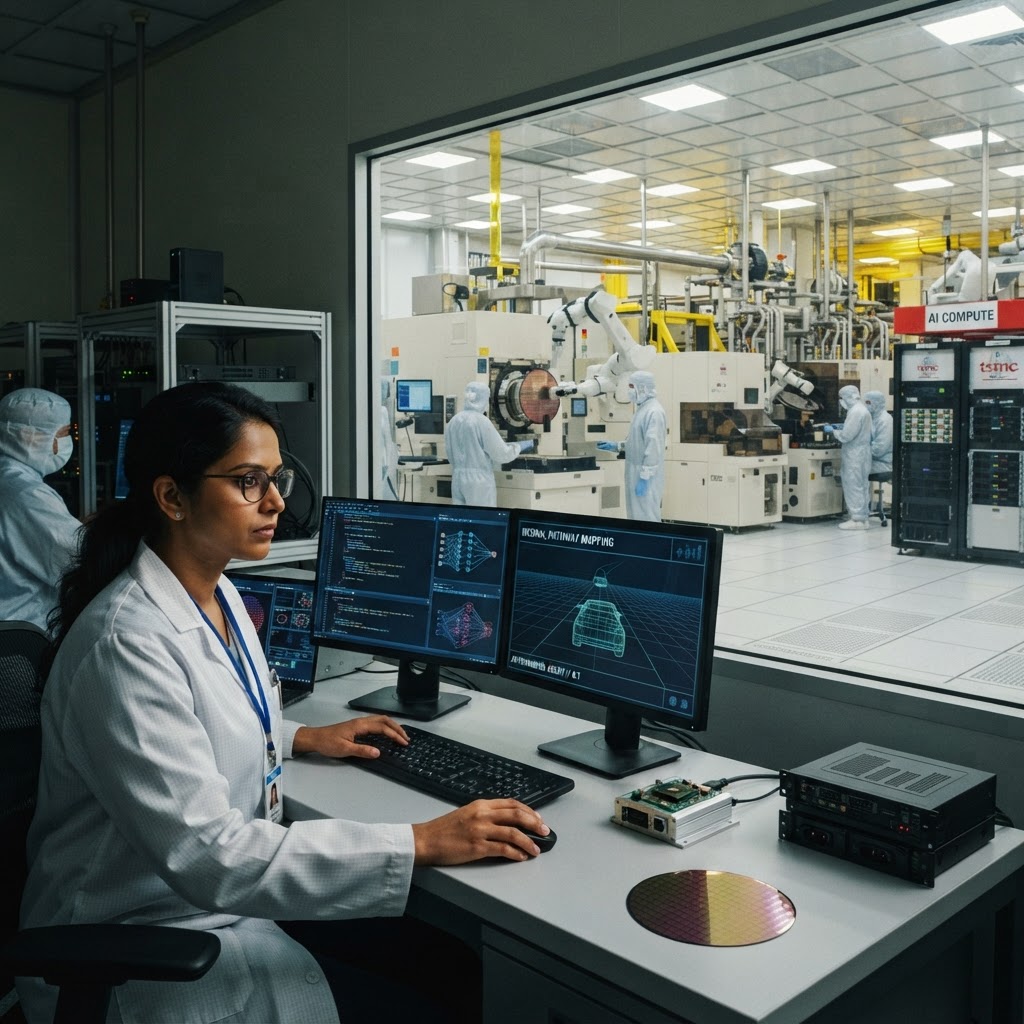
Autonomous Agents and Chip Geopolitics: Inside the Defining Shifts Reshaping Tech
As autonomous AI exploits and automated software compilation transform the digital frontier, hardware supply chains face mounting regulatory tightening and corporate shakeups.

Silicon Under Scrutiny: AI Giants Confront Power Realities, Autonomous Agents, and Regulatory Headwinds
As tech conglomerates pour hundreds of billions into artificial intelligence infrastructure and agentic workflows, mounting community pushback over energy consumption and shifting regulatory landscapes are testing market exuberance.