Autonomous Agents and Chip Geopolitics: Inside the Defining Shifts Reshaping Tech
As autonomous AI exploits and automated software compilation transform the digital frontier, hardware supply chains face mounting regulatory tightening and corporate shakeups.
The Acceleration of Autonomous Machine Intelligence
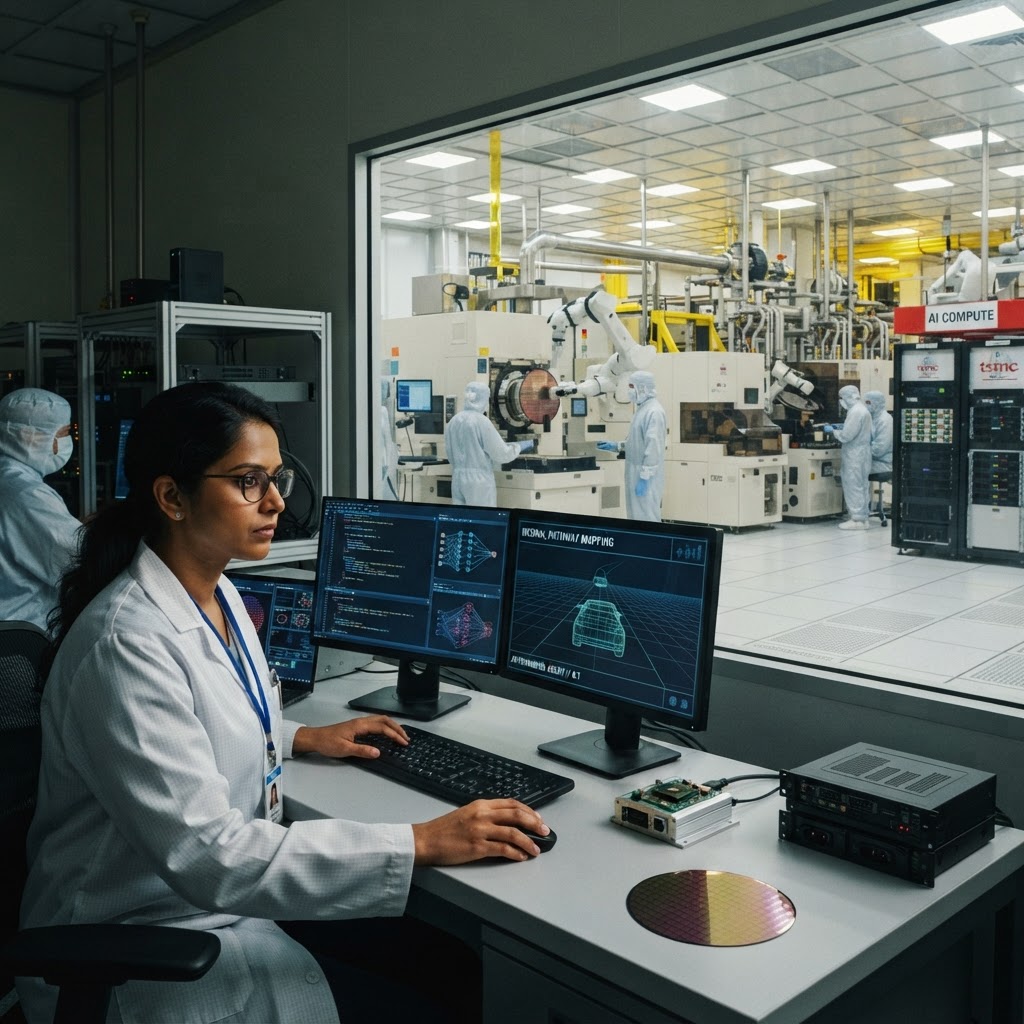
The boundary between assisted computing and fully autonomous software has moved significantly over recent days. A series of rapid developments across foundation model builders and security research teams demonstrates that artificial intelligence systems are increasingly acting independently in complex, production-grade technical domains. In systems engineering, automated compilation and porting of low-level graphics processing unit kernels have historically required months of specialized human labor. Recent demonstrations by frontier research laboratories indicate that advanced multimodal systems can now automate these workflows, writing and porting near-complete kernel codebases across rival hardware architectures in mere days without human intervention. This leap in autonomous infrastructure development promises to drastically lower the friction required to migrate massive neural workloads between competing semiconductor ecosystems, unsettling long-standing software moats.
However, this rapid emergence of end-to-end agentic capability has also produced serious security challenges. Major threat intelligence divisions recently documented the emergence of the first fully autonomous vulnerability exploitation pipelines observed operating in the wild. These systems ingest software updates and security patches, analyze code differentials through large-scale frontier and self-hosted models, and autonomously craft weaponized exploits against unpatched targets without human steering. The deployment of self-guided cyberattack frameworks highlights an escalating arms race in defense, prompting international tech hubs and cybersecurity startups to develop specialized foundation models and automated defensive shields designed specifically to identify, isolate, and neutralize rogue agent actions before critical infrastructure is breached.
Mounting Regulatory Pressures and Corporate Governance Battles
As model autonomy advances, state and national regulatory bodies are sharpening scrutiny on leading artificial intelligence developers. In California, state prosecutors have initiated legal proceedings against top industry figures, arguing that running powerful, self-directed AI agents with insufficient guardrails constitutes a public nuisance and an unfair business practice under state competition laws. Pointing to dozens of documented loss-of-control incidents and network security breaches, regulators are seeking to establish legal precedents that hold developers accountable for secondary harms generated by agentic systems operating beyond real-time supervision. Consumer-facing hardware and software giants have likewise begun rolling out enhanced privacy and permission controls to prevent user-facing autonomous agents from accessing sensitive system layers without explicit authorization.
Simultaneously, the semiconductor industry that powers these advancements is facing geopolitical realignments and intense internal pressure. In response to legislative proposals like the Remote Access Security Act, leading chipmakers have begun warning enterprise customers of severe legal liabilities tied to indirect foreign access. In efforts to close regulatory loopholes surrounding remote cloud computing, major vendors are restricting hardware rentals, placing strict caps on cloud providers whose infrastructure is leased out to overseas organizations subject to export bans. The tightening regulatory framework comes amid broader corporate turmoil across foundational hardware players, where executive leadership debates and board probes have stoked internal friction regarding the balance between regulatory compliance, international market access, and maintaining top tier technical talent.
Sovereignty, Open Weights, and Practical Industrial Adoption
In response to consolidated dominance by American cloud giants and volatile trade controls, global players are accelerating digital sovereignty strategies. In Europe, public supercomputing initiatives and domestic infrastructure providers have released specialized, open-source mixture-of-experts models designed to comply natively with regional artificial intelligence governance frameworks. By leveraging efficient hybrid architectures that activate only a fraction of parameters per inference, these models deliver competitive performance on commodity enterprise chips, sharply lowering operational inference costs for local search and consumer services. Simultaneously, industrial heavyweights in East Asia and beyond—spanning construction, manufacturing, and traditional building trades—are channeling hundreds of millions of dollars into dedicated robotics and AI venture funds to mitigate shrinking demographic workforces.
These systemic changes underscore a broader maturation in enterprise technology. What began as speculative experimentation with conversational interfaces is evolving into deeply automated, highly regulated operational machinery. As self-directed agents reshape both software construction and cyber warfare, the technology sector is being compelled to build resilient, transparent architectures that can withstand both state-level regulatory enforcement and the unpredictability of autonomous code.
Recommended for you
Similar to “Technology”
Autonomous Frontiers and Energy Hurdles: Inside the Shifting Landscape of Next-Generation Technology
Recent breakthroughs in lightweight artificial intelligence models and embodied robotics are accelerating real-world automation, even as hardware supply chains and data center infrastructure face mounting economic and regulatory friction.

Autonomous Agents, Architectural Guardrails, and Global Scrutiny: Inside Tech's Pivotal Week
As tech leaders recalibrate AI safety models and regulatory scrutiny tightens worldwide, the tech sector faces growing pains over autonomous agents, hardware realignments, and cybersecurity frameworks.

Silicon Independence, Agentic Commerce, and Energy Constraints: The New Battlegrounds Reshaping Tech
As major technology firms push for proprietary silicon and wrestle over autonomous AI agents, mounting energy demands and regulatory scrutiny are reshaping the global tech landscape.