From Cellular Frontiers to Global Governance: The Convergence Shaping Modern Health
Recent clinical milestones and international public health accords are combining advanced molecular medicine with broader multilateral frameworks to address the world's most pressing medical challenges.

The Convergence of High-Tech Medicine and Public Health
The global health landscape is witnessing a convergence between cutting-edge laboratory breakthroughs and coordinated international policy. While frontline researchers push the boundaries of immunotherapy, oncology, and metabolic science, multilateral organizations are moving swiftly to strengthen systems that ensure these advances reach populations in need. This dual trajectory underscores a growing realization: modern healthcare requires both advanced science and robust public infrastructure to deliver enduring outcomes.
Breakthroughs in Cellular and Metabolic Innovation
On the clinical frontier, researchers continue to expand the horizons of targeted therapies. Groundbreaking research documented by ScienceDaily reveals how scientists at the University of Southern California have established methods to produce renewable supplies of engineered immune cells, fundamentally enhancing natural immune defenses against oncological threats. Such advances build directly on recent clinical progress where precision interventions—ranging from bespoke gene therapies to multiagonist treatments for metabolic diseases—offer personalized solutions for conditions once considered intractable.
Simultaneously, the therapeutic landscape for chronic metabolic conditions like obesity and type 2 diabetes is undergoing a paradigm shift. Novel multi-receptor agonists, which modulate multiple hormonal pathways simultaneously, have demonstrated unprecedented efficacy in regulating glycemic control and achieving sustained weight reduction. These advances bridge the gap between symptom management and disease modification, pointing toward a future where complex systemic illnesses can be modulated before long-term organ damage sets in.
Preventive Screening and Systemic Health Risks
Alongside therapeutic innovation, diagnostics and lifestyle epidemiology are providing clearer roadmaps for prevention. Modern surveillance paradigms are shifting away from isolated, episodic tests toward longitudinal biomarkers. Emerging studies highlight that evaluating trends in regular blood metrics over extended intervals can detect underlying risks far earlier than waiting for overt symptoms to manifest.
At the same time, epidemiological warnings about lifestyle determinants are intensifying. Contemporary dietary research documented by Medical News Today links the chronic intake of ultra-processed foods directly to cognitive decline in otherwise healthy demographics. When combined with insights into systemic markers of inflammation, the medical consensus increasingly emphasizes that long-term physiological resilience depends heavily on proactive lifestyle management and early risk interception.
Multilateral Frameworks and Health Security
Technological and diagnostic breakthroughs alone cannot guarantee equitable outcomes without systemic governance. Recognizing this reality, international bodies have accelerated formal cooperation to safeguard healthcare delivery and border security. The World Health Organization (WHO) and INTERPOL announced a comprehensive agreement aimed at strengthening health protection frameworks and mitigating cross-border health threats, reinforcing the critical link between law enforcement and biosecurity.
Furthermore, broader global governance has achieved key diplomatic milestones. The formal adoption of the United Nations political declaration on pandemic prevention, preparedness, and response, alongside regional WHO roadmaps addressing non-communicable challenges and substance abuse, marks a renewed commitment to collective resilience. By aligning international standards with clinical and diagnostic innovations, global institutions are laying the groundwork for a more responsive, equitable healthcare ecosystem worldwide.
Recommended for you
Similar to “Global Health”
Frontiers of Modern Medicine: Emerging Therapies, Regulatory Milestones, and Shifting Global Priorities
Recent advances across biotechnology, drug safety investigations, and public health infrastructure are reshaping both clinical practice and global healthcare delivery.

Frontiers of Modern Medicine: How Gene Therapies, Multiagonists, and Non-Invasive Technologies Are Reshaping Patient Care
From breakthrough CRISPR treatments and advanced multiagonist diabetes therapies to minimally invasive cardiovascular procedures, medical innovation is moving rapidly into clinical practice while facing systemic challenges of global access.
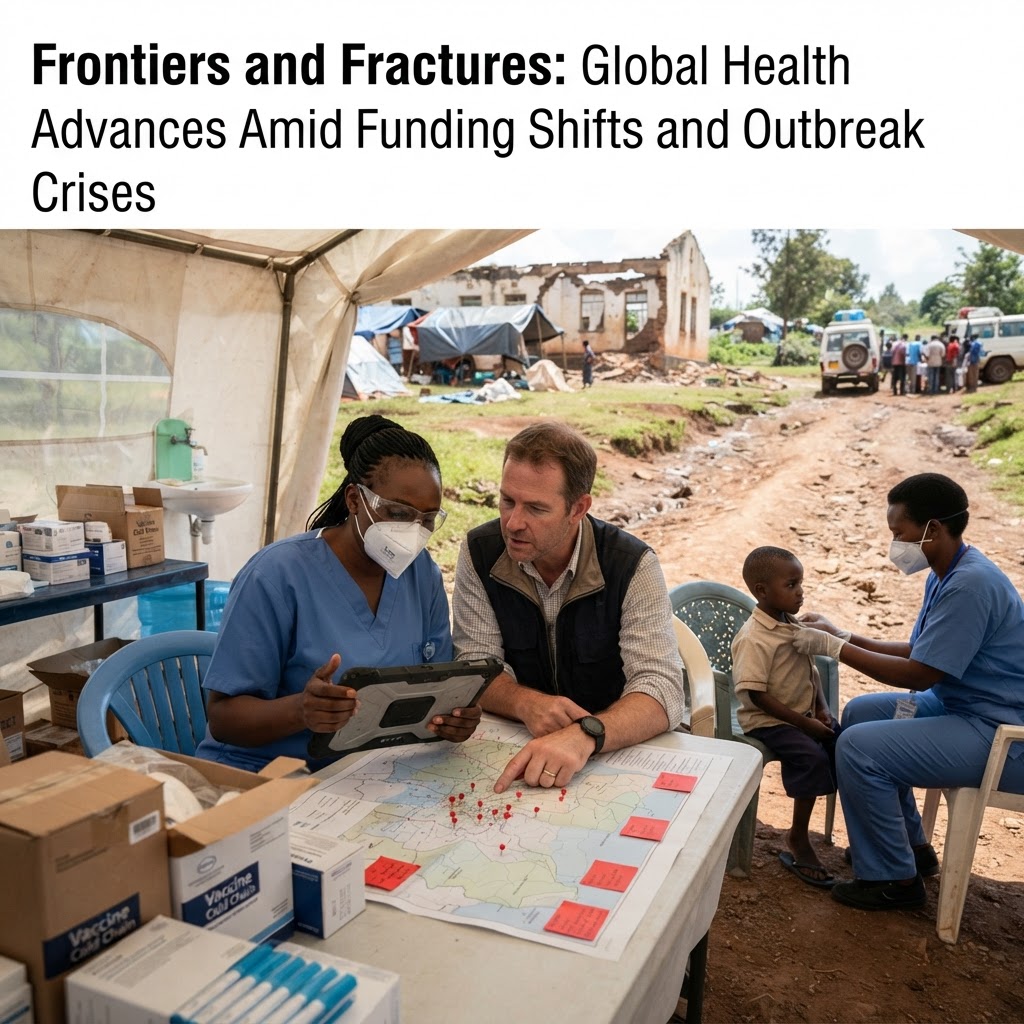
Frontiers and Fractures: Global Health Advances Amid Funding Shifts and Outbreak Crises
Recent breakthroughs in oncology and precision diagnostics are transforming modern medical practice, even as international public health infrastructure grapples with geopolitical funding shifts and persistent infectious disease crises.