Global Flashpoints: Electoral Paralysis in Israel, Maritime Peril in Hormuz, and Escalating Turmoil Across Continents
From political deadlock following Israel's parliamentary elections to naval mine incidents choking the Strait of Hormuz, geopolitical volatility has intensified worldwide.
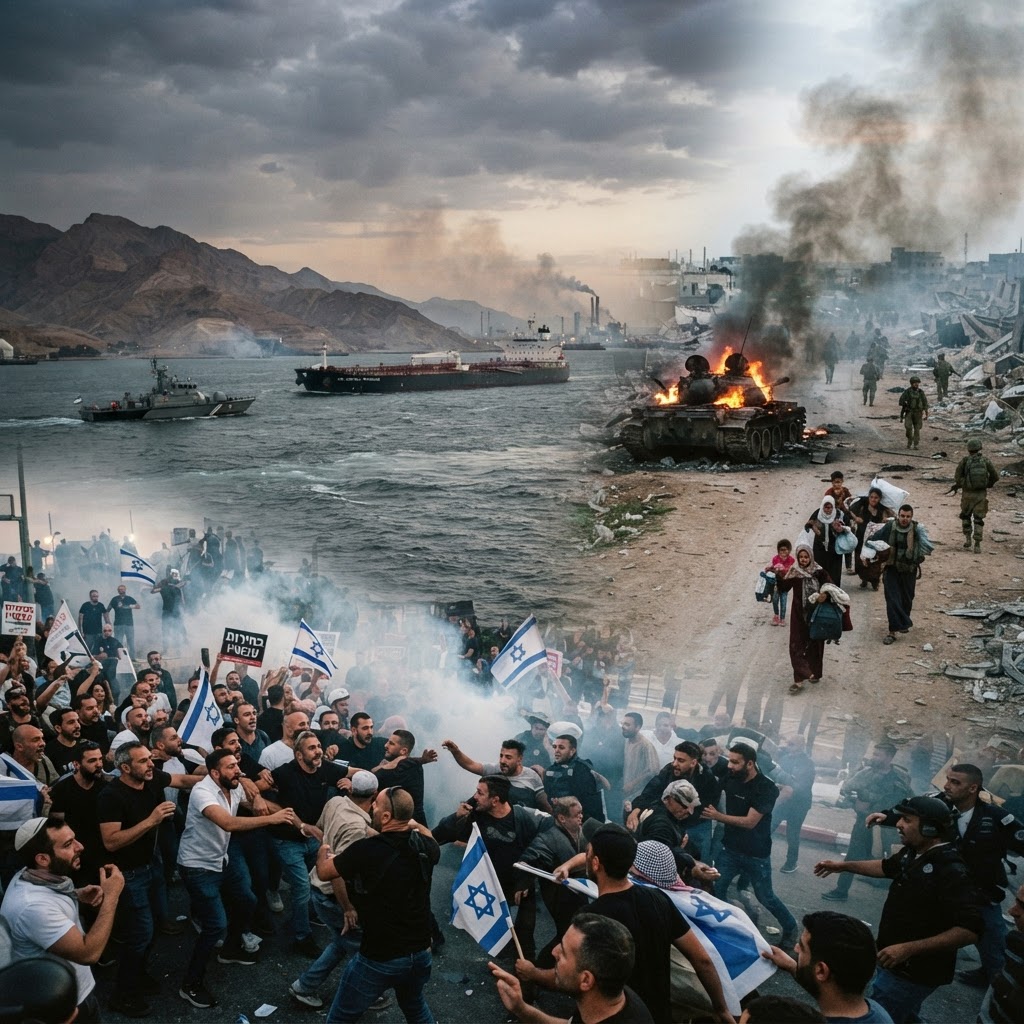
A World of Fractured Governance and Intensifying Conflicts
In a span of just a few days, international diplomacy and security architecture have faced severe tests across multiple regions. From shifting balances of power in the Middle East to legal turmoil in Latin America and persistent warfare in Eastern Europe, national leaders are navigating fragile coalitions, heightened maritime risks, and contested democratic transitions.
Parliamentary Paralysis in Israel
Israel is grappling with an acute political deadlock following the completion of vote counting in its general election, as reported by the Saachi Baat International News and Xinhua. Prime Minister Benjamin Netanyahu’s right-wing bloc secured 53 of the 120 seats in the Knesset, leaving him short of the 61-seat threshold required to form a majority government. Meanwhile, opposition leader Gadi Eisenkot captured 48 seats, asserting that the exit polls and final margins demonstrated a severe erosion of public confidence in the incumbent leadership.
With Arab-led parties capturing 19 seats, the path forward remains highly contested. Analysts observe that despite the deadlock, Netanyahu could remain in an interim governing capacity for months while lengthy coalition negotiations or legal maneuvers unfold, exacerbating domestic division during a period of critical regional realignment.
Naval Mine Crisis in the Strait of Hormuz
Maritime security in the Middle East deteriorated sharply after Iranian authorities declared the strategic Strait of Hormuz closed to ships deemed non-compliant, following explosions attributed to naval mines, according to the Saachi Baat report. Iranian naval forces claimed an oil tanker caught fire east of the chokepoint after detonating a mine, with the Islamic Revolutionary Guard Corps claiming additional commercial tankers were affected.
Concurrently, the United Kingdom Maritime Trade Operations (UKMTO) monitored an incident involving a burning vessel north of Khasab, Oman, where crew members were rescued safely. The escalating tension along one of the planet's primary energy arteries coincides with high-level geopolitical maneuvers: Iranian President Masoud Pezeshkian met Russian President Vladimir Putin in Moscow to advocate for regional affairs to be handled without Western involvement, while US Vice President JD Vance reached out to Iranian officials in a push to revive stalled dialogue, as detailed by Euronews.
Escalating Strikes and Infrastructure Warfare in Eastern Europe
In Ukraine, civilian infrastructure and transit networks have come under renewed bombardments. Ukrainian President Volodymyr Zelenskyy confirmed that casualties mounted after a drone strike struck a commuter train in Dnipro, killing at least 14 passengers and wounding dozens, while simultaneous strikes hit Chernihiv and Kremenchuk. Civilian centers including Kharkiv and Kyiv also suffered major attacks on residential areas.
Amid the destruction, diplomatic channels showed isolated signs of activity. Leaders from Finland and Norway held direct telephone calls with Vladimir Putin to urge the resumption of substantive negotiations, according to Euronews reporting. On the broader security front, defense cooperation across Europe saw bilateral adjustments, including a new three-year defense pact concluded between Poland and the United Kingdom.
Latin American Upheaval: Bolsonaro's Departure and Venezuelan Dialogue
In South America, political polarization peaked following Brazil's recent elections. Brazilian President Luiz Inácio Lula da Silva condemned former rival Flavio Bolsonaro for abruptly leaving Brazil for the United States despite an active Supreme Federal Court order barring his foreign travel, per reports from Xinhua and Euronews. The judicial probe centers on alleged financial irregularities and money laundering, heightening friction over the rule of law.
In neighboring Venezuela, opposition figure and Nobel Peace Prize laureate María Corina Machado returned to Caracas after a period of exile, publicly seeking formal talks with Vice President Delcy Rodríguez in an effort to break the country’s prolonged institutional impasse and build a fragile framework for transition.
Conclusion: A Fragile Interconnected Order
Whether navigating fraught domestic elections, shipping disruptions in critical sea corridors, or unrelenting conflict in Eastern Europe, the past several days demonstrate that modern international challenges are deeply interwoven. As governments struggle to project stability, the coming weeks will test whether international mechanisms can temper regional conflicts before broader escalations take hold.
Recommended for you
Similar to “World Affairs”
Fragile Diplomacy and Escalating Fronts: Global Tensions Test International Order
High-stakes diplomatic negotiations in the Middle East and Eastern Europe face mounting strain as battlefield strikes, political shakeups, and maritime friction disrupt peace efforts across multiple continents.
A Volatile Global Landscape: Escalating Middle East Tensions, Shifting Alliances, and Diplomatic Cross-Currents
Recent developments across world affairs highlight rising geopolitical tensions, as maritime standoffs and domestic political shifts in the Middle East intersect with broader diplomatic and technological friction.
Diplomacy Amid Crossfire: Maritime Peril in Hormuz and Political Shifts Reshape Global Affairs
Escalating maritime confrontations in the Persian Gulf and political realignments from Washington to Jerusalem coincide with tentative peace overtures aimed at Ukraine.