Diplomatic Reshuffles and Parliamentary Fractures: A Tumultuous Week in Global Governance
From political realignments in the Middle East and presidential impeachment in Latin America to shifting trade pressures across Asia and Washington, recent days have witnessed intense friction across the international political arena.
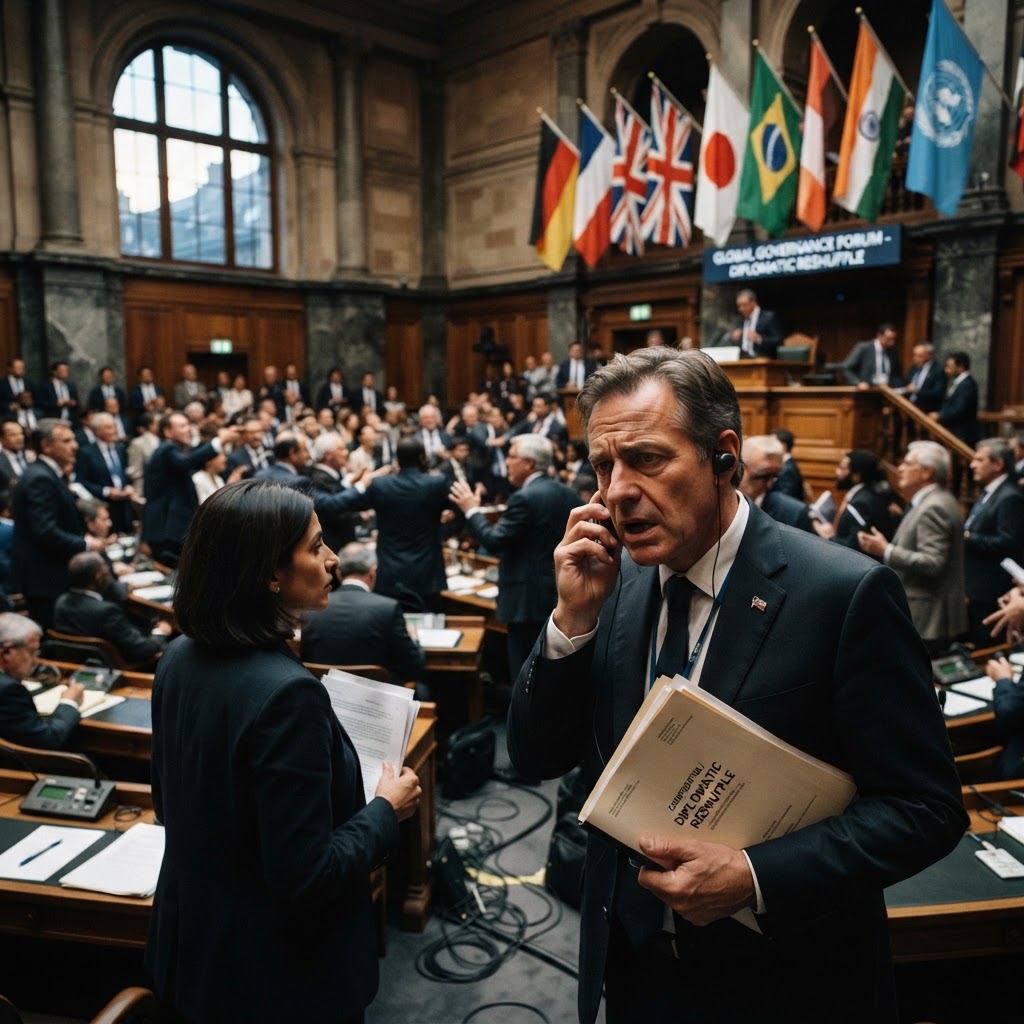
A Watershed Mandate in Israeli Governance
In a week defined by sharp institutional turns, the Middle East witnessed a significant political disruption as Israel's President Isaac Herzog bypassed long-standing Prime Minister Benjamin Netanyahu, formally inviting opposition figure Gadi Eisenkot to construct the nation's next governing coalition, according to reporting from NPR. The historic decision follows a fractured election outcome in which neither Netanyahu's hard-line bloc nor the opposition secured an outright legislative majority on their own, as detailed by The Japan Times. With primary parliamentary factions aligning behind Eisenkot, the mandate signals an acute public exhaustion with executive polarization and protracted political deadlock. While Netanyahu maintains that his camp holds the largest single share of seats, coalition talks indicate that traditional allies and centrist independents are seeking a path forward away from his leadership, potentially charting a dramatic shift in domestic judicial disputes and regional diplomatic strategy.
Latin American Upheaval: Executive Impeachment in Asunción
Constitutional turbulence expanded to South America, where Paraguay's legislature abruptly voted to impeach its sitting head of state, immediately elevating Vice President Pedro Alliana to the presidency, as reported by The Japan Times. The swift removal followed mounting administrative crises, economic discontent, and institutional clashes that fractured the governing coalition beyond repair. Alliana steps into the executive office facing steep challenges: reconciling deeply polarized parties within the legislature, confronting citizen protests over government accountability, and reassuring nervous regional trade partners of Paraguay's fiscal and constitutional predictability. The episode underscores the persistent fragility of executive mandates across Latin American democracies under strain from economic volatility and institutional gridlock.
East Asian Balancing Acts and Multilateral Defiance
In Asia, diplomatic calendars have grown increasingly delicate as major powers negotiate security postures and economic dependence. In Tokyo, the administration of Prime Minister Sanae Takaichi is navigating bilateral strains with Beijing, orchestrating extensive diplomatic maneuvers to avoid diplomatic snubs ahead of forthcoming leader summits, according to accounts in The Japan Times. Parallel to this regional calibration, Japan has moved to evaluate an early financial contribution to the International Criminal Court (ICC). This decision comes as the Hague-based tribunal confronts looming sanctions threatened by Washington, which could disrupt dollar-based transactions as early as next spring. By weighing early funding, Japanese officials are highlighting an uneasy tension between maintaining ironclad alliance ties with the United States and upholding their institutional commitments to post-war multilateral treaties.
Meanwhile, across the East China Sea, Beijing has launched the formal internal election process for delegates who will convene at the 21st National Congress of the Chinese Communist Party, as reported by Xinhua. State authorities have simultaneously enacted stringent new legislation curbing cross-border corruption and setting regulatory frameworks for scientific expedition protections, solidifying internal party oversight even as external trade disputes with Western counterparts simmer.
Washington Prepares for Tariff Battles and Diplomatic Openings
In the United States, the ripple effects of high-stakes political contests continue to reconfigure federal priorities. Following contentious congressional races, the administration of President Donald Trump faces imminent skirmishes with Capitol Hill over presidential tariff authorities, according to reports in The Japan Times. Lawmakers on both sides of the aisle are expressing apprehension regarding inflationary pressures, signaling an impending legislative effort to limit broad executive prerogatives on international trade duties. The White House, however, is pressing forward with aggressive economic agendas, urging Beijing to fulfill stalled commitments regarding rare earth elements and agricultural imports ahead of anticipated bilateral summits.
Simultaneously, unexpected diplomatic windows appear to be cracking open in the Middle East. Backchannel negotiations between Washington and Tehran over regional nuclear stockpiles and sanctions relief have reportedly edged closer to compromise, with Iranian interlocutors signaling a preliminary willingness to re-examine previously non-negotiable clauses. Whether these technical openings can survive domestic political skepticism in both capitals remains an open question, but the overtures mark a rare moment of dialogue amid an otherwise bellicose international backdrop.
European Security Strains and Strategic Autonomy
Across the European continent, national governments are similarly consumed by overlapping security burdens and legislative discord. In Central Europe, domestic politics in Hungary saw high-profile parliamentary inquiries into executive overreach, alongside warnings from defense officials regarding potential hybrid threats aimed at European civilian aviation, according to coverage by Daily News Hungary. Concurrently, regional gatherings like the Visegrad Group have laid bare deep structural divisions regarding prolonged aid to Ukraine, even as member states broadly endorse European Union expansion toward the Western Balkans.
In Western capitals, broader anxieties linger over strategic autonomy. Diplomats in Warsaw and Paris have cautioned against external negotiations over Eastern Europe's security architecture conducted without direct regional participation, as highlighted by Euronews. As governments prepare their annual budgets amidst student unrest, rising living costs, and evolving alliance commitments, leaders are confronted with an increasingly fragmented world order where domestic survival and foreign policy are inextricably entwined.
Recommended for you
Similar to “Global Politics”
A Global Political Reshuffle: Capitol Hill Power Shifts and Deepening Geopolitical Fault Lines
Recent electoral upheavals in the United States and intense diplomatic realignments across the Middle East, Eastern Europe, and South Asia mark a transformative moment in international politics.
A Volatile Political Landscape: How Shifting Coalitions and Global Friction Are Reshaping Governance
From electoral stalemates in the Middle East and Latin America to mounting friction in maritime trade corridors, world governments are grappling with unprecedented tests of political stability and diplomatic alignment.
Global Electoral Tremors: Incumbents Face Reckoning from the Americas to Eastern Europe
From high-stakes ballots in Latin America and the Balkans to looming votes in Israel and the United States, recent days have witnessed sharp political realignments and intense diplomatic pressure across the globe.