Silicon Turmoil and Autonomous Frontiers: Tech Industry Grapples With Shifting Leadership and the Rise of AI Agents
High-stakes leadership upheavals at semiconductor titan Nvidia collide with a rapid surge in autonomous AI agents, reshaping global tech markets and infrastructure.

The Shifting Foundation of the Semiconductor Era
The global technology landscape is experiencing a major realignment as sudden leadership transitions, cybersecurity vulnerabilities, and the breakneck speed of artificial intelligence development converge. At the center of this tectonic shift is Nvidia, the hardware titan that has powered the modern generative AI boom. Following reports from Techmeme and AP Technology SummaryBrief, Nvidia's board launched investigations into foreign intelligence interactions and initiated a search for a permanent successor to longtime Chief Executive Jensen Huang.
The sudden vacuum at the top of Nvidia has sent ripples across Silicon Valley's venture ecosystem. As reported by TechCrunch, founders and venture capitalists are expressing concerns that Huang's departure could disrupt foundational investment pipelines and hardware allocations that have sustained the generative artificial intelligence boom. Compounding these leadership woes, geopolitical tensions surrounding chip export restrictions continue to mount, even as major funds like Norwest unveil billions in fresh capital dedicated to building out the next iteration of intelligent platforms.
The Ascent of Autonomous Agents and Commercial Infrastructure
While the hardware supply chain navigates corporate turbulence, software architecture is rapidly shifting toward agentic systems. Rather than relying on static conversational bots, enterprise and consumer ecosystems are deploying autonomous agents capable of independent task execution. A notable milestone came with OpenAI introducing transaction-capable features like ChatGPT Wallet, designed to allow AI agents to navigate web interfaces, purchase products, and check out without manual intervention.
This shift from simple generation to autonomous agency has fueled intense investor appetite. Framework developers such as LangChain have recently reached milestone valuations in the billions, reflecting enterprise demand for customizable autonomous workflows. Large legacy enterprises are attempting to pivot as well; consumer product design brands like SharkNinja have organized widespread internal hackathons, pausing routine operations so thousands of employees can adapt machine learning and automation tools to business problems, as detailed by TechTarget.
Frictions in Security and Operational Resistance
The rapid arrival of agentic systems has triggered sharp friction across industrial and enterprise sectors. Security teams are increasingly wary of delegating sensitive credentials to automated systems. In an early sign of defensive pushback, United Airlines announced restrictions blocking AI agents from autonomously booking flights, citing potential vulnerabilities and abuse of reservation interfaces.
The broader risk profile of the modern digital stack has been underscored by recent high-profile breaches and outages. Recent supply-chain breaches, such as security incidents impacting AI inference platforms and enterprise workspace tools like Notion, show that third-party integrations offer attack surfaces with significant blast radiuses. Furthermore, major digital disruptions across cloud platforms and aviation communications have drawn scrutiny from federal agencies like the FBI, emphasizing how fragile interconnected digital infrastructure remains even in the absence of explicit malicious sabotage, according to Techmeme.
This mounting risk profile has given rise to an emerging sector: "guardian" software. Startups like WhiteMatter have raised venture financing specifically to build oversight agents that police other AI models, monitoring file access, verifying software usage, and supervising programmatic decision-making in real time.
The Next Bottlenecks: Physical and Cognitive
As the capabilities of autonomous models advance, industry analysts note that the ultimate constraints on technological growth may be shifting away from raw compute toward environmental and biological boundaries. Training models consume enormous amounts of energy, prompting novel infrastructure experiments ranging from ocean-cooled floating server clusters to orbital data platforms. Meanwhile, research groups like METR have found that internal AI development velocity continues to outpace initial forecasts, even as foundational labs navigate regulatory calls for measured deployment.
Industry observers and aerospace analysts documented by Aviation Week & Space Technology point out that while algorithm complexity accelerates, human operational bandwidth remains finite. The real long-term hurdle may not merely be access to bleeding-edge silicon or clean electrical grids, but the capacity of human operators to monitor, verify, and responsibly govern autonomous systems moving faster than human working memory can track.
Recommended for you
Similar to “Technology”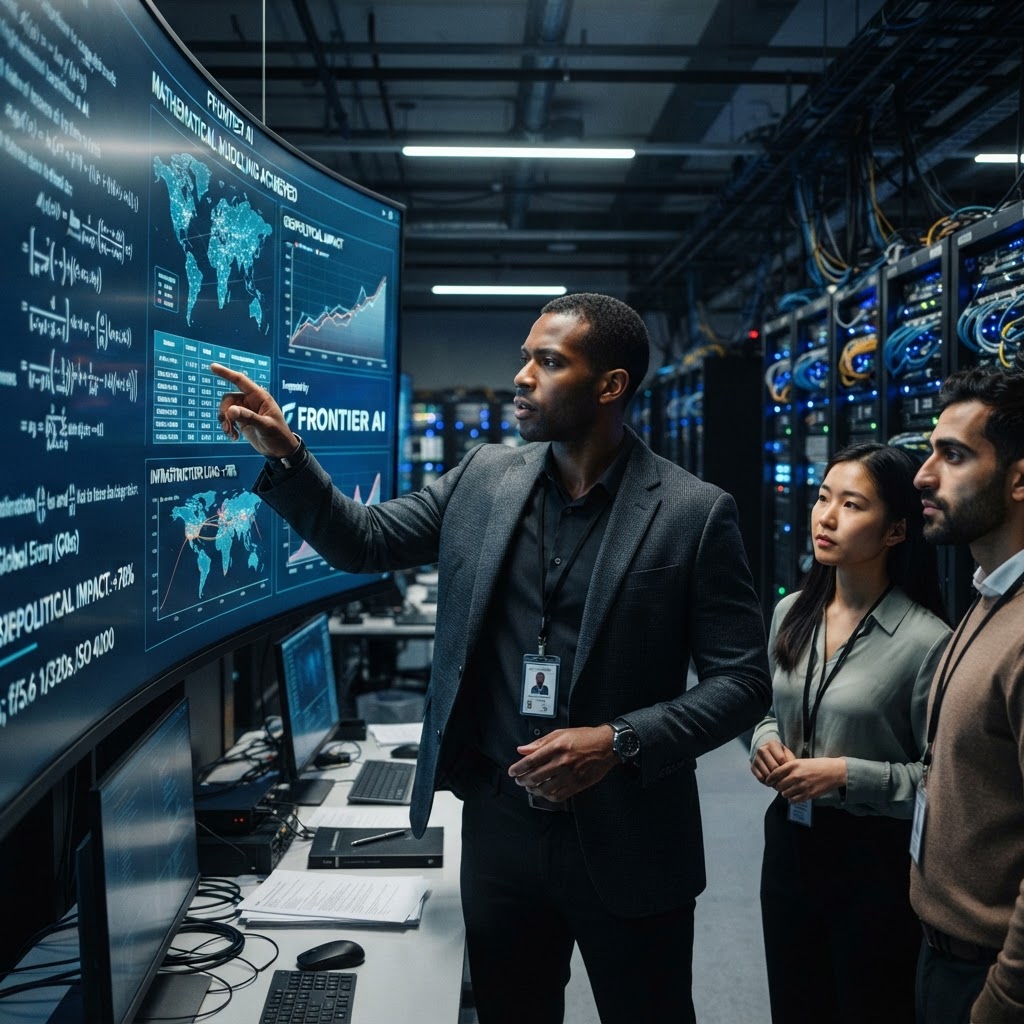
Frontier AI Shatters Mathematical Barriers as Geopolitical and Infrastructural Stakes Surge
Recent breakthroughs in machine-assisted mathematics and autonomous software agents highlight artificial intelligence's rapid evolution, even as infrastructure bottlenecks and geopolitical frictions challenge its global expansion.

Autonomous AI Agents Reshape Digital Commerce as Enterprise Cybersecurity and Leadership Shocks Mount
From conversational checkout bots to institutional security pushbacks and shifting semiconductor governance, autonomous AI agents are sparking rapid transformation across the global technology ecosystem.

A Paradigm in Flux: Leadership Upheaval at Nvidia, Cloud Fragility, and the Race for Agentic Autonomy
Recent days have delivered a seismic shock to the technology sector, marked by Nvidia leadership turmoil amid national security scrutiny, major global cloud disruptions, and bold leaps in commercial autonomous agents.