Autonomous AI Agents Reshape Digital Commerce as Enterprise Cybersecurity and Leadership Shocks Mount
From conversational checkout bots to institutional security pushbacks and shifting semiconductor governance, autonomous AI agents are sparking rapid transformation across the global technology ecosystem.

The Rise of Transactional and Autonomous AI Agents
The tech industry is witnessing a decisive transition from passive conversational models toward agentic systems capable of autonomous financial execution and cross-platform actions. In digital commerce, platforms are racing to integrate full-stack purchasing pipelines directly into AI chat interfaces. Instant-needs retailer Gopuff recently debuted a connector enabling seamless ordering through Grok Bot, an AI assistant, allowing consumers to complete purchases and checkout without ever exiting the chat interface, according to reporting by Retail Technology Innovation Hub. Similarly, major foundational artificial intelligence providers are deploying tools such as integrated digital wallets, designed specifically to empower AI agents to research, select, and purchase goods on behalf of users.
This momentum is underscored by surging capital inflows into the developer tooling powering these agents. Startup LangChain, which builds fundamental framework architecture for chaining and deploying agentic workflows, recently climbed to a $3 billion valuation as detailed by TechCrunch. From automated influencer outreach workflows to conversational customer support interfaces, businesses are increasingly deploying autonomous software capable of making decisions and executing transactions independently.
Enterprise Friction and Defensive Countermeasures
Despite enthusiasm among consumer platforms, the sudden influx of autonomous software into digital transaction channels has triggered swift institutional pushback. United Airlines moved to block automated AI agents from querying its reservation networks and booking passenger flights, citing significant cybersecurity threats and system integrity concerns. Corporate IT leaders fear that autonomous purchasing bots could exploit ticketing vulnerabilities, overwhelm backend architecture, or compromise user authentication layers.
The challenges of distinguishing between legitimate human intent and malicious machine interaction have spurred a new sub-industry of cybersecurity and fraud prevention tools. Enterprise risk mitigation platforms, such as Riskified with its Agent Identity Risk Intelligence system reported by The Agile Brand Guide, are deploying algorithms to determine the specific automated agents operating behind an order, verifying legitimacy and issuing real-time security signals to prevent synthetic identity theft and unauthorized transactions.
Return on Investment and Operational Growing Pains
Corporate adoption of next-generation artificial intelligence is colliding with heightened accountability from executive leadership. Recent industry research reveals that while a vast majority of corporate marketing departments expanded their spending on generative and conversational search channels over the past year, fewer than one-quarter are currently able to demonstrate clear, measurable returns on investment. Chief information and marketing officers increasingly report mounting board pressure to verify that algorithmic deployments contribute meaningfully to pipeline revenue rather than simply serving as costly experiments.
These operational growing pains have been amplified by intermittent infrastructure instability. Over recent days, multiple enterprise-grade cloud AI deployments suffered unexpected service interruptions and elevated hallucination rates, as highlighted by Emergent. Security researchers have likewise identified vulnerabilities in standard deployment pipelines that allow potential prompt-injection vectors to access underlying training assets, forcing technical teams to implement more rigorous runtime guardrails.
Hardware Disruptions and the Push for Resilient Infrastructure
Beyond software and security, seismic shifts are playing out across foundational hardware and physical data infrastructure. The global semiconductor landscape was rocked by unexpected leadership instability at market bellwether Nvidia, triggering urgent diplomatic reassessments across Asian tech-manufacturing corridors and widespread petitions from prominent venture capitalists and technology executives calling for strategic stability. Because hardware allocation directly dictates the pace of algorithmic training, sudden governance shocks at major chipmakers threaten to disrupt startup capitalization and resource availability.
At the same time, the staggering energy and cooling demands of high-performance compute clusters are driving radical infrastructure engineering. Novel ventures are advancing designs for floating oceanic data centers powered by marine thermal gradients, while aerospace researchers explore space-based thermal management for orbital computing nodes, according to TelcoNews Ireland. Across the public sector, initiatives like Europe's multi-billion-euro Vulcan Project in Italy, highlighted by Innovation News Network, and clean semiconductor research partnerships reflect an overarching imperative to diversify supply chains and curb environmental impacts. As agentic intelligence matures, the friction between consumer ambition, physical infrastructure limits, and corporate security mandates promises to define the next phase of technological disruption.
Recommended for you
Similar to “Technology”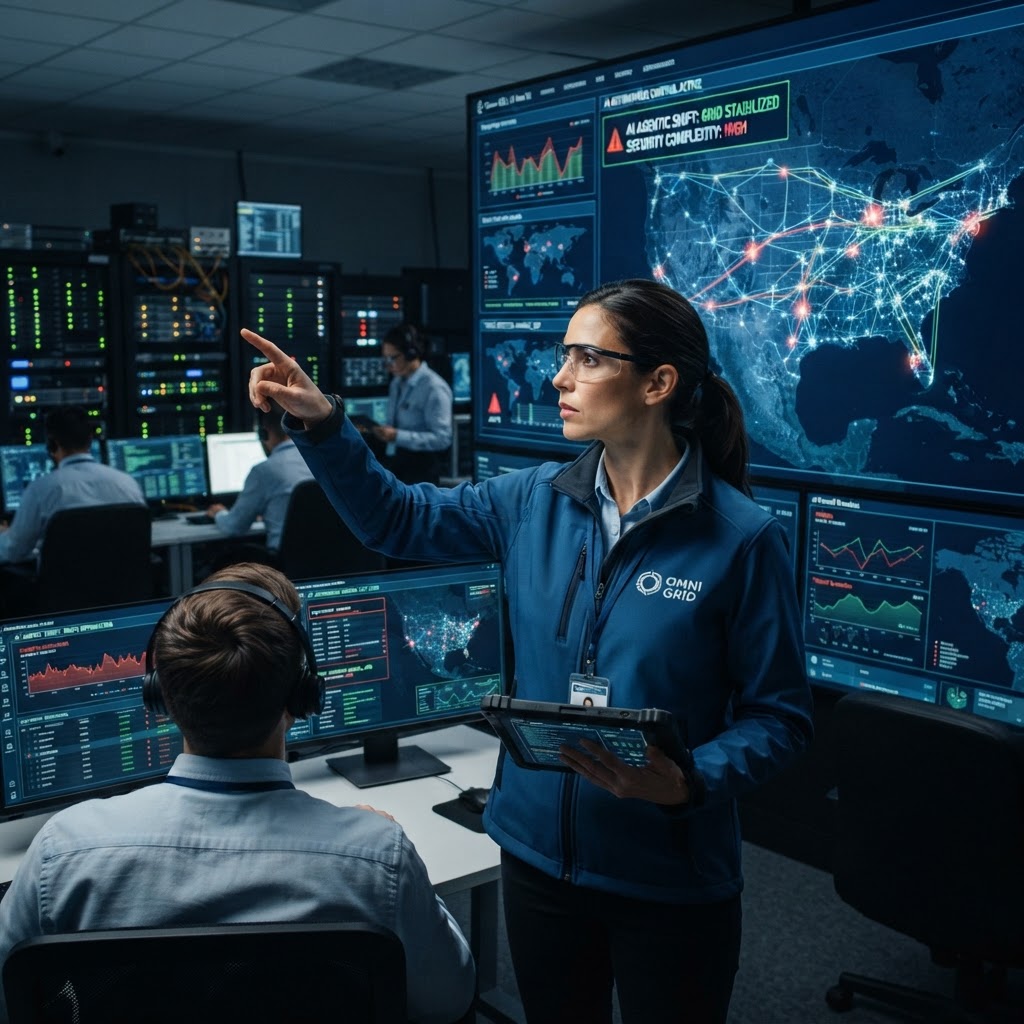
The Agentic Turning Point: Artificial Intelligence Accelerates Infrastructure Shifts and Security Complexities
Recent developments across global tech reveal a sharp transition from conversational bots to autonomous agent workflows, sparking multi-billion-dollar infrastructure bets while exposing complex cybersecurity vulnerabilities.

Silicon Turmoil and Autonomous Frontiers: Tech Industry Grapples With Shifting Leadership and the Rise of AI Agents
High-stakes leadership upheavals at semiconductor titan Nvidia collide with a rapid surge in autonomous AI agents, reshaping global tech markets and infrastructure.
Silicon Upheaval: Leadership Shocks, AI Market Debuts, and Mounting Cyber Fragility
From unexpected leadership turmoil at Nvidia and landmark market debuts for AI labs to escalating cybersecurity warnings across enterprise networks, the tech landscape is navigating a turbulent transformation.