A Fractured Consensus: How Opinion Pages Worldwide Are Reckoning with a Shifting Global Order
Recent commentary across leading global publications reflects mounting anxiety over macroeconomic instability, shifting geopolitical alliances, and the disruptive emergence of artificial intelligence.
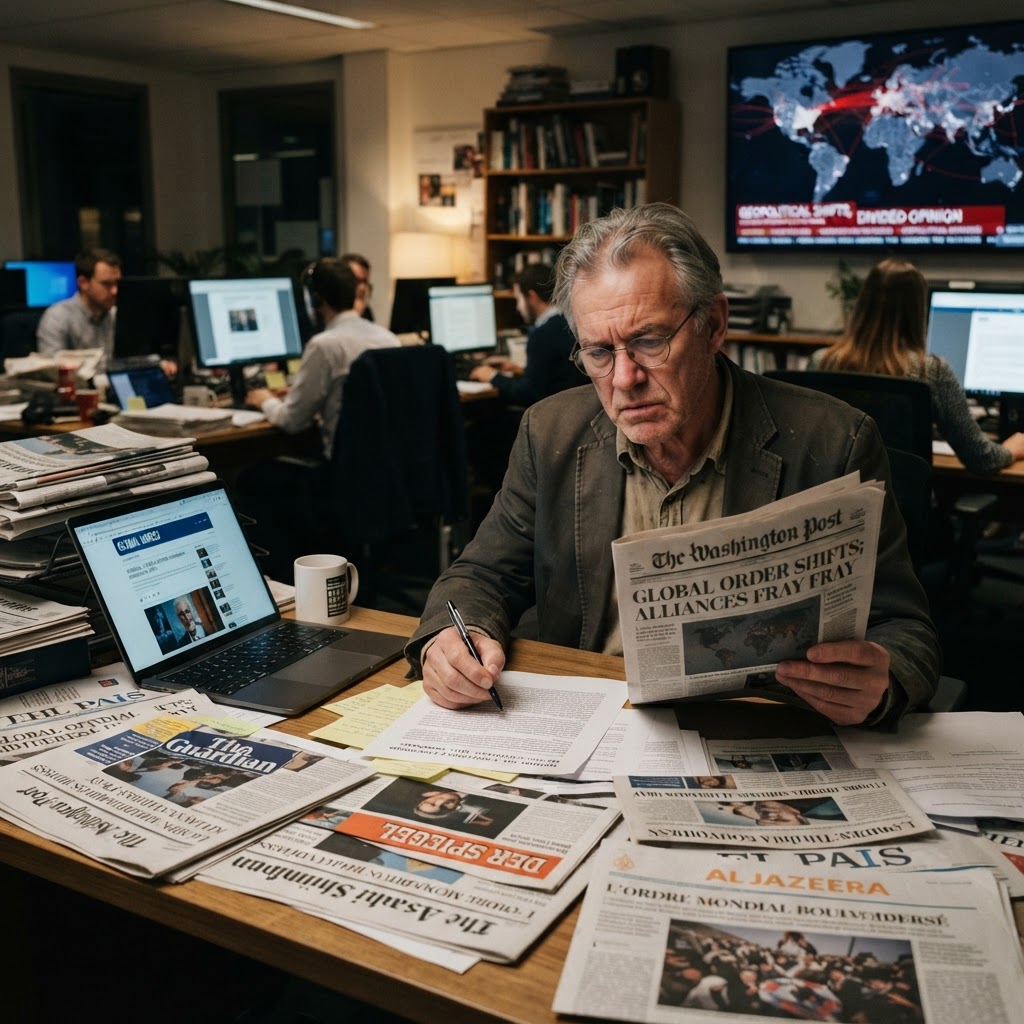
The Shifting Contours of Global Alignment
In recent days, opinion columns across the international press have turned their attention toward an increasingly volatile geopolitical landscape. Editorial pages from Washington to Beijing are grappling with the unraveling tenets of post-Cold War diplomacy. Commentators in Western outlets, including analyses highlighted by the The New York Times, warn that institutional norms that long anchored global governance are deteriorating under political polarization and nationalist impulses. Conversely, state-aligned and regional commentators, such as contributors to the Global Times, assert that multilateral frameworks must evolve to accommodate emerging powers and multipolar realities, arguing that unilateral pressures can no longer dictate regional trajectories.
This divide is nowhere more apparent than in discussions surrounding strategic autonomy across Asia and the Global South. As documented by coverage in regional outlets like The Rising Nepal and regional commentary hubs such as CNA, non-aligned states increasingly reject zero-sum mandates forced upon them by rival superpowers. Rather than reflexively choosing between Western partnerships and alternative initiatives, developing nations are actively hedging their bets to safeguard domestic economic stability and secure critical infrastructure investment.
Macroeconomic Squeeze and Fiscal Reckonings
Domestic concerns over fiscal sustainability have occupied equal prominence on editorial pages. Commentators in financial and conservative spheres, such as contributors to Fox News Opinion and Business News, have sounded repeated alarms regarding debt overhang and the escalating consequences of high sovereign bond yields. Columnists observe that national governments across the Western world have expanded borrowing to unsustainable thresholds, leaving little budgetary headroom to address looming demographic transitions, military modernization, or climate shocks.
These macroeconomic warnings reflect a broader consensus among columnists that ordinary citizens are bearing the brunt of sustained inflation and high borrowing costs. Whether discussing affordable housing shortfalls or the compounding impact of interest rate surges, op-eds demonstrate growing public skepticism toward state management of fiscal policies. Commentators argue that the political tolerance for expansive state spending has narrowed dramatically, forcing difficult debates over austerity, tax reform, and entitlement sustainability.
Technological Disruption and Institutional Trust
Beyond economics and grand strategy, opinion pages have focused extensively on the rapid operationalization of artificial intelligence and its ripple effects across the workforce. Writers are moving past speculative enthusiasm, choosing instead to probe the immediate challenges facing corporate boards, creative industries, and regulatory bodies. As analysts note across business journals, institutional decision-makers frequently find themselves lagging behind the swift pace of technological deployment, risking both cultural backlash and systemic liability.
The consensus emerging from this spectrum of viewpoints is that modern governance structures—both domestic and international—face an unprecedented convergence of pressures. As institutional trust erodes and the geopolitical architecture undergoes profound re-evaluation, editorial platforms serve as barometers for a global public searching for coherent solutions in an era defined by volatility and transition.
Recommended for you
Similar to “Global Affairs”
The Global Rethink: How Geopolitical Fractures and Artificial Intelligence Are Reshaping Opinion Columns
Recent commentary across leading global publications reflects a world reassessing core assumptions, from shifting balance-of-power dynamics in Europe and Asia to the compounding anxieties surrounding artificial intelligence and democratic resilience.

A World Turning Inward: How Fractured Alliances and Economic Nationalism Are Redefining Global Governance
Recent commentary across leading global editorial pages reveals an escalating anxiety over economic nationalism, shifting migration compacts, and the gradual disintegration of post-war international frameworks.

The Fracture of Consensus: How World Opinion Is Navigating a Multipolar Reality
Recent commentary across global editorial boards reflects deep anxiety over fractured alliances, economic protectionism, and the rise of an uncompromising multipolar diplomacy.