The Global Rethink: How Geopolitical Fractures and Artificial Intelligence Are Reshaping Opinion Columns
Recent commentary across leading global publications reflects a world reassessing core assumptions, from shifting balance-of-power dynamics in Europe and Asia to the compounding anxieties surrounding artificial intelligence and democratic resilience.

The Shifting Contours of Global Commentary
Over the past week, global opinion sections and editorial boards have increasingly converged on a shared realization: the geopolitical frameworks and technological presumptions that guided the past decade are eroding faster than institutions can adapt. From the halls of Washington and European capitals to East Asia, commentators are actively dissecting an international landscape dominated by fractured alliances, internal political polarization, and the disruptive ascendancy of artificial intelligence.
A recurring theme across recent analyses is the structural transformation of traditional security balances. In Europe, columnists are sounding alarms over a burgeoning fiscal and defense imbalance between the continent's historic pillars. While Germany has accelerated borrowing to finance military rearmament, France faces heavy sovereign debt pressures that threaten its capacity to keep pace, prompting observers to question who will balance a rearmed central Europe when traditional counterweights falter. Similar questions of alliance dependability are animating debates across the Pacific, where analysts in Tokyo have scrutinized whether nuclear deployments or heightened international legal reform offer the most pragmatic path forward under growing regional tensions.
The Artificial Intelligence Reckoning Moves Beyond Hype
Perhaps no topic has commanded more space on opinion pages in recent days than the socio-economic fallout of artificial intelligence. While initial coverage of generative AI focused predominantly on its revolutionary potential and headline-grabbing tech valuation milestones, recent commentary has adopted a markedly cautious, even skeptical posture. Market commentators are openly questioning whether current levels of infrastructure investment risk forming speculative bubbles, comparing the rapid deployment of compute resources and datacenters to pre-2008 exuberance.
Beyond macroeconomic anxieties, commentators are confronting the lived realities of rapid automation on everyday life. Opinion essays across major regional platforms highlight a growing cultural and domestic friction: from concerns that AI tools are hollowing out entry-level skill acquisition for younger workers to warnings about the technology's compounding impact on family life and domestic labor. In parallel, civic commentators are reporting mounting local pushback against the rapid expansion of power-hungry data centers, uniting disparate communities across ideological lines in resistance to environmental and utility burdens. Rather than a frictionless transformation, AI is increasingly framed as a contested civic frontier.
Domestic Strains and Democratic Headwinds
Underpinning these macroeconomic and technological shifts is a sharp focus on the fragility of governance. In the United States, recent commentary has been dominated by debates over electoral fairness, campaign strategy, and persistent economic anxieties. Pollsters and analysts observe that public trust remains deeply fractured over inflation, immigration enforcement, and judicial autonomy, while commentators debate how democratic majorities navigate persistent political gridlock.
This scrutiny of democratic health is not confined to North America. Commentary platforms throughout Asia and Latin America have turned their lenses toward domestic stability and civic tolerance. Editorialists are tracking the delicate survival of multi-party norms under polarizing leadership, questioning whether institutional guardrails can withstand executive overreach or civic apathy. From climate-driven budgeting disasters in developing nations to contentious trade rows among longstanding partners, columnists reflect a global electorate grappling with compound crises.
Synthesizing a Fragmented Future
What unites these disparate threads of global opinion is an overwhelming rejection of complacency. Commentators are no longer treating supply-chain vulnerabilities, technological displacement, or diplomatic volatility as temporary anomalies. Instead, the consensus across international commentary suggests that societies are entering an era defined by hard choices: choosing between rapid technological adoption and worker security, between traditional alliance guarantees and self-sufficient deterrence, and between economic protectionism and global cooperation.
As editorialists continue to interpret this transition, their analyses serve less as detached observation and more as active contestation over the principles that should guide policy in an increasingly multipolar and technologically fraught world.
Recommended for you
Similar to “Global Affairs”
A Fractured Consensus: How Opinion Pages Worldwide Are Reckoning with a Shifting Global Order
Recent commentary across leading global publications reflects mounting anxiety over macroeconomic instability, shifting geopolitical alliances, and the disruptive emergence of artificial intelligence.
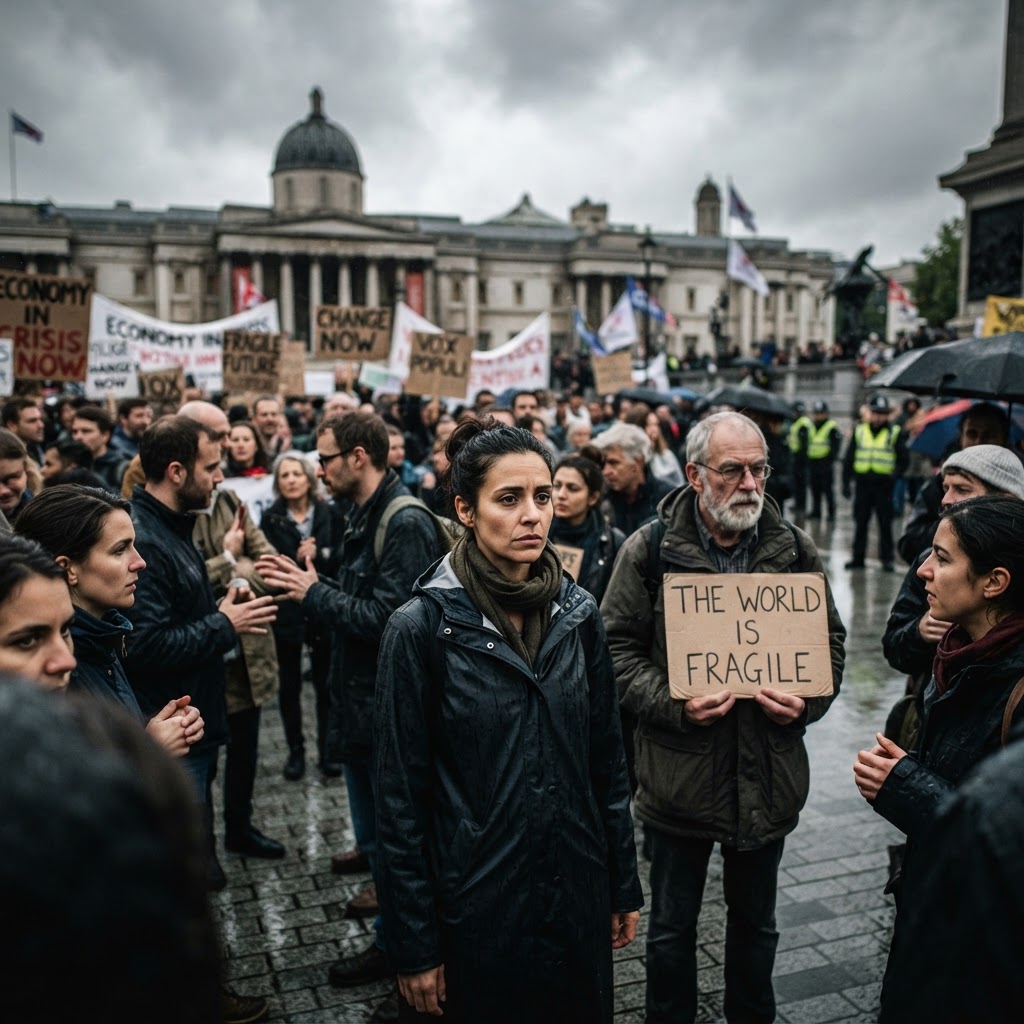
A Confluence of Cracks: Global Opinion Weighs Political Backlash and Economic Fragility
Recent commentary across leading global publications reflects a world reassessing political overreach and speculative economic exuberance, marked by historic electoral shifts and growing skepticism over the artificial intelligence boom.

A World in Flux: How Geopolitics, AI Disruptions, and Climate Realism Are Reshaping Global Opinion
Recent commentary across major international publications reveals a shared reckoning over shifting electoral dynamics, the unvarnished realities of the global climate crisis, and the unchecked footprint of modern technology.