The Fractured Consensus: How Competing Geopolitical and Tech Visions Are Reshaping Global Opinion
Recent commentary across leading global forums highlights a profound realignment, where strategic mistrust between superpowers, tightening borders, and ungoverned technological disruption challenge multilateral cooperation.
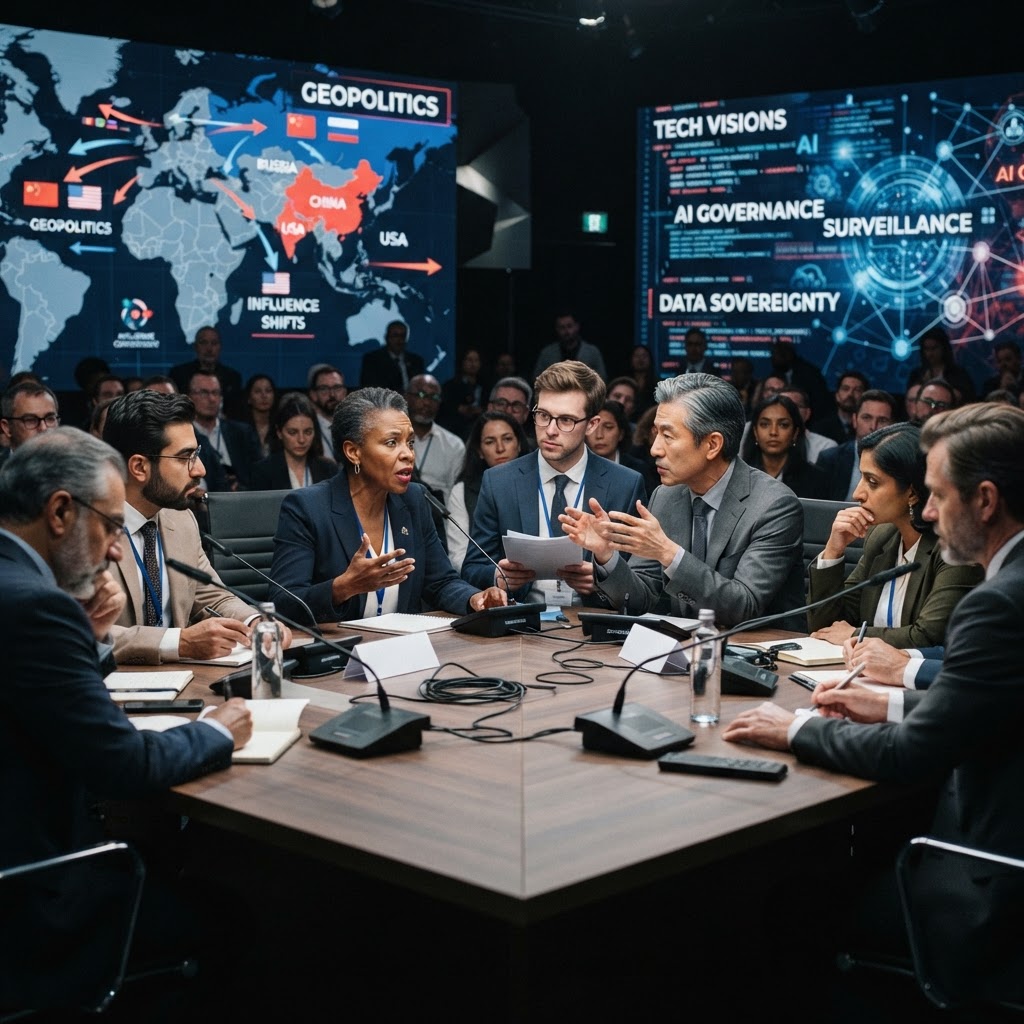
The Anatomy of Stability Without Trust
Across major editorial pages in recent days, international commentators have converged on an unsettling paradox: the world order is increasingly relying on fragile truces rather than genuine cooperation. Analysis published by Project Syndicate highlights that major bilateral engagements, notably between Washington and Beijing, have slipped into a dynamic termed 'stability without trust.' Rather than seeking ideological or systemic reconciliation, global powers are settling for tactical pauses to keep simmering economic and military rivalries from spiraling completely out of control. While such detentes offer immediate relief to global supply chains, analysts warn that leverage and deterrence are tenuous substitutes for constructive diplomacy.
The Re-Bordering of Wealthy Economies
Parallel to high-level geopolitical friction is an intensifying debate over human mobility and sovereignty. Commentators writing in The Japan Times observe a striking parallel across industrialized nations: from East Asia to Western capitals, governments are simultaneously courting foreign talent to alleviate demographic contraction while constructing higher barriers to permanent civic integration. New reforms scrutinizing permanent residency, raising social contribution thresholds, and prioritizing temporary over permanent status demonstrate an impulse to treat immigration as an economic lever rather than a human bridge. Opinion writers argue that this transactional mindset risks fostering long-term social fragmentation, punishing newcomers while failing to sustainably resolve underlying structural labor deficits.
Technology Governance at a Tipping Point
Meanwhile, the debate over the regulation and societal impact of artificial intelligence has moved to the core of opinion discourse. Experts discussing international policy call for robust oversight agencies to safeguard against catastrophic risk and information pollution, even as commentators emphasize that starving models of high-quality data could undermine AI's public utility. Writing on platforms like Project Syndicate and policy journals such as the Global Policy Journal, thinkers argue that the true test of 21st-century governance lies in preventing algorithmic monopolies while harmonizing cross-border safety standards. Yet, with unilateral industrial policies and technological sovereignty taking precedence in major capitals, achieving consensus on digital ethics remains as elusive as traditional international treaties.
The Strain on Multilateral Architecture
Ultimately, these intersecting currents reflect a wider crisis of global governance. As multilateral institutions struggle to enforce mandates amid nationalist pushback and great-power competition, columnists emphasize that ad-hoc coalitions and plurilateral agreements are taking the place of universal accords. Whether navigating international trade battles, pandemic preparedness, or the legacy of prolonged conflicts, public opinion reflects a growing recognition that the post-war multilateral framework has reached an inflection point. The emerging consensus among international thought leaders is not that globalization has ended, but that its next iteration will be harsher, more contested, and defined by pragmatic self-interest rather than shared ideals.
Recommended for you
Similar to “Global Affairs”
A Fractured Consensus: How Opinion Pages Worldwide Are Reckoning with a Shifting Global Order
Recent commentary across leading global publications reflects mounting anxiety over macroeconomic instability, shifting geopolitical alliances, and the disruptive emergence of artificial intelligence.

The Fracture of Consensus: How Institutional Distrust and Geopolitical Realignment Are Reshaping Global Opinion
Recent commentary across major international outlets reveals a deepening fragmentation of consensus, driven by historic declines in institutional trust, technological upheaval, and escalating geopolitical competition.

The Global Rethink: How Geopolitical Fractures and Artificial Intelligence Are Reshaping Opinion Columns
Recent commentary across leading global publications reflects a world reassessing core assumptions, from shifting balance-of-power dynamics in Europe and Asia to the compounding anxieties surrounding artificial intelligence and democratic resilience.