The Fracture of Consensus: How Institutional Distrust and Geopolitical Realignment Are Reshaping Global Opinion
Recent commentary across major international outlets reveals a deepening fragmentation of consensus, driven by historic declines in institutional trust, technological upheaval, and escalating geopolitical competition.

The Crumbling Edifice of Public Trust
In commentary sections and public attitude surveys worldwide over the past several days, an unmistakable theme has emerged: the accelerating erosion of faith in foundational institutions. From North America to the Asia-Pacific, opinion writers and pollsters are documenting a critical shift in how citizens perceive the governing bodies and corporate entities that guide their daily lives. According to recent public opinion research highlighted by Gallup News, confidence in central government bodies—including critical Cabinet departments overseeing justice, defense, and foreign affairs—has plummeted to historic lows. Simultaneously, everyday assurances once taken for granted, such as food safety and economic predictability, are coming under sharp critical scrutiny by commentators across the political spectrum.
This erosion is not occurring in a vacuum. Columnists are increasingly connecting institutional decay to an inability to manage compounding crises, from housing affordability and high sovereign debt to localized cost-of-living stresses. When basic administrative competencies appear compromised, public commentary shifts from evaluating policy performance to questioning the legitimacy and viability of the governing architecture itself.
The Two Faces of Technological Disruption
Nowhere is the divide in contemporary editorial opinion more apparent than in discussions surrounding artificial intelligence. Across regional and international business publications, analysts are wrestling with whether automation serves as an empowering tool or a destructive force. In education and workplace analysis, some commentators point to data demonstrating that generative technologies liberate professionals from administrative minutiae, allowing teachers, researchers, and creators to concentrate on core human engagement. Yet, counter-arguments in editorial columns emphasize the destabilizing impact on creative industries, white-collar security, and corporate governance.
Editorial discussions, such as those featured in Business News, underscore the widening gap between the rapid commercial deployment of algorithmic tools and the capacity of leadership boards to mitigate ethical and operational risk. The prevailing opinion among market watchers suggests that society has moved past speculative curiosity: AI is now treated as an irreversible structural force demanding clear regulatory boundaries, even as bureaucratic inertia makes timely oversight unlikely.
Geopolitical Polarization and the Battle of Narratives
On the international stage, editorial pages reflect an increasingly bifurcated world order. Discourse around great-power competition between Washington and Beijing has grown sharper, focusing on deep structural contradictions rather than routine diplomatic friction. Commentary published in state and regional media, including pieces in the Global Times, portrays Western industrial sanctions as ineffective efforts to arrest technological shifts, emphasizing alternative trade frameworks and emerging global partnerships such as BRICS and the Belt and Road Initiative.
Conversely, Western and non-aligned commentary, such as analysis synthesized by regional observers and discussed via outlets like The Rising Nepal, underscores the ideological and economic friction defining modern multipolarity. Amid escalating debates over defense postures, export controls, and supply chain reshoring, opinion leaders are recognizing that middle powers—particularly across Southeast Asia, Africa, and Latin America—are recalibrating their stances. Rather than accepting bipolar alignments wholesale, commentary in the Global South increasingly advocates for strategic hedging, leveraging competition between major powers to protect sovereign economic interests.
The Domestic Politics of Polarization
Domestically, the opinion landscape in Western democracies is dominated by widening political fractures. Debates highlighted across major opinion columns, from Al Jazeera to mainstream American platforms, illustrate how foreign policy consensus has begun to fragment along domestic partisan lines. Once-solid bipartisan agreements on alliances, defense funding, and Middle Eastern diplomacy are facing unprecedented internal strain, with progressive and populist factions challenging legacy doctrines.
Simultaneously, fiscal anxiety has taken center stage. Commentators point to mounting public debts, rising bond yields, and prolonged inflation as existential domestic threats that constrain future policy choices. Rather than seeking shared civic solutions, editorialists often find that political actors use these anxieties to deepen partisan tribalism, compounding the very cynicism that survey researchers continue to document.
Conclusion: Navigating an Unanchored Era
Synthesizing the dominant opinion currents of recent days reveals a world navigating an unanchored transitional phase. The post-Cold War consensus—marked by globalization, deference to technocratic institutions, and unipolar diplomacy—has decisively given way to an era of scrutiny, strategic nationalism, and public skepticism. Whether examining the integration of artificial intelligence, the realignment of geopolitical power, or the breakdown of domestic civic trust, contemporary opinion reflects a global public demanding accountability from institutions that have yet to demonstrate they are equipped for the challenges ahead.
Recommended for you
Similar to “Global Opinion”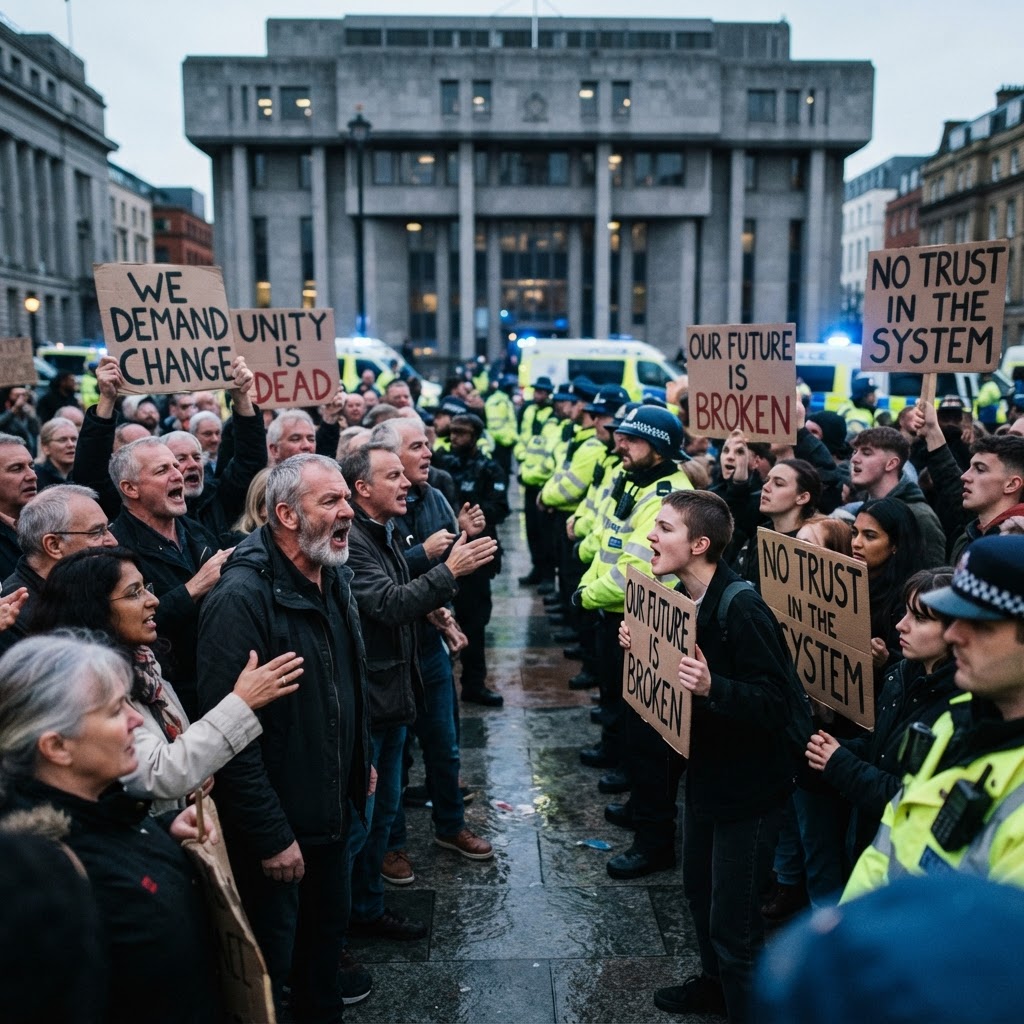
The Fracture of Consensus: How Sinking Confidence and Geopolitical Friction Are Reshaping Public Opinion
Across the globe, collapsing institutional trust and intensified geopolitical competition are transforming public sentiment, leaving citizens skeptical of leadership and weary of multilateral paralysis.

The Fractured Consensus: How Competing Geopolitical and Tech Visions Are Reshaping Global Opinion
Recent commentary across leading global forums highlights a profound realignment, where strategic mistrust between superpowers, tightening borders, and ungoverned technological disruption challenge multilateral cooperation.

A World in Flux: How Geopolitics, AI Disruptions, and Climate Realism Are Reshaping Global Opinion
Recent commentary across major international publications reveals a shared reckoning over shifting electoral dynamics, the unvarnished realities of the global climate crisis, and the unchecked footprint of modern technology.