Between Climate Volatility and Fiscal Action: Global Environmental Policy Navigates a High-Stakes Frontier
As extreme weather escalates and adaptation gaps widen, international policymakers and carbon markets are pivoting toward tougher fiscal mechanisms, transparent verification frameworks, and renewed governance.

The Escalating Toll of Climate Impacts
Communities around the globe are facing an unprecedented convergence of environmental stresses. According to ongoing evaluations published by Nature Portfolio, climate change is actively generating widespread loss and damage across natural and human ecosystems, with vulnerabilities intensifying as systems surpass their adaptive capacities. The mounting economic reality has been underscored by reports from the National Oceanic and Atmospheric Administration (NOAA Climate.gov), which documented recurring spates of multi-billion-dollar disaster events driven by severe storms, compounding human displacement and infrastructure destruction.
These converging hazards emphasize that mitigating climate fallout is no longer a theoretical debate about future scenarios. Instead, environmental resilience has become an urgent fiscal and humanitarian imperative, demanding immediate structural adjustments across supply chains, energy grids, and fiscal policy worldwide.
Fiscal Instruments and Shifting Environmental Taxes
In response to compounding ecological burdens, governments are increasingly relying on economic policy instruments to incentivize decarbonization. Data released by Eurostat shows that European Union environmental tax revenues grew notably, reaching €371.9 billion as energy levies remained the cornerstone of sustainable fiscal revenue. Although environmental taxes represent an evolving proportion of overall gross domestic product, the sustained increase demonstrates how market-based levies are becoming deeply embedded in economic structures.
Environmental economists emphasize that while taxation systems successfully generate resources and establish financial disincentives against fossil consumption, their success depends on equitable reinvestment. Public revenues must be targeted toward clean-energy transitions, infrastructure hardening, and supporting frontline populations who bear the brunt of rising energy costs.
Supply Chain Scrutiny and Carbon Accounting
Alongside state-level taxation, market-driven mechanisms for decarbonization are facing heightened demands for integrity. Corporate commitments to net-zero operations have frequently drawn skepticism due to ambiguous accounting and unverified offsets. To bridge this trust deficit, industry frameworks are introducing auditable, commodity-linked standards.
As highlighted by Argus Media, initiatives such as Puro.earth's dedicated registry for agricultural carbon attributes reflect an industry-wide pivot away from decoupled credits toward verifiable, mass-balance carbon tracking. By binding carbon-intensity metrics directly to physical feedstocks and agricultural commodities through timestamped audits, registries seek to ensure that corporate reporting under the Science Based Targets initiative (SBTi) reflects genuine emissions reductions on the ground.
Governance Deficits and the Justice Gap
Despite progress in fiscal and technological solutions, international environmental governance continues to grapple with institutional and social disparities. Recent analyses by the United Nations Trade and Development body (UNCTAD) warn that international climate finance remains critically fragmented, leaving developing economies and small island states chronically underfunded in adaptation capital compared to their structural exposure.
Compounding these systemic funding gaps are human-rights concerns within resource stewardship. Coverage by Mongabay highlights persistent risks faced by frontline communities and conservation defenders, pointing out that national policies often overlook grassroots inclusivity and vulnerable populations during green transitions. Whether navigating agricultural supply chains or international climate pacts, experts caution that ecological goals cannot be achieved without pairing rigorous oversight with social equity and fair economic safeguards.
Recommended for you
Similar to “Environment”
Adapting to the Edge: Escalating Climate Realities Confront Fiscal and Policy Frontiers
As global climate records tumble and vulnerable regions confront worsening disaster risks, international policymakers are racing to bridge mounting governance, adaptation, and financial gaps.

Global Environmental Fronts: Accelerating Climate Vulnerabilities, Policy Clashes, and Grassroots Adaptation
As scientific trackers warn that the 1.5°C threshold could be crossed within years, international negotiators and grassroots communities are racing against time amid escalating regulatory battles and extreme weather.
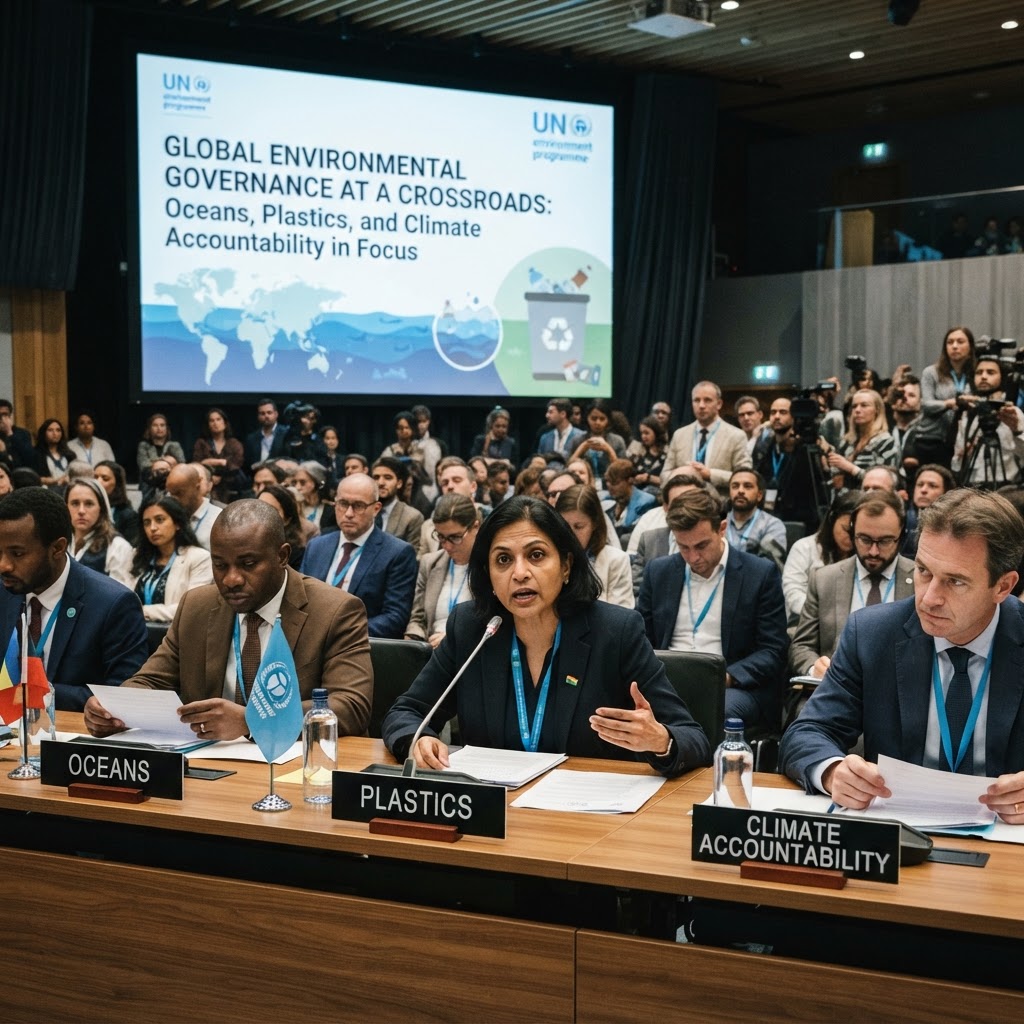
Global Environmental Governance at a Crossroads: Oceans, Plastics, and Climate Accountability in Focus
As international bodies advance milestone frameworks on high seas biodiversity and plastic pollution, climate advocates increasingly turn to legal mechanisms and satellite tracking to enforce environmental accountability.