Collapsing Reefs, Scorching Heat, and Regulatory Pivots: The Mounting Strains on Global Ecosystems
Recent ecological findings reveal escalating threats to marine biodiversity and surging human casualties from climate extremes, while global policymakers recalibrate conservation targets and environmental compliance frameworks.
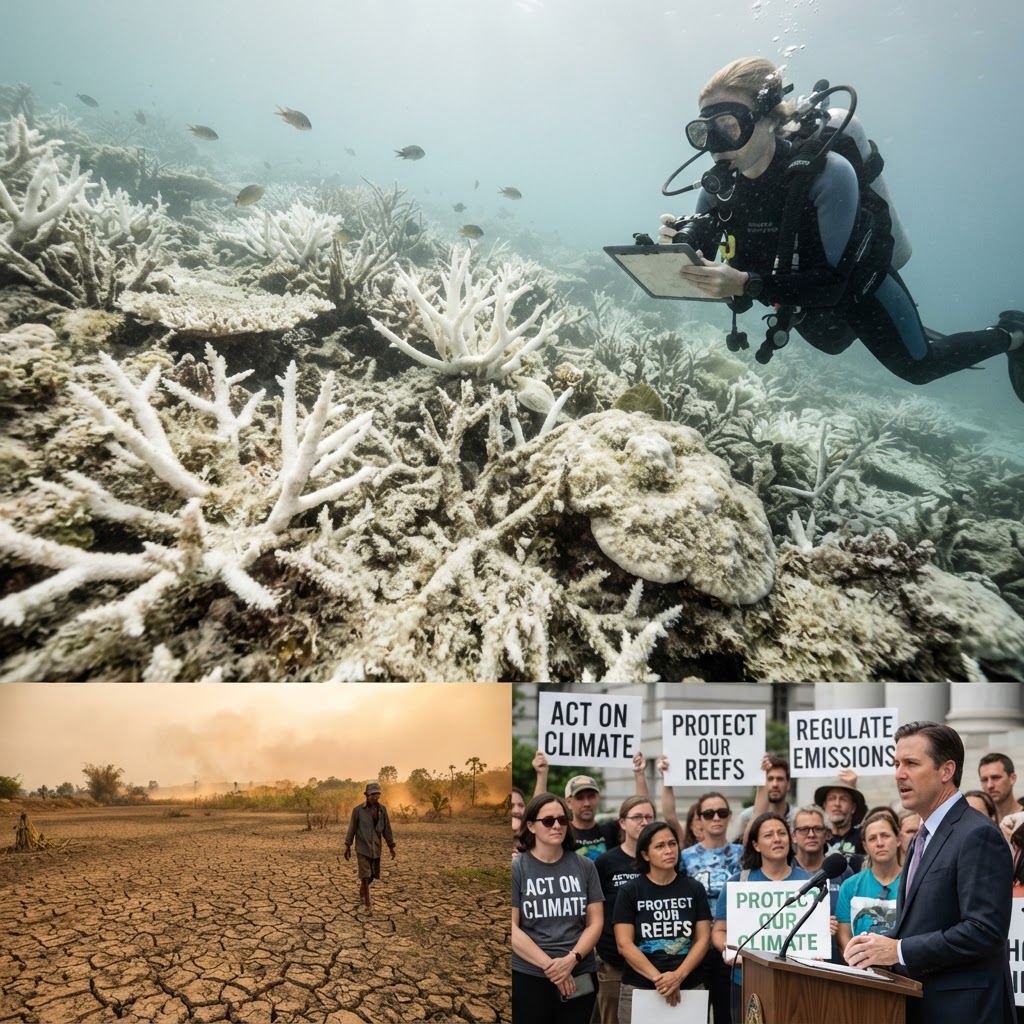
Accelerating Ecological Strain Across Land and Sea
In recent days, a series of international environmental assessments and field studies have highlighted the worsening pressures facing vulnerable ecosystems worldwide. Among the most alarming developments are new global assessments warning that coral reefs—particularly those in Australian waters—face an imminent danger of systemic collapse within the next fifty years unless drastic, coordinated emissions cuts and local remediation actions are achieved immediately. Marine researchers underscore that successive warming anomalies and persistent acidification are pushing critical marine habitats beyond their natural thresholds of recovery, endangering vast webs of oceanic biodiversity and the coastal economies reliant upon them.
Simultaneously, the tangible human toll of environmental disruption has come into stark focus. Epidemiological and meteorological reports from Europe reveal that summer heatwaves claimed over 50,000 lives, with researchers attributing nearly two-thirds of the fatalities directly to anthropogenic climate change. These findings coincide with mounting hydrological distress across disparate regions, from devastating flash flooding in the Himalayan river systems of Nepal to escalating flood risk in the United Kingdom. Communities globally are increasingly questioning whether conventional frameworks of infrastructure resilience can keep pace with rainfall and flooding patterns that consistently outstrip historical baselines.
The Shifting Landscape of Conservation and Industrial Footprints
As fragile ecosystems buckle under climatic stress, international delegates and conservationists have converged to confront the conflict between economic expansion and conservation commitments. Recent biodiversity negotiations, including multilateral talks convened in Armenia, have centered on preserving Earth's most vulnerable flora and fauna under rapidly deteriorating conditions. However, research published by conservation watchdogs warns that the ambitious global target to safeguard 30 percent of the planet's land and sea by 2030 is under direct threat from expanding extractive operations. The rapid footprint of mining, hydrocarbon extraction, and intensive industrial agriculture continues to encroach upon officially designated buffer zones, posing severe legal and conservation dilemmas.
Amid these ecosystem-level challenges, scientists are uncovering finer-scale diagnostic tools to gauge planetary health. Paleoclimatologists utilizing ancient stalagmite records spanning hundreds of thousands of years have developed deeper understandings of how global monsoon oscillations respond to broader orbital and atmospheric shifts. Concurrently, environmental geochemists have revealed that microplastic layers deposited in aquatic sediments worldwide now form an enduring physical record of human industrialization, serving as an immutable geological marker of synthetic waste accumulation across marine and freshwater ecosystems.
Technological Solutions and Regulatory Recalibrations
While planetary stressors multiply, technical approaches to carbon mitigation and environmental governance are moving in divergent directions. On the technological front, global underground carbon dioxide storage achieved an unprecedented milestone, sequestering 43.6 million metric tons in a single year as commercial carbon capture and storage (CCS) initiatives scale across heavy industries. Nevertheless, civil society and citizen-science coalitions, ranging from coastal cleanup drives in South America to wildlife anti-trafficking task forces, emphasize that technological mitigation alone cannot replace front-line conservation and plastic-reduction mandates.
At the governance level, major regulatory bodies are overhauling long-standing environmental policies. In the United States, the Environmental Protection Agency has rolled out updates to modernize regulations under the Resource Conservation and Recovery Act (RCRA) to celebrate its 50th anniversary, pushing for permitting reforms, hazardous waste electronic manifesting, and accelerated cleanup regimes. Concurrently, federal agencies have advanced substantial funding allocations to combat per- and polyfluoroalkyl substances (PFAS) contamination in drinking water. However, these programs exist alongside significant shifts in regulatory focus, such as administrative revisions targeting oil and natural gas requirements and adjustments to compliance deadlines under greenhouse gas reporting frameworks.
As scientific metrics reveal narrowing windows to preserve fragile biomes, the emerging challenge of this decade lies at the intersection of rigorous scientific diagnosis and pragmatic environmental law. Without cohesive policy alignments that reconcile industrial modernization with aggressive ecological protection, communities worldwide will confront intensifying environmental disruptions that conventional infrastructure is simply unprepared to handle.
Recommended for you
Similar to “Environment”
A Convergence of Ecological Crises: Escalating Floods, Health Threats, and Stalled Global Ambition
Recent scientific assessments and diplomatic negotiations reveal a widening gulf between accelerating climate shocks—from intensified flood peaks to rising health burdens—and stalled international environmental action.
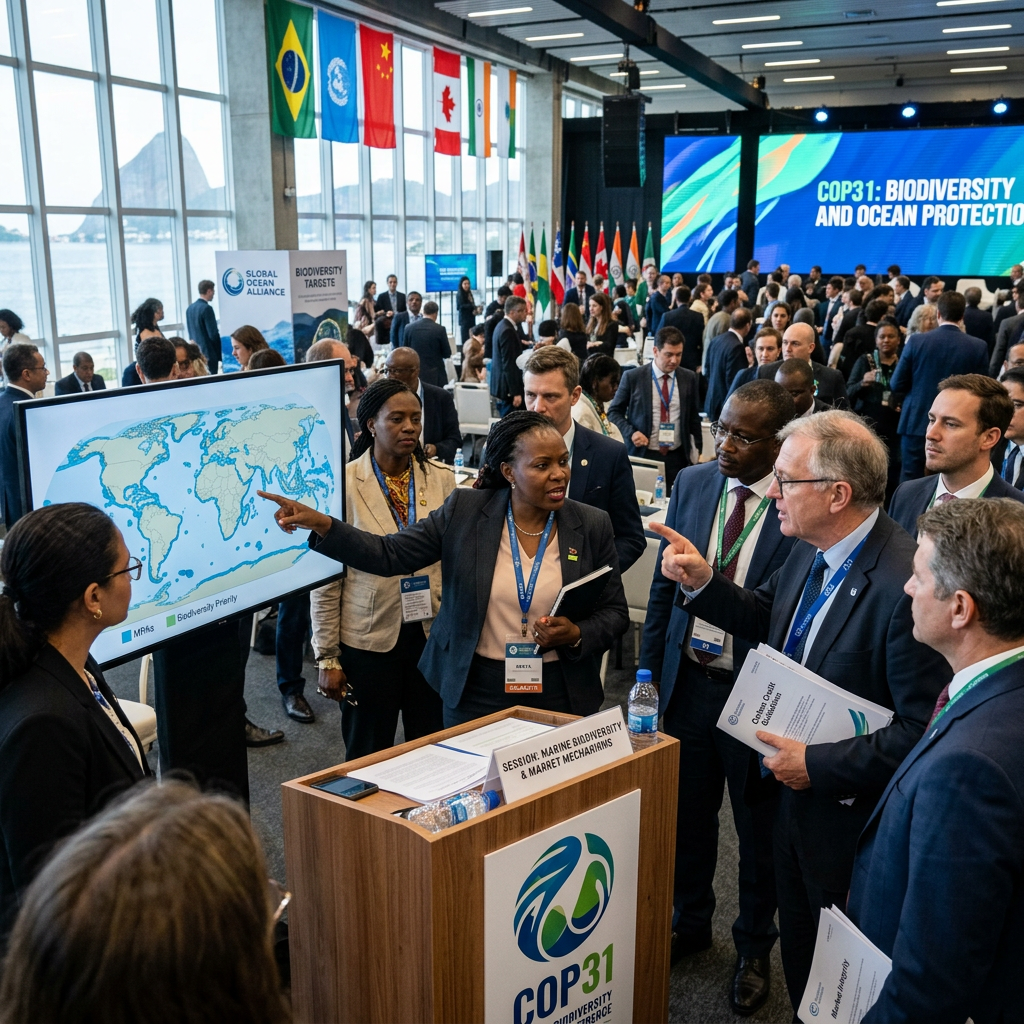
Ocean Protection and Market Integrity Clash on the Global Stage as COP31 Targets Biodiversity and Carbon Systems
Recent high-stakes talks at the COP31 climate summit highlighted a sharp division between expanding marine conservation pledges and unresolved disputes over carbon accounting integrity and forest preservation.

A Planetary Crossroad: Global Biodiversity Talks Collide With Escalating Climate Signals
As international delegates chart the new 'Yerevan Pathway' to rescue lagging 2030 biodiversity goals, newly released data highlighting record greenhouse gas concentrations and shifting marine currents underscore the mounting urgency of coordinated ecological action.